

Year-round tax planning: Strategies for the four seasons
Year-round tax planning: Strategies for the four seasons
A quarterly breakdown of key deadlines and decisions to help maintain an effective, proactive tax plan
Year-round tax planning: Strategies for the four seasons
A quarterly breakdown of key deadlines and decisions to help maintain an effective, proactive tax plan

03.24.2026
Key takeaways
- Tax planning is a year-round process, not just a once-a-year event around Tax Day.
- In winter, review the past year, gather documents, adjust withholding, and treat Tax Day as a strategic checkpoint.
- In spring, align your plan with estimated payments, retirement contributions, and income sources like RMDs.
- In summer, do a midyear check-in to adjust withholding, refine projections, and plan tax-smart moves early.
- In fall, act before year-end deadlines to maximize contributions, manage gains and losses, and prepare for what’s next.
For many people, taxes show up once a year in a flurry of forms and paperwork. But smart tax planning doesn’t begin in the weeks leading up to Tax Day. It unfolds quietly, month by month — and is shaped by things such as paychecks, life changes, and financial decisions made long before the filing deadline arrives.
Thinking about taxes as a year-round process — broken into four seasons — can help you stay proactive, avoid oversights and surprises, and make more intentional choices about what you owe and what you keep.
Read more: Beyond tax season: Why year-round tax planning can pay off
Winter: Review, reset — and file
January through March can be about looking backward before moving forward. The more clearly you can see what happened last year, the better positioned you are to shape what happens next. And the process also can help with understanding and preparing your tax return for filing.
Gather documents
To start, collect the documents that tell your financial story from the prior year: W-2s, 1099s, mortgage interest statements, investment summaries, and records of any major financial activity. From there, take stock of what changed. Did your income increase? Did you start a side hustle, receive a bonus, or experience a major life event like marriage or a new child? Each of these can shift your filing status, eligibility for credits, or overall tax liability.
Revisit
If you typically receive a large refund, it may be worth adjusting your withholding so more money stays in your paycheck throughout the year. If you owed more than expected, this is the time to correct course by updating your W-4 or planning for estimated payments.
Finally, use this window to revisit tax-advantaged opportunities you can still influence. Contributions to certain retirement accounts, like traditional IRAs, can often be funded up until the tax filing deadline in April. If you’re eligible, this gives you a last chance to reduce prior-year taxable income while boosting long-term savings.
Tax Day
All of these actions will position you for the year ahead and prepare you for the final step of the prior year — Tax Day. Taxes for 2025 are due April 15, 2026.
Preparing to file can provide the chance to shift your mindset: Rather than treating the process as a task to complete, start thinking about it as a checkpoint. It’s your most complete snapshot of the past year, so it can reveal opportunities to adjust your strategy for the current one. If you find yourself rushing to meet the deadline, consider whether better organization or earlier preparation next year could reduce stress and improve decision-making.
Read more: Tax planning for parents: Credits, 529s, and dependent care explained
Spring: Adjust and align
Once filing season wraps up, it can be tempting to shelve the topic of taxes until next year. But spring can be about alignment and fine-tuning — making sure your tax strategy reflects your current income, goals, and obligations throughout the year.
Plan estimated taxes
If you’re self-employed, have income not subject to withholding, or expect to owe $1,000 or more in federal income taxes after withholding, you may need to make estimated tax payments, which begin in April. Missing them can lead to penalties, so It’s important to note the estimated tax payment deadlines on your calendar:
Earning period | Payment due date |
January 1 - March 31, 2026 | April 15, 2026 |
April 1 - May 31, 2026 | June 15, 2026 |
June 1 - Aug. 31, 2026 | September 15, 2026 |
September 1 - December 31, 2026 | January 15, 2027 |
Optimize retirement savings
Contributions. This is also a good time to evaluate retirement contributions. Increasing contributions to a 401(k) or traditional IRA not only supports long-term goals — it can also have an upfront tax advantage. You may be able to deduct your contributions, reducing your current taxable income and, therefore, your current tax liability. If your employer offers a match, confirm you’re contributing enough to capture the full benefit.
Required Minimum Distributions (RMDs). For retirees or those approaching retirement, spring is also a natural point to revisit RMDs, which become mandatory at age 73. If you’re subject to RMD rules, these withdrawals count as taxable income and can influence your overall tax picture — including your bracket, Medicare premiums and the taxation of Social Security benefits. Planning distributions earlier in the year, rather than waiting until year-end, can provide more flexibility. In some cases, strategies like qualified charitable distributions (QCDs) may help reduce the tax impact while supporting charitable goals.
Read more: How spring cleaning finances could save money
Summer: Midyear check-In
By midyear you may have a clearer picture of how your finances are unfolding. Think of summer as a time to do a tax pulse check and use it as a window for making refinements. Small, deliberate changes while there’s still plenty of time left in the year can help keep your tax strategy on track so you potentially can avoid making drastic moves later.
Withholding
Withholding is not a set-it-and-forget-it activity. As part of your check-in, review your latest pay stubs or income statements and compare what you’ve earned so far with what you expected back in January. If your income is trending higher than anticipated — whether because of a raise, bonus, side hustle, or investment gains — you may be headed for a higher tax bracket than planned.
W-4s can be updated any time to align your withholding with your real income and life changes. If you adjust withholding now you may be able to spread any additional tax liability across remaining pay periods through the year, instead of facing a larger bill next spring.
If you’re self-employed or earning income without withholding, revisit income projections before the September estimated payment deadline. Adjusting projections proactively can help you avoid underpayment penalties and reduce the risk of a year-end scramble.
Charitable moves
Almost one third (30%) of charitable giving happens in December, but a tax-savvy giving back strategy can help make doing good an effective year-round endeavor. Consider giving assets other than cash and bunching donations into a single year — an approach that may help you exceed the standard deduction.
Planning ahead rather than waiting until the end of the year can help create flexibility and room for thoughtful decisions to both optimize your giving power and make gifts more tax-efficient.
Workplace savings
Be sure to remember workplace benefits. Check your contributions to tax-advantaged accounts like 401(k)s, Health Savings Accounts (HSAs), or Flexible Spending Accounts (FSAs). If you’re behind on contributions, increasing them now can give you time to catch up gradually. For FSAs in particular, summer is a practical checkpoint to ensure you’re on track to use funds before year-end deadlines. Unlike HSAs that allow carryovers, FSA funds typically are “use it or lose it.”
Read more: How do investing decisions affect taxes? Get a Sense Check
Fall: Prepare, position, and proceed
As the year winds down, your tax strategy shifts from monitoring to action. Opportunities start to narrow in September, with December 31 being a firm cutoff for many tax moves, so this can be the time to be deliberate about what you can still influence.
Retirement contributions
If you haven’t already maxed out your 401(k) or other workplace plan, increasing your contributions in the final months can reduce your taxable income while strengthening your long-term savings. The same applies to HSAs, which offer a triple tax advantage: Contributions may be deductible, growth is tax-free and qualified withdrawals aren’t taxed. Individuals can contribute $4,400 to an HSA in 2026, while those with family coverage can contribute up to $8,750. People ages 55 and over can make an additional contribution of $1,000 each in 2026.
Investments
This also can be a good moment to look beyond income to tax-sensitive investments. If you’ve sold investments and are realizing gains, you might explore tax-loss harvesting — selling other investments at a loss — to offset capital gains and help you manage your overall tax exposure. Be mindful of wash sale rules, which can disallow losses if you repurchase similar investments too quickly.
Read more: Tax preparation checklist: Why an early tune-up can make tax filing easier
Looking back
Using a year-end checklist can help you avoid surprises and help ensure nothing falls through the cracks. It’s not meant to replace thoughtful planning but can be used for thoughtful, timely adjustments — so when the year closes, your tax strategy reflects intention, not urgency.
Looking ahead
You may be expecting to make some life changes in the coming year that could affect your finances — things like a new job, retirement, relocation, or sale of an asset. Running the numbers now can help you make informed decisions to proactively prepare for any potential tax impact.
Read more: What should be on my year-end financial checklist? Get a Sense Check
Final thoughts
Breaking the year into quarterly milestones can help you stay proactive, avoid last-minute surprises, and make more intentional decisions about what you owe — and what you keep — throughout the year. It can also shift how you think about taxes altogether and make informed choices along the way.
Over time, a steady, seasonal approach can lead to fewer surprises, more confidence, and a clearer connection between your financial decisions and their tax impact.
This material is for informational purposes only and is not intended to provide investment, legal, or tax recommendations or advice. Tax laws are subject to change and vary based on individual circumstances. You should consult your own investment, legal, or tax professional regarding your specific situation.
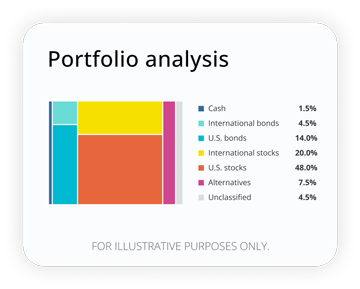
How well are your investments performing?
Analyze your portfolio in minutes and receive a target allocation for your goals.
RO5329610-0326
 Get The Currency newsletter



The Currency editors
Staff contributors
The CurrencyTM writers and editors cover the latest financial news and insights shaping how we live, work, and play. The team provides accurate, data-driven, and timely content aimed at empowering financial freedom for all.
The content contained in this blog post is intended for general informational purposes only and is not meant to constitute legal, tax, accounting or investment advice. You should consult a qualified legal or tax professional regarding your specific situation. No part of this blog, nor the links contained therein is a solicitation or offer to sell securities. Compensation for freelance contributions not to exceed $1,250. Third-party data is obtained from sources believed to be reliable; however, Empower cannot guarantee the accuracy, timeliness, completeness or fitness of this data for any particular purpose. Third-party links are provided solely as a convenience and do not imply an affiliation, endorsement or approval by Empower of the contents on such third-party websites. This article is based on current events, research, and developments at the time of publication, which may change over time.
Certain sections of this blog may contain forward-looking statements that are based on our reasonable expectations, estimates, projections and assumptions. Past performance is not a guarantee of future return, nor is it indicative of future performance. Investing involves risk. The value of your investment will fluctuate and you may lose money.
Certified Financial Planner Board of Standards Inc. (CFP Board) owns the certification marks CFP®, CERTIFIED FINANCIAL PLANNER™, CFP® (with plaque design), and CFP® (with flame design) in the U.S., which it authorizes use of by individuals who successfully complete CFP Board's initial and ongoing certification requirements.