

How do investing decisions affect taxes? Get a Sense Check
How do investing decisions affect taxes? Get a Sense Check
Selling investments can trigger capital gains, affect your tax bracket, and even impact Medicare premiums. Empower’s Tony Johnson discusses investment choices and their tax implications in this edition of Sense Check
How do investing decisions affect taxes? Get a Sense Check
Selling investments can trigger capital gains, affect your tax bracket, and even impact Medicare premiums. Empower’s Tony Johnson discusses investment choices and their tax implications in this edition of Sense Check

03.20.2026
Key takeaways
- Where you hold investments matters — while trades inside retirement accounts don’t trigger taxes, selling in a taxable account can.
- Short-term capital gains federal tax rates apply to the sale of appreciated assets held for less than a year; assets held more than a year are taxed at long-term capital gains federal tax rates.
- Rebalancing portfolios to manage risk can create tax consequences, so gains should be recognized intentionally.
- Capital losses offset gains dollar-for-dollar, and up to $3,000 can offset ordinary income annually.
- The tax picture can change in retirement to include retirement account withdrawals and Social Security.
The question of how selling an investment affects taxes is one I hear from clients at all stages of life. It’s a smart concern because taxes aren’t just about how much you make — they’re about how and where you invest, how long you hold assets, and when you decide to sell. In many cases, a small timing decision can make a meaningful difference in your tax bill.
The potential tax impact of selling an investment depends on the account type and its tax status.
Taxable versus tax-advantaged accounts
As you make investment decisions, you may be considering whether to make a particular investment in a taxable or tax-advantaged account. The choice may depend on when you want to realize income. Being deliberate can help you more easily control the timing for realizing income or managing your tax brackets.
The interest from assets like bonds or high-yield savings accounts generate ordinary income, taxed at higher ordinary rates each year in a taxable account versus lower capital gains rates. You can’t really control the timing — bond coupon interest or bank account interest is paid throughout the year. Since it’s going to be taxed at ordinary income rates anyway, investing in assets that generate interest income in a tax-advantaged account, such as a traditional IRA can make sense, allowing you to defer the tax and control when distributions occur.
Retirement accounts
With traditional and Roth IRAs and 401(k)s, you can rebalance, sell, or change investments with no tax consequence at the time of the trade. The tax impact only comes when you take distributions. Traditional IRA and pre-tax 401(k) withdrawals are taxed as ordinary income. Roth withdrawals are generally tax-free assuming you meet the rules for qualified distributions.
Taxable accounts
Taxes depend on the type of asset and length of time it’s held. When you sell a stock or exchange-traded fund (ETF) for more than you paid, you’ll owe federal (and possibly state) capital gains tax. Short-term capital gains apply to sales of appreciated assets held less than a year. These gains are taxed at the same federal rates as ordinary income rates (10%-37% depending on taxable income and filing status).
Long-term capital gains rates — typically 0%, 15%, or 20%, possibly plus the 3.8% net investment income tax — apply to appreciated assets held more than a year. If you sell at a loss, you may have a tax benefit, which we’ll get to shortly.
Mutual funds are unique. You can hold them and make no trades yet still receive taxable capital gain distributions because of trading activity inside the fund. Mutual Funds are required to distribute at least 98% of their net realized capital gains to shareholders annually, which typically happens at the end of the year. If you hold mutual funds in a taxable account, you can’t control the timing or amount of gains you might be forced to realize, making precision tax-bracket planning difficult.
ETFs generally offer more tax efficiency and control. Bonds typically generate interest that’s taxed at ordinary income rates. Real estate and Real Estate Investment Trusts (REITs) may generate capital gains and sometimes return of capital (ROC). ROC is not taxed when received but rather reduces your basis dollar-for-dollar.
Big moves can also trigger estimated tax payments if you are not covered by a tax safe harbor, potentially leading to underpayment penalties. Taxes aren’t just about what you sell — but when you sell and where and how you hold the assets.
Read more: Understanding long-term capital gains tax
Taxing dividends and interest income
Interest income in a taxable account is always taxed annually at ordinary income rates at your highest marginal rate, regardless of whether it comes from a savings account, a CD, or most bond interest. While interest generated in a traditional IRA isn't taxed each year, withdrawals are taxed at ordinary income rates when they occur.
Some investors might have the misconception that dividends are “free” money, but they do create a taxable event, even if you reinvest the dividends immediately. Most stock dividends are “qualified dividends” (subject to certain stock holding requirements) and taxed at long-term capital gains rates, which are generally lower than ordinary income rates. Whether you’re paid a qualified dividend or sell shares of a growth stock held for more than a year, both are subject to long term capital gains income tax rates. Some dividends are “ordinary dividends” and taxed at higher rates — typically if you haven’t met the holding period or if the income is business income passed through to you.
Portfolio rebalancing
Portfolio rebalancing is an important component of financial planning — but keep in mind once you sell assets in taxable accounts, it means you will realize capital gains or losses.
At its core, rebalancing is about risk control. If 25% of your portfolio is in a single stock, trimming concentrated exposure could be a prudent move. However, it’s important to determine when you want to recognize the potential gain. It could make sense to spread sales over multiple tax years (but keep in mind that a drop in price of only 6% can nullify the tax benefit of trying to stay out of the 20% bracket and into the 15% bracket for example), or perhaps do all at once if risk is your primary concern. Much can depend on your full financial picture, goals, and risk tolerance.
Timing matters in other ways too. For example, selling just before a position becomes long-term could potentially mean paying a higher ordinary rate on any gains.
Losses and tax-loss harvesting
Losses can hurt your portfolio value, but sometimes they can help reduce your tax bill.
If you sell investments at a gain, you may owe capital gains tax. But if you also realize losses, those losses can reduce the amount of gains you’re taxed on — a strategy called tax-loss harvesting. There’s no limit on the amount of capital losses you can use against capital gains in a given year.
If your losses exceed your gains, the excess doesn’t disappear. You can use up to $3,000 per year to offset ordinary income, and any remaining losses carry forward indefinitely. That carryforward can be valuable in future years if you realize large gains — it’s like having a tax benefit waiting to be used that potentially can materially impact your tax bill.
Capital loss carryforwards sometimes can get overlooked if you’re switching tax preparers or filing on your own, especially if prior returns aren’t shared. Good recordkeeping and coordination are important.
Read more: How tax-loss harvesting can reduce your tax bill
Taxes in retirement
Taxes are still taxes, and work the same way whether you’re working or not. While you’re in the workforce, your tax bracket is largely driven by earned income. But in retirement, there are nuances you may become sensitive to, such as required minimum distributions (RMDs) and Social Security benefits to name a few.
RMDs are mandatory withdrawals from 401(k)s and traditional IRAs that generally start at age 73 and those distributions are taxed as ordinary income. (Note: If you are still working at 73 you likely will not have RMDs from assets inside your current employer’s 401(k) account unless you own 5% or more of the company.) Large RMDs can change your tax bracket significantly and have a cascading effect — impacting how much of your Social Security is taxable and potentially triggering Medicare surcharges based on the Income-Related Monthly Adjustment Amount (IRMAA).1 For most people, up to 85% of Social Security is going to be taxable, depending on your modified adjusted gross income (MAGI).
The potential outcomes underscore the importance of managing retirement income thoughtfully to avoid unintended tax consequences.
Read more: Don’t need the RMD? Tax-smart strategies for Required Minimum Distributions
Ordinary income and capital gains
Ordinary income and capital gains are interrelated when it comes to federal tax treatment: Ordinary income forms the base and long term capital gains income is layered on top of it to determine the tax bracket. The easiest way to understand this stacking relationship is through examples.
Example 1. In this scenario, you are married filing jointly. Your ordinary income for 2026 totals $90,000, and your capital gains total $21,000. In 2026, the 0% long term capital gains bracket goes up to $98,900 for married filing jointly, but using the 0% capital gains bracket depends on your other income sources. Ordinary income forms the base of that 0% bracket. If your ordinary income totals $90,000, then only the first $8,900 of your $21,000 in capital gains will be taxed at 0% ($98,900). The remaining $12,100 of your capital gains spill into the next marginal long term capital gains bracket of 15% (which goes up to $613,700 for married filing jointly in 2026).
Example 2. You are married filing jointly and your ordinary income in 2026 is $200,000. In this scenario you are not eligible to participate in the 0% capital gains bracket at all, since your ordinary income already exceeds the 0% tax bracket limit of $98,900. Long term capital gains from $200,000 up to the $613,700 bracket limit would be taxed at 15% (plus 3.8% Net Investment Income Tax for married joint filers over $250K).2
Final considerations
While the focus here is on federal tax implications, keep in mind state tax considerations help create a complete — and sometimes more complex — tax picture. Most states also have an income tax (a handful do not), and many tax ordinary income and capital gains identically. Some states do not tax distributions from retirement accounts, and some states do not tax social security. State tax safe harbor rules vary by state too.
A general rule of thumb for investing and taxes is simple: If something sounds too good to be true, it probably is. The key is to understand the tax implications of any financial moves you make and control the timing.
A proactive tax strategy might include coordinating with a CPA or financial professional on things like long-term asset location, income timing, capital gains, safe harbor rules, and overall risk. Thoughtful planning beats clever shortcuts every time. But planning isn’t a one-and-done activity — it’s an ongoing process that meets both changing personal circumstances and tax regulations.
Read more: Tax 101: Understanding the basics
Frequently Asked Questions
Do I pay taxes every time I sell an investment?
Not always. If the investment is inside a traditional or Roth IRA or a 401(k), you can sell or rebalance without immediate tax consequences. In a taxable account, however, selling for a gain typically triggers capital gains tax.
What’s the federal tax difference between short-term and long-term capital gains?
If you sell an asset you’ve held for less than one year, gains are taxed at short-term rates — the same as ordinary income. If you hold it for more than a year before selling for a profit, you may qualify for long-term capital gains rates, typically 0%, 15%, or 20%.
Are dividends taxable?
Dividends create a taxable event in the year they’re paid — even if you automatically reinvest them. Most stock dividends are taxed at federal long-term capital gains rates, but some may be taxed as ordinary income.
How does tax-loss harvesting work?
If you sell investments at a loss, those losses offset capital gains. If losses exceed gains, you can use up to $3,000 per year to offset ordinary income, and any remaining losses carry forward indefinitely.
How do taxes change in retirement?
In retirement, there are additional nuances to income planning. Required minimum distributions (RMDs) from traditional retirement accounts are taxed as ordinary income. They can also increase how much of your Social Security is taxable and may trigger higher Medicare premiums through IRMAA surcharges.
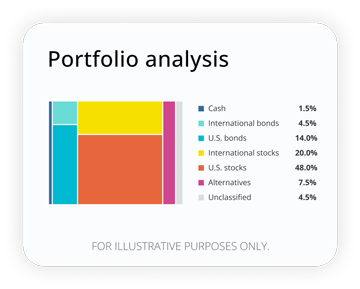
How well are your investments performing?
Analyze your portfolio in minutes and receive a target allocation for your goals.
1 Social Security Administration, “Request to lower an Income-Related Monthly Adjustment Amount (IRMAA),” accessed March 2026.
2 Internal Revenue Service, “Questions and Answers on the Net Investment Income Tax,” September 13, 2025.
RO5312304-0325
 Get The Currency newsletter



Tony Johnson, CFP®, CMSA®, CPWA®, EA, ASBC®
Contributor
Tony Johnson is a Financial Planning Specialist at Empower. A Certified Financial Planner™, Capital Markets & Securities Analyst™ (CMSA), Certified Private Wealth Advisor®, Enrolled Agent, and Accredited Small Business Consultant®, he provides proactive, holistic guidance across a wide range of advanced planning topics.
The content contained in this blog post is intended for general informational purposes only and is not meant to constitute legal, tax, accounting or investment advice. You should consult a qualified legal or tax professional regarding your specific situation. No part of this blog, nor the links contained therein is a solicitation or offer to sell securities. Compensation for freelance contributions not to exceed $1,250. Third-party data is obtained from sources believed to be reliable; however, Empower cannot guarantee the accuracy, timeliness, completeness or fitness of this data for any particular purpose. Third-party links are provided solely as a convenience and do not imply an affiliation, endorsement or approval by Empower of the contents on such third-party websites. This article is based on current events, research, and developments at the time of publication, which may change over time.
Certain sections of this blog may contain forward-looking statements that are based on our reasonable expectations, estimates, projections and assumptions. Past performance is not a guarantee of future return, nor is it indicative of future performance. Investing involves risk. The value of your investment will fluctuate and you may lose money.
Certified Financial Planner Board of Standards Inc. (CFP Board) owns the certification marks CFP®, CERTIFIED FINANCIAL PLANNER™, CFP® (with plaque design), and CFP® (with flame design) in the U.S., which it authorizes use of by individuals who successfully complete CFP Board's initial and ongoing certification requirements.