

What should be on my year-end financial checklist? Get a Sense Check
What should be on my year-end financial checklist? Get a Sense Check
In this edition of Sense Check, Empower’s Allisa Ritterbach shares money moves you may want to add to your year-end financial checklist to help make progress on financial goals and optimize tax benefits before year-end
What should be on my year-end financial checklist? Get a Sense Check
In this edition of Sense Check, Empower’s Allisa Ritterbach shares money moves you may want to add to your year-end financial checklist to help make progress on financial goals and optimize tax benefits before year-end

11.25.2025

Listen
·What should be on my year-end financial checklist? Get a Sense Check
Key takeaways
- Maxing out or increasing contributions to tax-advantaged accounts can help reduce your taxable income and boost long-term savings.
- The year-end financial checklist isn’t just about taxes — it’s a smart time to review investments, insurance, debt, and goals for the year ahead.
- Intentional money moves before year-end, like a Roth conversion, charitable gift, or portfolio rebalance, can make a meaningful impact.
Use this year-end financial checklist to help boost savings, give smartly, and review your debt, insurance, and spending before December 31.
As the year winds down, it can be a great time to tighten up your finances, make smart tax moves, and set yourself up for a strong start to next year. Making a few proactive moves with this year-end financial checklist can help you reduce your taxable income for the tax year and make progress towards your financial goals.
1. Max out (or boost) your contributions to tax-advantaged accounts
Year-end is one of the best times to check how close you are to hitting your 401(k), IRA, or health saving account (HSA) contribution limits and to give those savings a final boost. In 2025, you can contribute up to $23,500 to a 401(k), 403(b), and 457 plan, and $7,000 in an traditional or Roth IRA. If you are age 50 or older, you can contribute up to $7,500 more in catch-up contributions.1 Taking advantage of as much of that limit as you can each year can help you build your savings. You have until December 31, 2025 to contribute to your employer plan and until April 15, 2026 to contribute to your traditional or Roth IRAs.
You receive an immediate tax benefit for any of the pre-tax contributions, which lowers your taxable income dollar for dollar. Roth contributions have tax-free growth potential where the earnings are not federally taxed provided you meet the withdrawal rules. Remember state and local taxes may still apply.
Be sure to check how your modified adjusted income (MAGI) impacts how much you can contribute to a Roth IRA and remember that contributions to a Traditional IRA may not be tax deductible if your income exceeds certain thresholds.
2. Consider opening or converting to a Roth IRA
If your income or deductions look different this year, it might be a good moment to explore whether a Roth IRA contribution or conversion makes sense for your situation.
Roth IRAs offer many benefits, including tax-free growth potential and tax-free distributions, assuming you're age 59½ and the account has been open for at least five years.2 If you’re already maximizing your employer plan pre-tax contributions, then funding a Roth IRA could be that next savings step. Even if you can only contribute a small amount, getting the Roth IRA open and funded starts the five-year clock for tax-free growth.
If you already have a traditional IRA, a Roth conversion could be worth exploring if your income is lower this year than you expect it to be in the future, or if you have unusually high deductions this year — like large medical expenses or charitable giving. Roth conversions must be completed by December 31 to be considered for that tax year. Keep in mind that if you’re on Affordable Care Act insurance, a Roth conversion can affect your subsidy, and if you’re on Medicare it can increase your premiums.
Read more: Roth conversion: A comprehensive guide
3. Take your required minimum distributions (RMDs)
If you are required to take an RMD this year, you’ll need to take the distribution by year end to avoid penalties. If you turned 73 in 2025 and are taking an RMD for the first time, you have until April 1, 2026 to take your RMD. After that, you'll need to take it before the end of each calendar year, so that first year may involve two withdrawals. It’s a critical deadline because the consequences can be significant — if you don’t take your RMD by the deadline, there’s a 25% tax on the amount not withdrawn.3
If you miss the deadline, the penalty can be lowered to a 10% tax if corrected within two years, so now is also a good time to make sure you took the RMD, if required, over the past two years.
4. Rebalance your portfolio and harvest tax losses
The end of the year is a natural checkpoint to make sure your investments are aligned with your goals and your taxable accounts are working as efficiently as possible. To start, you can check your asset allocation and rebalance your portfolio if needed.
If you have a taxable account, you can also use a strategy known as tax-loss harvesting to realize any investment losses to offset your gains, which can help lower your tax bill. It’s important to keep in mind the wash-sale rule: You can’t buy the same or substantially identical security within 30 days before or after the sale.
5. Make charitable donations that also give back
Year-end giving can do double duty by helping causes you care about while offering meaningful tax benefits when done strategically. By December you are likely to have solid estimates of your income and deductions, so it’s a good time to evaluate whether additional contributions to charity would benefit your tax scenario.
You have a few different options for charitable giving. If you want to take advantage of bunching — doing maybe two years’ worth of giving in one year — that can help you qualify for and increase your itemized deduction. Alternatively, if you’re someone who likes to give on a regular cadence, you may want to consider a donor-advised fund which allows you to take the deduction in one year but distribute the gifts over multiple years. Finally, if you're 70½ or older, you can take a qualified charitable distribution (QCD) of up to $108,000 in 2025 from your traditional IRA to donate directly to a qualified charity without paying taxes. This can help you meet your RMD requirement and receive a tax benefit.
Any charitable contributions must be completed by December 31 in order to be counted as a deduction for that year.
Read more: Charitable giving: Tax-smart strategies for doing good
6. Use up flexible spending account (FSA) dollars
If you’ve still got money sitting in your FSA, now’s the time to spend it, before the balance disappears or your grace period expires. First determine what your employer’s specific carryover or grace-period rules are — they can offer one or the other, not both.
The carryover limit is up to $660 for the 2025 plan year, or your plan might offer a grace period that extends 2.5 months after the end of the plan year.4
Scheduling any medical or dental appointments you’ve been putting off or stocking up on eligible supplies like sunscreen, cough syrup, or first-aid products are good ways to use the funds. It’s always interesting the things you might not think would be included. Simple drugstore items often qualify, but there’s also the likes of wearable technology, red light therapy masks, and genetic testing services. You can view all eligible products on FSAStore.
7. Review your debts and look for ways to lower interest costs
From credit cards to mortgage rates, now is a great time to check in on your debts and look for opportunities to save money. Some year-end moves make sense from a tax perspective, and others just make sense as part of a good financial review. See if consolidating your debts could make your payments more manageable or if you can negotiate lower interest rates on credit cards or personal loans.
It’s also worth reviewing your mortgage rate to see if refinancing could save you money over time. Even a one-point reduction can significantly cut interest costs and lower your monthly payment, especially if you plan to stay in your home for several more years. Taking the time to run the numbers or talk to a lender now can help you decide if refinancing fits your broader financial goals.
If you itemize deductions, you might also consider making an extra mortgage payment before December 31 to increase your deductions for the year. That small move can help lower your taxable income while giving you a head start on next month’s payment.
Read more: How does refinancing a mortgage work?
8. Plan for your year-end bonus or extra cash
A year-end bonus or windfall is the perfect opportunity to shore up savings, pay down high-interest debt, and still reward yourself for your hard work. Consider starting an emergency fund to make sure you have three to six months of expenses saved. How much cash to hold depends on your job security and whether you have other assets you could access, like a taxable account.
Next, consider focusing on high-interest debt, typically anything with an interest rate of 6% and above. If it’s below that, you’re probably earning more in your investments than you’re paying in debt. Then maximize your tax-advantaged accounts — your 401(k), HSA, or IRA — and fund any long-term goals like a 529 or brokerage account. Finally, keep at least a small portion for yourself. You worked hard for it.
9. Review insurance, beneficiaries, and Social Security statements
Before the new year starts, make sure your insurance coverage, beneficiary designations, and Social Security records still fit your life today — not the one you had a few years ago. Year end is a natural checkpoint to update these details. If you’ve had major life or career changes, it’s especially important to review your policies and make sure beneficiaries are current.
It’s also a good time to review your Social Security statement to make sure your income was reported accurately. The SSA does make mistakes, and they’ll only correct them if brought to their attention within 3 years, 3 months, and 15 days after the year in which the wages were paid or the self-employment income was earned.5 You can log in to your account at SSA.gov to download your statement and confirm that your earnings history is correct.
10. Review your spending and reset your financial goals for the new year
Year-end is a natural time to pause and reflect on where your money went over the past 12 months. You’re encouraged to look at your spending before setting new financial goals. Using aggregator tools, like the Empower Personal DashboardTM, to track spending and categorize transactions can be really helpful. You can look back to see what you actually spent versus what you expected, identify surprises, and adjust your habits.
Seeing how categories like groceries and gas have shifted year over year can also help you plan a more realistic budget for the next year. Keeping up with your budget throughout the year is easier than trying to review everything at once in December. By taking stock now, you’ll head into the new year with a clear picture of your finances and a stronger sense of where you want your money to go next.
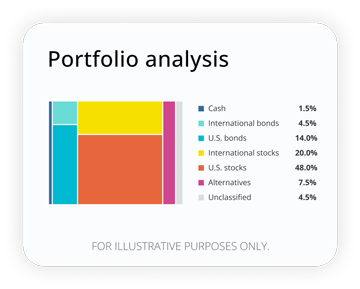
How well are your investments performing?
Analyze your portfolio in minutes and receive a target allocation for your goals.
1 IRS, “401(k) limit increases to $23,500 for 2025, IRA limit remains $7,000,” November 2025.
2 IRS, “Roth IRAs,” August 2025.
3 IRS, “Retirement topics - Required minimum distributions (RMDs),” August 2025.
4 FSAStore, “What Is the FSA “Use It or Lose It” Rule?,” November 2025.
5 Social Security Administration, “How do I correct my earnings record?” February 2023.
The tax information provided is based on current laws, which are subject to change and interpretation.
RO5013683-1125
 Get The Currency newsletter



Allisa Ritterbach, CFP®
Contributor
Allisa Ritterbach is a Senior Financial Professional at Empower. A CERTIFIED FINANCIAL PLANNER™ professional, she provides proactive, holistic financial guidance across a wide range of topics including investment management, financial planning, and more.
The content contained in this blog post is intended for general informational purposes only and is not meant to constitute legal, tax, accounting or investment advice. You should consult a qualified legal or tax professional regarding your specific situation. No part of this blog, nor the links contained therein is a solicitation or offer to sell securities. Compensation for freelance contributions not to exceed $1,250. Third-party data is obtained from sources believed to be reliable; however, Empower cannot guarantee the accuracy, timeliness, completeness or fitness of this data for any particular purpose. Third-party links are provided solely as a convenience and do not imply an affiliation, endorsement or approval by Empower of the contents on such third-party websites. This article is based on current events, research, and developments at the time of publication, which may change over time.
Certain sections of this blog may contain forward-looking statements that are based on our reasonable expectations, estimates, projections and assumptions. Past performance is not a guarantee of future return, nor is it indicative of future performance. Investing involves risk. The value of your investment will fluctuate and you may lose money.
Certified Financial Planner Board of Standards Inc. (CFP Board) owns the certification marks CFP®, CERTIFIED FINANCIAL PLANNER™, CFP® (with plaque design), and CFP® (with flame design) in the U.S., which it authorizes use of by individuals who successfully complete CFP Board's initial and ongoing certification requirements.