

Math mistakes to missed credits: Common tax oversights to avoid
Math mistakes to missed credits: Common tax oversights to avoid
Tax vigilance can mean avoiding simple slip-ups, watching details and deadlines, and maximizing eligible opportunities
Math mistakes to missed credits: Common tax oversights to avoid
Tax vigilance can mean avoiding simple slip-ups, watching details and deadlines, and maximizing eligible opportunities

03.06.2026
Key takeaways:
- Filing errors from math mistakes to incorrect Social Security numbers and bank info can trigger IRS notices or refund delays.
- Overlooking income forms, credits, or deductions may result in a higher tax bill.
- Paying attention to deadlines and contribution limits can help maximize eligible tax savings.
More than half of Americans (55%) believe they’ve made financial mistakes when they lacked awareness at critical moments, Empower research shows, with nearly one in five (19%) citing taxes and tax-advantaged accounts as areas where they wished for a “do-over.”
When it comes to tax filing, awareness isn’t always about complicated laws or IRS guidance. It can be about avoiding common human errors, such as entering the wrong Social Security number for a dependent or incorrect bank account information on a form.1
The same can be true with miscalculations or simply inputting the wrong numbers. The IRS sent more than 1 million “math error” notices to individual tax filers in 2024 — the latest data available — flagging 1.2 million potential issues on everything from adjusted gross income to the Child Tax Credit.2
Tax awareness also can mean recognizing all the deductions or credits that could potentially apply to you.3 Maximizing contributions to tax-advantaged retirement accounts like a 401(k) or IRA also has the potential to reduce taxable income for some filers.
Whether the risk is making an error or overlooking an opportunity, here’s a few things to keep in mind during tax filing season and beyond.
Double-check details and income
Attention to detail matters: Some of the common errors the IRS sees are missing or incorrect Social Security numbers (SSNs). Each SSN and name on a tax return should appear exactly as printed on the Social Security card.4 The IRS verifies SSNs to prevent fraud, and errors can trigger filing rejections.5
The IRS also can flag returns with errant bank information or missing signatures. The agency advises taxpayers to double-check routing and account numbers, as errors can delay direct deposit refunds. Returns that aren’t signed are considered invalid, and for joint returns both spouses must sign.6
Remember all income: Income doesn’t only derive from a permanent salaried job. Taxpayers who work as independent contractors, take on gig jobs, or earn income from other sources including interest, dividends or capital gains, rental income, unemployment benefits, or certain retirement distributions may receive one or more Forms 1099 reporting that income.7
The IRS receives copies of 1099s from providers and automatically compares this data to the amounts reported on tax returns. A discrepancy, such as income on a 1099 that isn’t reported on a return, could trigger further review.
Take inventory of your tax picture
Filing status: Filing status matters because it determines how your income is taxed and which credits and deductions you can claim, among other things.8 Single, Married Filing Jointly, Married Filing Separately, and Head of Household each have different tax brackets and standard deduction amounts, which can directly affect your overall tax bill.
Credits and deductions: Deductions and credits can be important tools to reduce taxes, but they work in different ways. A tax credit can reduce the tax you owe dollar-for-dollar, while a deduction can reduce your taxable income.
Many people take the standard deduction, but some may choose to itemize deductions to maximize benefits. Ensuring your adjusted gross income (AGI) is correct is very important because it’s a reference point throughout the return for determining eligibility for certain deductions and credits.
Maximizing benefits: Contributions to traditional IRAs, 401(k) plans, and other tax-advantaged retirement accounts can reduce current tax liability while potentially building long-term wealth. However, maximizing benefits also requires careful attention to contribution limits, eligibility requirements, and the timing of contributions.
For other taxable individual investments, tax-loss harvesting and the timing of capital gains and losses can impact tax liability. Those strategies require ongoing monitoring and adjustment based on market conditions and individual circumstances.
Plan ahead to minimize surprises
Keep deadlines in mind: Individual income tax returns are due April 15, 2026, for the 2025 tax year and late filing can result in penalties and interest, especially if you owe taxes. You can receive a six-month extension for many reasons by filing IRS Form 4868, giving you until October 15, 2026, to file your return.9
If you are self-employed or have other major sources of income, you may need to make estimated tax payments on a quarterly basis if you expect to owe at least $1,000 for 2025.
It’s also important to note that most tax deductions — such as 401(k) and 403(b) contributions, charitable donations, and mortgage and student loan interest — are based on the calendar year, with a December 31 cutoff. But some deductions, such as contributions to traditional IRA or Roth IRA accounts, can be made up until the April filing deadline and still count for the prior tax year.
Stay organized: Keeping track of documents and staying organized can help take some of the logistical challenges out of the process. The IRS requires employers to distribute W-2s by the end of January but several types of consolidated 1099s aren’t required to be mailed until mid-February.
Life events such as switching jobs, selling a primary residence, or moving to a new state could also require specific forms. If gathering documents and forms starts to feel complex or overwhelming, you may want to consider working with a qualified tax professional to help you optimize opportunities and avoid potential mistakes.
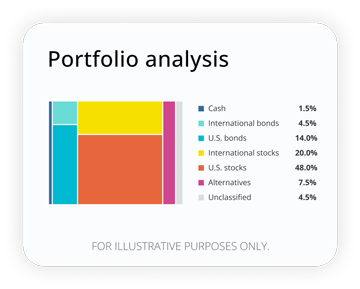
How well are your investments performing?
Analyze your portfolio in minutes and receive a target allocation for your goals.
1 IRS, “Common tax mistakes to avoid,” February 2026.
2 IRS, “IRS 2024 Data Book,” accessed March 2026.
3 IRS, “Credits and Deductions,” December 2025.
4 IRS “Errors taxpayers should watch out for when preparing a tax return,” March 2026.
5 IRS, “Age, name or SSN rejects, errors, correction procedures,” December 2025.
6 IRS “Errors taxpayers should watch out for when preparing a tax return,” March 2026.
7 CNET, “There Are 22 Types of 1099 Tax Forms. Here's How to Know Which Ones You'll Get,” February 2025.
8 IRS, “What is my filing status?” December 2025.
9 IRS, “About Form 4868, Application for Automatic Extension of Time to File U.S. Individual Income Tax Return,” August 2025.
RO5275123-0326
 Get The Currency newsletter



The Currency editors
Staff contributors
The CurrencyTM writers and editors cover the latest financial news and insights shaping how we live, work, and play. The team provides accurate, data-driven, and timely content aimed at empowering financial freedom for all.
The content contained in this blog post is intended for general informational purposes only and is not meant to constitute legal, tax, accounting or investment advice. You should consult a qualified legal or tax professional regarding your specific situation. No part of this blog, nor the links contained therein is a solicitation or offer to sell securities. Compensation for freelance contributions not to exceed $1,250. Third-party data is obtained from sources believed to be reliable; however, Empower cannot guarantee the accuracy, timeliness, completeness or fitness of this data for any particular purpose. Third-party links are provided solely as a convenience and do not imply an affiliation, endorsement or approval by Empower of the contents on such third-party websites. This article is based on current events, research, and developments at the time of publication, which may change over time.
Certain sections of this blog may contain forward-looking statements that are based on our reasonable expectations, estimates, projections and assumptions. Past performance is not a guarantee of future return, nor is it indicative of future performance. Investing involves risk. The value of your investment will fluctuate and you may lose money.
Certified Financial Planner Board of Standards Inc. (CFP Board) owns the certification marks CFP®, CERTIFIED FINANCIAL PLANNER™, CFP® (with plaque design), and CFP® (with flame design) in the U.S., which it authorizes use of by individuals who successfully complete CFP Board's initial and ongoing certification requirements.