

Start 2026 with a financial backup plan
Start 2026 with a financial backup plan
Re-evaluating money habits now can make managing ups and downs easier in the new year
Start 2026 with a financial backup plan
Re-evaluating money habits now can make managing ups and downs easier in the new year

12.29.2025

Listen
·Start 2026 with a financial backup plan
Key takeaways
Americans have a median of $500 saved for emergencies
People can maximize tax advantages with strategic saving
Keeping beneficiaries updated can help clarify future inheritance and protect wealth
Beginning a new year can inspire people to reset financial habits. Keeping goals grounded in savings and spending supports progress.
Ending one year and starting the next welcomes what psychology calls the “fresh start effect,” which can have a lasting effect on personal finances. This time of transition can act as a marker for people to take a quick mental breather and then get more energized about the decisions coming next.1
This push for self-improvement and reflection may be especially high around the time of new year’s resolutions, and having people being truly dedicated to the work can go a long way. Behavioral science research has shown that goals that people pursue for their own gratification, also known as intrinsic motivation, are more enduring than those rewarded by outside factors.2
With emotions affecting people’s approach to their finances, it’s important to keep financial goals grounded in tangible figures like current savings and past spending trends. This can be an opportunity to try the SMART method, in which goals are:3
Specific: Dollar amounts and percentages help with setting detailed goals.
Measuring progress: Use previous bills to set a benchmark, and then show the difference.
Achievable: Decide on a realistic change depending on income.
Relevant: Take lifestyle and family size into account.
Time-bound: Give enough time to start seeing a change (e.g., “by December 2026”), though not too vague of a horizon like “in the future.”
Read more: 10 financial resolutions for 2026
Almost half of people (45%) wish they had started saving sooner and more consistently before facing major life changes, according to Empower research. In preparing for the year ahead, being proactive with a financial backup plan could help avoid future money regrets.
Build up emergency savings
Since January 2025, Americans have been saving around 4% or more of their income, and the second half of the year brought a cooling job market and the disruption of a government shutdown — and more attention to the importance of a safety net. Putting those extra dollars toward rainy-day emergencies — rather than being tempted with “lifestyle creep” expenses — could help down the line.
More than two in five Americans (42%) think their current savings wouldn’t help if they lost their job, according to an Empower study. People have saved a median of $500 for emergencies, which would still leave a payment gap compared to a few typical expenses, should there be a pause in income:
People pay an average of $838 to fix their cars.4
The average monthly rent in the U.S. runs $2,000.5
Shoppers spend $1,546 on groceries and restaurants in a typical month.
Empower’s free emergency fund calculator shows the impact of different amounts on a desired savings goal or time horizon.
Read more: How to build an emergency fund
Decide where money lives best
An emergency fund is only as helpful as being able to tap it when needed. Here’s where Empower research found people are keeping their emergency savings:
Regular savings account (37%)
Checking account (23%)
In cash at home (19% overall, 27% of Gen Z)
Across all types of savings, making sure that money is in the most strategic spot can help save on taxes and get the most potential growth for the future. For tax advantages, a workplace retirement plan can be top of mind, though people can also save using individual retirement accounts (IRAs), which have different contribution limits in addition to 401(k) accounts. The same way people can have multiple 401(k) accounts, they can also open multiple IRAs, which could be useful depending on individual tax situations.
Read more: Roth vs. traditional IRAs: Which should I choose?
A forward-thinking backup plan should also account for bills that need to be paid. January motivation could push a debt payoff plan forward. During the 2025 holiday season, people were expected to spend more than $20 billion using Buy Now, Pay Later installment loans.
The 2026 calendar will bring “later” soon enough, so having a detailed list of BNPL providers, amounts, and deadlines acts as a good resource to keep people accountable.
Empower findings show that 44% of Americans would be anxious about making timely BNPL payments, though many have brought rigor to the responsibility: 32% of people say they always pay on time.
Set (or update) beneficiaries
It’s a popular year-end money move to max out or add to retirement savings, since the IRS has annual contribution limits. Making sure the actual money is transferred is one task, though what can be forgotten is setting up (or updating) the beneficiary designations on each account.
A beneficiary is a person or an organization (such as a trust) that someone designates to inherit their assets when they die. Tax-advantaged accounts like 401(k) plans and IRAs (both traditional and Roth types) have a section online or a form that can be submitted to include the specific information needed. People may also encounter beneficiaries mentioned in life insurance policies and pension plan setups.
Assigning a beneficiary helps ensure that a nest egg (retirement, brokerage investment, or other accounts) is passed along according to a person’s wishes. Without a beneficiary named, assets could get caught up in probate — a legal process that can slow or even stop the wealth transfer and could include potential tax consequences.
With $124 trillion set to move across generations by 2048, having accurate beneficiary information across accounts can be an essential step in both a financial backup plan and future wealth transfer.
Start today, benefit tomorrow
More than half of Americans (54%) think the cost of living rose during 2025, based on an Empower study, and having a full financial picture – complete with contingency plans – could help prepare for whatever 2026 has in store.
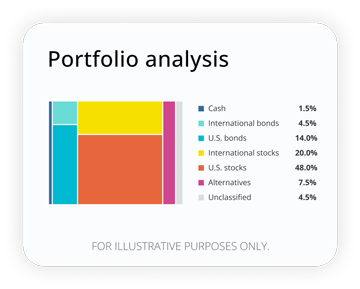
How well are your investments performing?
Analyze your portfolio in minutes and receive a target allocation for your goals.
1 Psychology Today, “Fresh Starts: The Psychology Behind New Year Motivation,” December 2024.
2 Yale Center for Customer Insights, “The Power of Intrinsic Motivation: Turning New Year’s Resolutions into Results,” January 2025.
3 WorkWell NYC, “Living Purposefully: Setting SMART Goals,” accessed December 2025.
4 Kelley Blue Book, “Here’s How Much the Average Car Repair Now Costs,” March 2025.
5 Zillow, “US rental market: What is the average rent in US?” accessed December 2025.
RO5071609-1225
 Get The Currency newsletter



The Currency editors
Staff contributors
The CurrencyTM writers and editors cover the latest financial news and insights shaping how we live, work, and play. The team provides accurate, data-driven, and timely content aimed at empowering financial freedom for all.
The content contained in this blog post is intended for general informational purposes only and is not meant to constitute legal, tax, accounting or investment advice. You should consult a qualified legal or tax professional regarding your specific situation. No part of this blog, nor the links contained therein is a solicitation or offer to sell securities. Compensation for freelance contributions not to exceed $1,250. Third-party data is obtained from sources believed to be reliable; however, Empower cannot guarantee the accuracy, timeliness, completeness or fitness of this data for any particular purpose. Third-party links are provided solely as a convenience and do not imply an affiliation, endorsement or approval by Empower of the contents on such third-party websites. This article is based on current events, research, and developments at the time of publication, which may change over time.
Certain sections of this blog may contain forward-looking statements that are based on our reasonable expectations, estimates, projections and assumptions. Past performance is not a guarantee of future return, nor is it indicative of future performance. Investing involves risk. The value of your investment will fluctuate and you may lose money.
Certified Financial Planner Board of Standards Inc. (CFP Board) owns the certification marks CFP®, CERTIFIED FINANCIAL PLANNER™, CFP® (with plaque design), and CFP® (with flame design) in the U.S., which it authorizes use of by individuals who successfully complete CFP Board's initial and ongoing certification requirements.