

Job market cools after modest August gains
Job market cools after modest August gains
The U.S. added 22,000 jobs in August, while unemployment ticked slightly upward at 4.3%
Job market cools after modest August gains
The U.S. added 22,000 jobs in August, while unemployment ticked slightly upward at 4.3%

09.10.2025
Key takeaways:
- U.S. payrolls grew by 22,000 in August
- Unemployment rate held nearly unchanged at 4.3%
- A preliminary annual benchmark indicates roughly 911,000 fewer jobs in the 12 months through March 2025 than first reported
The U.S. added 22,000 jobs in August, with unemployment at 4.3%, according to the Bureau of Labor Statistics. The slower pace of hiring underscores the importance of emergency savings, as many households report having limited financial buffers.
The latest employment snapshot reflects a cooler labor market. August brought 22,000 new nonfarm jobs, a softer pace than earlier this year, while unemployment rose 0.1% to 4.3% month-over-month, according to the Bureau of Labor Statistics.1
The labor force participation rate showed little change last month at 62.3% — meaning just over 6 in 10 people ages 16 and older were either working or actively looking for work.2 The jobs report also showed that the employment-population ratio held at 59.6%, reflecting the share of the overall population that is currently employed.
Read more: Leading the way: Female entrepreneurship is up 69%
Revisions deepen the slowdown narrative
Monthly revisions recast the summer’s strength. June was revised down to a small job loss of 13,000, instead of the 147,000 new jobs previously reported, and July was revised up modestly from the 73,000 originally reported but still subdued at 79,000. The bigger reset came with the preliminary annual benchmark, which — based on unemployment-insurance tax records — suggests the economy added about 911,000 fewer jobs over the 12 months ending March 2025 than initially estimated.4 That lowers the average monthly pace over that period and underscores a labor market that has been cooler beneath the surface.5
Healthcare and social assistance add jobs
Healthcare carried the bulk of job growth, with 31,000 jobs added, below the industry’s 42,000 average monthly gain over the past year.6 Social assistance rose by 16,000, reflecting continued growth in individual and family services.7
Federal government employment declined by 15,000, while construction, retail trade, transportation and warehousing, and financial activities, showed minimal change.8
Average hourly earnings for employees on private nonfarm payrolls rose by 10 cents, or 0.3%, to $36.53; over the past year, wages rose 3.7%.9
Read more: Flex appeal — how flexibility benefits workers and employers
Why emergency savings matter
Periods of slower hiring underscore the need for financial preparedness. Empower research found that 42% of Americans say their current savings wouldn’t help if they lost their job today. At the same time, 31% of respondents reported adding to their savings in the past month, and 75% agreed that having an emergency fund is essential to financial security.
Median balances remain low, according to Empower data. A typical household has $500 in emergency savings, with Baby Boomers saving around $2,000, Gen X $500, Millennials $300, and Gen Z $400. In addition, 29% said they would be unable to handle an unexpected expense of over $400.
Other Empower findingsshow that 71% of respondents said a $5,000 windfall would improve their financial happiness for at least six months. Taken together, the data show how even relatively modest financial cushions can provide stability in times of slower job growth.
What to watch next
- Real earnings data on Sept. 11 will show whether wage growth is keeping pace with inflation.
- September jobs data, due Oct. 3, will test whether August’s slowdown is a one-month dip or part of a longer trend.
Data details at a glance
- Payrolls: +22,000 (August)
- Unemployment rate: 4.3%
- Wages: +0.3% month over month; +3.7% year over year
- Revisions: June –13,000; July +79,000
- Preliminary benchmark (year through March 2025): –911,000 jobs
Source: Bureau of Labor Statistics Employment Situation Summary
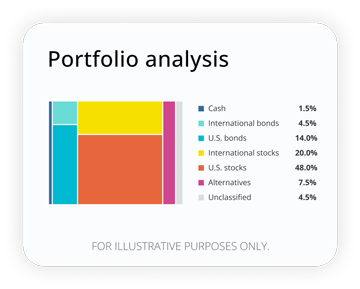
How well are your investments performing?
Analyze your portfolio in minutes and receive a target allocation for your goals.
1 Bureau of Labor Statistics, “Employment Situation Summary,” Sept. 5, 2025.
2 Ibid
3 Ibid
4 Bureau of Labor Statistics, “Current Employment Statistics Preliminary Benchmark (National) Summary,” Sept. 9, 2025.
5 CBS News, “Employers added 22,000 jobs in August, falling short of forecasts, as labor market cool,” Sept. 5, 2025.
6 Bureau of Labor Statistics, “Employment Situation Summary,” Sept. 5, 2025.
7 Ibid
8 Ibid
9 Ibid
RO4812503-0925
 Get The Currency newsletter



The Currency editors
Staff contributors
The CurrencyTM writers and editors cover the latest financial news and insights shaping how we live, work, and play. The team provides accurate, data-driven, and timely content aimed at empowering financial freedom for all.
The content contained in this blog post is intended for general informational purposes only and is not meant to constitute legal, tax, accounting or investment advice. You should consult a qualified legal or tax professional regarding your specific situation. No part of this blog, nor the links contained therein is a solicitation or offer to sell securities. Compensation for freelance contributions not to exceed $1,250. Third-party data is obtained from sources believed to be reliable; however, Empower cannot guarantee the accuracy, timeliness, completeness or fitness of this data for any particular purpose. Third-party links are provided solely as a convenience and do not imply an affiliation, endorsement or approval by Empower of the contents on such third-party websites. This article is based on current events, research, and developments at the time of publication, which may change over time.
Certain sections of this blog may contain forward-looking statements that are based on our reasonable expectations, estimates, projections and assumptions. Past performance is not a guarantee of future return, nor is it indicative of future performance. Investing involves risk. The value of your investment will fluctuate and you may lose money.
Certified Financial Planner Board of Standards Inc. (CFP Board) owns the certification marks CFP®, CERTIFIED FINANCIAL PLANNER™, CFP® (with plaque design), and CFP® (with flame design) in the U.S., which it authorizes use of by individuals who successfully complete CFP Board's initial and ongoing certification requirements.