

Leading the way: Female entrepreneurship is up 69%
Leading the way: Female entrepreneurship is up 69%
Female-founded businesses have grown exponentially since 2019, while overall new business formation jumped 37% year over year in January
Leading the way: Female entrepreneurship is up 69%
Female-founded businesses have grown exponentially since 2019, while overall new business formation jumped 37% year over year in January

02.26.2026
Key takeaways
- Women founders make up 49% of all new businesses per the latest data, marking the highest rate in the past five years.
- In January 2026, total new business applications were up near 37% year over year, the largest increase since April 2021.
- Women now make up nearly half of angel investors, and 46% of businesses seeking angel capital are women-owned.
New business data reflects a growing desire among women to build wealth on their own terms through entrepreneurship.
Women are in their entrepreneur era, becoming their own boss at unprecedented rates. The most recent data shows female entrepreneurs are responsible for 49% of all new businesses — a 69% increase from 2019 to 2024.1 The surge is part of a broader boom in new business formation. According to the U.S. Census Bureau, new business applications were up nearly 37% in January 2026 compared to January 2025, suggesting strong momentum heading into the new year. January marked the largest year-over-year increase since April 2021, when volumes rose almost 112%.2
Empower research finds that nearly half of women (46%) cite financial independence as core to happiness, and 68% highlight living debt‑free — values that align closely with the reasons many women are turning to entrepreneurship as a path to greater control over their financial futures.
From side hustle to full-time founder
Not every trend is on the rise. As more employers push for return-to-office policies, side hustles are slowing In 2024, only 35% of new businesses were side hustles — down from 45% in 2023.3 For many aspiring entrepreneurs, being physically present at the office has limited the time and flexibility to build businesses on the side. Instead, more are making the leap into full-time entrepreneurship.
Women funding women
Women are giving new meaning to the phrase “a girl’s girl.” Across industries, they’re funding, mentoring, and championing one another. Women-owned businesses account for 46% of firms seeking angel capital and more women are stepping in to meet that demand: Nearly half of angel investors are now women, signaling a powerful shift in financial influence.4 That influence is only expected to grow, with women set to inherit $34 trillion in assets through the Great Wealth Transfer.
Read more: The $34 trillion shift: How women are reshaping wealth and legacy
Sisterhood as strategy
Still, access to capital — and knowledge — is not always equitable. Anu Duggal, founding partner of the Female Founders Fund, reported she once took 700 meetings to secure $5.85 million in funding — a stark example of the barriers still common even for women launching VC firms.5
Meanwhile, women are less likely than men to have workplace sponsors at key career junctures, according to a new McKinsey survey. Some 31% of women with entry-level roles had sponsors in 2025 compared with 45% of men; for VP and above it was 66% vs. 72%, respectively. Support was more balanced for mid-career roles.6
Read more: How mentorship can recharge careers and finances
Innovators like Daniella Pierson are creating alternative solutions. Her platform CHASM offers female entrepreneurs free access to pitch decks, legal workshops, and even grants — funded through an invite-only membership model — to bridge the gaps typically closed off to women without legacy networks.7 These initiatives are critical steps in making entrepreneurship accessible and inclusive, and big names are following suit. Last year, the Tory Burch Foundation pledged $1 billion in support of women entrepreneurs by 2030.8 The move comes at a time when only 4.2% of women-owned businesses in the U.S. surpass $1 million in annual revenue; among Tory Burch Foundation fellows, that number rises to 42%.9
Breaking barriers in the workplace
The entrepreneurial rise isn’t happening in isolation. Women are making parallel strides in traditional workplaces, gaining ground in leadership and professional roles. The number of women running Fortune 500 companies hit a new high in 2025, with 55 women CEOs leading the nation's biggest firms by revenue.10 According to data from the Pew Research Center, 46% of all U.S. managers were women in 2023, up from 29% in 1980.11 Women are now filling 38% of majority-male professional jobs — such as computer scientists, physicians, and lawyers — up from 23% in 1980.
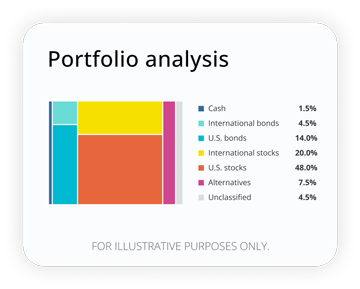
How well are your investments performing?
Analyze your portfolio in minutes and receive a target allocation for your goals.
1 Gusto, “2025 New Business Formation Report: Women are on Par with Men as Side Hustles & Remote Work Decline,” April 2025.
2 U.S. Census Bureau, “Business formation statistics,” February 2026.
3 Gusto, “2025 New Business Formation Report: Women are on Par with Men as Side Hustles & Remote Work Decline,” April 2025.
4 Business Insider, “Shaking up Silicon Valley,” April 2025.
5 Fortune, “It took Anu Duggal 700 meetings to launch Female Founders Fund. Now she’s investing in women with a ‘chip on their shoulder’ to deliver outsized returns,” March 2025.
6 University of Colorado, “Female entrepreneurs face hidden barriers in mentorship networks,” February 2025.
7 Newsweek, “Could Female Entrepreneurship Close the Gender Gap? Daniella Pierson Thinks So,” July 2025.
8 Forbes, “The $1 Billion Promise: Tory Burch’s Bold Bet On Women Entrepreneurs,” May 2025.
9 Forbes, “The $1 Billion Promise: Tory Burch’s Bold Bet On Women Entrepreneurs,” May 2025.
10 Axios, “A record number of women are Fortune 500 CEOs,” June 2025.
11 Pew Research Center, “Women are a rising share of U.S. managers and professionals,” July 2025.
RO5247698-0226
 Get The Currency newsletter



The Currency editors
Staff contributors
The CurrencyTM writers and editors cover the latest financial news and insights shaping how we live, work, and play. The team provides accurate, data-driven, and timely content aimed at empowering financial freedom for all.
The content contained in this blog post is intended for general informational purposes only and is not meant to constitute legal, tax, accounting or investment advice. You should consult a qualified legal or tax professional regarding your specific situation. No part of this blog, nor the links contained therein is a solicitation or offer to sell securities. Compensation for freelance contributions not to exceed $1,250. Third-party data is obtained from sources believed to be reliable; however, Empower cannot guarantee the accuracy, timeliness, completeness or fitness of this data for any particular purpose. Third-party links are provided solely as a convenience and do not imply an affiliation, endorsement or approval by Empower of the contents on such third-party websites. This article is based on current events, research, and developments at the time of publication, which may change over time.
Certain sections of this blog may contain forward-looking statements that are based on our reasonable expectations, estimates, projections and assumptions. Past performance is not a guarantee of future return, nor is it indicative of future performance. Investing involves risk. The value of your investment will fluctuate and you may lose money.
Certified Financial Planner Board of Standards Inc. (CFP Board) owns the certification marks CFP®, CERTIFIED FINANCIAL PLANNER™, CFP® (with plaque design), and CFP® (with flame design) in the U.S., which it authorizes use of by individuals who successfully complete CFP Board's initial and ongoing certification requirements.