

What is lifestyle creep, and how can you control it?
What is lifestyle creep, and how can you control it?
On the road to financial happiness, keep savings in mind as much as spending
What is lifestyle creep, and how can you control it?
On the road to financial happiness, keep savings in mind as much as spending
12.03.2025
Key takeaways
Lifestyle creep is a gradual increase in spending as a person’s income rises
Emotions and social factors can contribute to spending inflation
Revisiting a budget and goal-based planning can balance out lifestyle creep
As income fluctuates, it can be tempting to put extra funds toward spending. Lifestyle creep shows how staying in control can benefit long-term money goals.
Lifestyle creep (also known as lifestyle inflation or spending creep) happens when people spend more as they make more income. Americans saw their household wealth jump 4.4% from the start of 2025 to the halfway point, according to Empower Personal DashboardTM data.
It can feel good when people see financial growth in terms of their career choices, investing strategies, and day-to-day shopping lists. A raise at work could feel like an opportunity to spend on treats, though that could also result in more expenses that aren’t immediately felt.
Continuing to keep an eye on budgets and savings can help balance happiness and practicality — while still monitoring lifestyle creep.
Understanding lifestyle creep
Overall inflation in America — the rate at which the general price standard of goods and services increases over time — during the past several years has shifted the way that Americans see their own purchasing power, or how much their money can buy. The most recent government data available for the Consumer Price Index showed that prices rose 3% as a whole, comparing September 2025 to the same time last year.
The American consumer is still spending strong as prices rise into the end of the year, as retail sales in September marked a 0.2% month-over-month gain ahead of the holiday season.1 Projected trends between Nov. 1 and Dec. 31 put shoppers on track to make a $1 trillion holiday sprint.
The popularity of AI-powered chatbots has brought even more convenience (and a conversational experience) to spending. During the holiday season, chatbots are expected to see a 520% jump in usage around shopping compared to last year. Making spending more frictionless — such as being able to ask questions, select items, and possibly transact within the chat experience — could contribute to lifestyle creep.
Read more: Holiday shopping goes high tech
With lifestyle creep, the behavioral concept of anchoring comes into play, in which people use assumptions (like their previous experience or estimates of costs) to make decisions — rather than hard evidence like dollar amounts or supported facts. A complicating factor is that people may not know they’re doing it. A trip to the store could result in several $5 items adding up to $100, though the shopper may only consider the per-item price when deciding whether they got a good deal.
Not giving enough thought to the true cost of goods can rack up thousands in impulse purchases, which total around $2,000 a year on average.
Read more: Money comes, money goes: Are we in an age of “Fast Spending”?
There’s also the satisfaction factor involved when people get a positive life change like work bonus or windfall. The process of being happy with a change, having that happiness “wear off,” and then wanting to seek more happiness is called hedonic adaptation.2 Simply, people get used to good things and do even more to get back to that level of joy.
Empower research found that nearly three-quarters of people (74%) think having more money would solve most of their problems. However, a one-time bump doesn’t necessarily last forever: 71% say a windfall of $5,000 would increase their financial happiness by at least six months.
Common signs you’re experiencing lifestyle creep
Deciding that your changing lifestyle is adding up takes more than just a feeling. Americans use an average of four hours a day thinking about money, according to Empower findings, and ensuring you’re using the right data and insights is important to understanding the full financial picture.
Gathering accurate spending numbers is a good place to start, and free credit reports, financial tools that track how money moves in and out of accounts, and online financial accounts can provide insight. Lifestyle creep can appear on statements as larger transaction amounts from specific retailers (like restaurants or subscription services), higher credit card bills, or lower amounts going into savings or investing accounts.
Taking stock of items you own is another way to visually and physically illustrate if purchases are accumulating too quickly, or if there’s overlap in how they’re used. Take daily habits into account as well: Three warm down jackets may not stand out as lifestyle creep for a New Yorker who commutes outdoors in the winter, but they could raise a flag for someone in a warmer location.
Finding “the next cool thing” doesn’t always translate into high-priced luxury goods or experiences; discretionary categories like clothes and tech can easily become part of increased spending. Shoppers have been putting more of their 2025 dollars toward off-price retailers like Walmart and T.J. Maxx, whose parent companies have reported strong sales and earnings recently.3 In its biggest sales jump since 2021, technology chain Best Buy saw comparable sales pop 2.7% for the quarter ending Nov. 1, as people have been replacing devices bought during the pandemic such as laptops, gaming consoles, and smartphones.4
Managing lifestyle inflation
Beyond tracking spending, it’s also important to monitor how much money is being saved across accounts that align with short- and long-term financial goals, whether those are a down payment on a home, an emergency fund, or retirement savings. Getting a sense of the average 401(k) balance and average net worth by age can provide context.
How lifestyle creep affects savings and investments
Allocating additional money you may receive to savings and investment accounts can help reposition lifestyle creep as a way to potentially grow net worth.
Empower’s Investment Return Calculator can map out scenarios that show how dollars could grow if given time and the power of compounding. The average work bonus given to U.S. workers in December 2024 was $2,503.5 Let’s see how that could affect savings if put into an investment account on its own with no additional contributions:
Investment period: 10 years
Contributions: Only a single contribution of $2,503
Total earnings: $5,404, assuming an 8% rate of return
People can also see how adding the same amount each year (like putting an annual bonus aside instead of spending it) could build savings:
Investment period: 10 years
Contributions: The initial $2,503 plus annual contributions of the same amount
Total earnings: $459,156, assuming an 8% rate of return
With wages showing 3.8% growth over the past year as of September, there’s also a chance that even allotting smaller amounts of take-home pay toward saving could still leave some of the increase for more discretionary spending.6 To fend off lifestyle creep, as spending goes up, people can make sure they’re still saving.
Turn lifestyle creep into a financial boost
Putting extra funds into tax-advantaged accounts like health savings accounts or a workplace 401(k) plan could further unlock benefits that can reduce a person’s overall taxable income.
Setting up automatic or recurring withdrawals can bring a more organized approach to allocating money since the process happens behind the scenes without hitting a checking account. Retirement plans like those provided by an employer may also offer ways for workers to allocate some or all of a windfall, such as a work bonus or percentage increase in base pay. Revisiting the 401(k) contribution rate as income changes allows people to regularly re-evaluate.
Consulting a financial professional could also help investors adjust their savings and investing goals to accommodate new spending. Understanding how lifestyle creep appears in daily life can help harness that extra money now into moves that can pay off for the long term.
Frequently asked questions about lifestyle creep
What is lifestyle creep?
Lifestyle creep occurs when a person’s spending rises as their income increases, often without intentional planning. It can show up in higher everyday expenses, discretionary purchases, or lower contributions to savings and investing accounts.
What typically causes lifestyle creep?
Lifestyle creep can stem from emotional responses to higher income, everyday convenience purchases, or behavioral factors such as anchoring. Social influences and increased exposure to new products and technology can also shape spending choices.
How can someone tell if they’re experiencing lifestyle creep?
Signs may include higher credit card balances, larger or more frequent discretionary purchases, overlapping items at home, or reduced savings contributions. Spending data, account statements, and financial-tracking tools can help surface these patterns.
Does inflation contribute to lifestyle creep?
Inflation can influence lifestyle creep by shifting how people perceive purchasing power. Rising prices may normalize higher spending, making it harder to distinguish necessary cost changes from discretionary increases.
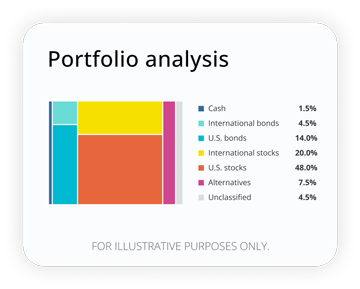
How well are your investments performing?
Analyze your portfolio in minutes and receive a target allocation for your goals.
1 CNN Business, “Here’s what the latest inflation and spending data reveals about the US economy,” November 2025.
2 The Decision Lab, “Hedonic Treadmill,” accessed November 2025.
3 The Wall Street Journal, “Americans Are on a Year-End Shopping Spree,” November 2025.
4 The Wall Street Journal, “Best Buy Raises Outlook as Consumers Spend on Tech Upgrades,” November 2025.
5 CNBC, “Year-end bonuses rise — but fewer workers are getting them, report finds,” January 2025.
6 U.S. Bureau of Labor Statistics, "Employment Situation Summary," accessed November 2025.
RO5028994-1125
EXAMPLE ABOVE IS FOR ILLUSTRATIVE PURPOSES ONLY. This hypothetical illustration does not reflect a particular investment and is not a guarantee of future results. It assumes an 8% annual rate of return, reinvestment of earnings, and no withdrawals for a 10-year period. Rates of return may vary. The illustration does not reflect fees, which could change the outcomes provided.
 Get The Currency newsletter


The Currency editors
Staff contributors
The CurrencyTM writers and editors cover the latest financial news and insights shaping how we live, work, and play. The team provides accurate, data-driven, and timely content aimed at empowering financial freedom for all.
The content contained in this blog post is intended for general informational purposes only and is not meant to constitute legal, tax, accounting or investment advice. You should consult a qualified legal or tax professional regarding your specific situation. No part of this blog, nor the links contained therein is a solicitation or offer to sell securities. Compensation for freelance contributions not to exceed $1,250. Third-party data is obtained from sources believed to be reliable; however, Empower cannot guarantee the accuracy, timeliness, completeness or fitness of this data for any particular purpose. Third-party links are provided solely as a convenience and do not imply an affiliation, endorsement or approval by Empower of the contents on such third-party websites. This article is based on current events, research, and developments at the time of publication, which may change over time.
Certain sections of this blog may contain forward-looking statements that are based on our reasonable expectations, estimates, projections and assumptions. Past performance is not a guarantee of future return, nor is it indicative of future performance. Investing involves risk. The value of your investment will fluctuate and you may lose money.
Certified Financial Planner Board of Standards Inc. (CFP Board) owns the certification marks CFP®, CERTIFIED FINANCIAL PLANNER™, CFP® (with plaque design), and CFP® (with flame design) in the U.S., which it authorizes use of by individuals who successfully complete CFP Board's initial and ongoing certification requirements.