

🎆 The savings spark

06.25.2026
As the nation prepares to celebrate 250 years of independence, many Americans are focused on their own financial freedom. In fact, 91% of people say they're prioritizing financial health — and tapping into overlooked money opportunities may be just the thing to light the savings spark.
One place to start? Workplace benefits. Retirement contributions are the top-ranked benefit for 46% of employees, yet some miss the chance for an extra boost. Over half of employer plans offer a 5% 401(k) match — and capturing the full amount can add up over time. Consider this example: A worker earning $65,000 who saves 5% annually ($3,250) and receives their full employer match could potentially accumulate $1.08 million over 40 years, assuming 6% growth.
Wondering about other missed savings sources? Check out these 10 money moves to help boost financial freedom.
— The Editors

👕 Secondhand stars: Resale shopping is moving from niche trend to star status as the Consumer Price Index recently added used apparel to the closely watched inflation gauge. Thrifting continues to reshape spending behaviors as 52% of Gen Z and Millennials try to sell about half the items in their closet — propelling the secondhand apparel market toward an expected $78.8 billion by 2030.
🫡 Savings salute: Looking to give your money more freedom to grow? Americans hold an average $39,262 in cash savings according to Empower Personal DashboardTM data. The right home for those dollars could matter: A high-yield savings account can offer easy access for short-term goals, while a CD can help lock in potential returns for future plans. See the key benefits of each on The CurrencyTM.
🔔 Declare independence: A job change can be an opportunity to take stock of retirement savings. Whether you leave your 401(k) in a former employer’s plan, roll it into a new workplace plan, or move it into an IRA, understanding your options can help keep long-term goals on track. Learn what to consider before making your next move.
🗽 Passing the torch: Older Americans have an estimated $110 trillion* in wealth — and rather than waiting to transfer it as inheritance, some are choosing to share their money now to help children and grandkids buy homes, pay off debt, and gain financial footing. While there’s no one-size-fits-all strategy, creating a solid estate plan can help ensure assets are passed along according to your wishes.

Forging a path
About 30% of U.S. households consist of just one person — and with 59% of Gen Zers set to move this year, that number could grow.
Moving into a place of your own is a milestone on the road to financial freedom, but managing solo living expenses can be overwhelming. An “order of operations” strategy can help prioritize where dollars should go first for a strong foundation. Unsure where to start? Try these 6 ways to balance saving, debt payoff, and investing goals.

Land of opportunity
Working your way through college is taking on new meaning thanks to changes in federal student financial aid. Workforce Pell Grants will expand by hundreds of millions of dollars* on July 20 to include short-term, non-degree job training programs in high-demand fields like healthcare, childcare, and auto repair. The Congressional Budget Office projects about 100,000 students will be eligible for payouts averaging about $2,200 each to help with courses leading to occupational licenses and certifications.
Planning for future education costs? Americans hold about 17.7 million 529 savings and prepaid tuition plan accounts totaling roughly $602.9 billion in assets. Learn how to choose a 529 plan and why saving early and consistently can be key.

Goals in play
The 2026 FIFA World Cup is underway in the U.S., and the tournament is expected to generate about $8.1 billion* in consumer spending across North America.
With 48 teams and 104 matches through July 19, fans from around the globe are expected to drive demand for travel, dining, and entertainment. Some luxury hotels are offering exclusive finals weekend packages as high as $1 million, while restaurants* in host cities are rolling out special deals, promotions, and giveaways.
The global sports tourism market is projected to reach $1.3 trillion by 2032, but attending events can put a dent in wallets. With the price of admission up 1.3%* year over year in the U.S., a thoughtful budget and sinking fund can help keep financial game plans on track.

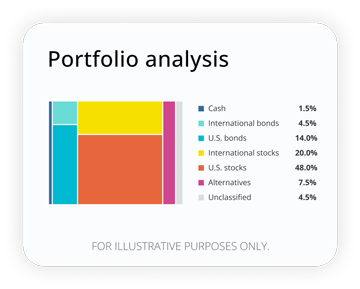
How well are your investments performing?
Analyze your portfolio in minutes and receive a target allocation for your goals.
*Third-party data is obtained from sources believed to be reliable; however, Empower cannot guarantee the accuracy, timeliness, completeness, or fitness of this data for any particular purpose. Third-party links are provided solely as a convenience and do not imply an affiliation, endorsement, responsibility, or approval by Empower of the contents on such third-party websites.
RO5584104-0626 WF6510700-0626
 Get The Currency newsletter



The Currency editors
Staff contributors
The CurrencyTM writers and editors cover the latest financial news and insights shaping how we live, work, and play. The team provides accurate, data-driven, and timely content aimed at empowering financial freedom for all.
The content contained in this blog post is intended for general informational purposes only and is not meant to constitute legal, tax, accounting or investment advice. You should consult a qualified legal or tax professional regarding your specific situation. No part of this blog, nor the links contained therein is a solicitation or offer to sell securities. Compensation for freelance contributions not to exceed $1,250. Third-party data is obtained from sources believed to be reliable; however, Empower cannot guarantee the accuracy, timeliness, completeness or fitness of this data for any particular purpose. Third-party links are provided solely as a convenience and do not imply an affiliation, endorsement or approval by Empower of the contents on such third-party websites. This article is based on current events, research, and developments at the time of publication, which may change over time.
Certain sections of this blog may contain forward-looking statements that are based on our reasonable expectations, estimates, projections and assumptions. Past performance is not a guarantee of future return, nor is it indicative of future performance. Investing involves risk. The value of your investment will fluctuate and you may lose money.
Certified Financial Planner Board of Standards Inc. (CFP Board) owns the certification marks CFP®, CERTIFIED FINANCIAL PLANNER™, CFP® (with plaque design), and CFP® (with flame design) in the U.S., which it authorizes use of by individuals who successfully complete CFP Board's initial and ongoing certification requirements.