

How do I create a solid estate plan? Get a Sense Check
How do I create a solid estate plan? Get a Sense Check
In this edition of Sense Check, Empower financial professional Matt Carey talks through the key elements of an estate plan, including must-have documents, when trusts make sense, tax-smart strategies to consider, and planning pitfalls to avoid.
How do I create a solid estate plan? Get a Sense Check
In this edition of Sense Check, Empower financial professional Matt Carey talks through the key elements of an estate plan, including must-have documents, when trusts make sense, tax-smart strategies to consider, and planning pitfalls to avoid.

09.30.2025

Listen
·How do I create a solid estate plan? Get a Sense Check
Key takeaways:
A will, financial power of attorney, and medical directive are essential estate planning documents
Trusts can control timing for distributing assets and help avoid probate
Titles and beneficiary designations must match the plan or assets may detour to probate
Estate tax thresholds are high, but can vary at the state level
Be sure to periodically review plans, every five years or more frequently if you move or have a life-changing event, and store documentation in a safe place
A solid estate plan incorporates essential documents that name decision-makers for incapacity and clearly directs assets, and an optional trust can stage inheritances. To help streamline execution, it’s important to make sure titles and beneficiaries match your plan. State rules typically drive the tax math, so it can be worthwhile to revisit your plan regularly and after big life changes.
An estate plan is designed to ensure your assets go exactly where you want them to after you pass away. It’s also where you outline wishes as far as guardianship of minor children, as well as guardianship of yourself in the event you become incapacitated. The term legacy plan is also used, but a legacy plan is broader and goes beyond distribution of assets. It’s a more holistic approach that also incorporates the type of values and family history you want passed on to the next generation.
Essential documents
There are some key documents that are considered essential to an estate plan:
Last will and testament. Your last will and testament outlines what you want to happen to your assets after you pass away, and names an executor — the person who will carry out your will. Your will can also include your wishes for your funeral and final arrangements. Even if you have beneficiary designations, you still need to have a will.
Durable power of attorney (POA) (for finances). This can be particularly important for an unmarried person, since their assets may be titled in their name alone. A durable POA designates a person to act as your agent managing financial affairs on your behalf, including in the event you become incapacitated. Even for a married couple, a durable POA is essential, since without it a spouse does not have the legal authority to manage an IRA, a 401(k), or other retirement account. The durable POA becomes void after death, and then the will kicks in.
Medical directive. This might consist of a Healthcare or Medical POA, which legally designates a person to act as your agent to make medical decisions on your behalf should you become incapacitated. Or it may be a living will, which outlines your wishes for medical treatment should you no longer be able to make those decisions.
Wills vs trusts
Trusts add control over timing for when assets are distributed and can include conditions for beneficiaries — for example if you have children who are minors, or if you don’t want beneficiaries to receive assets in one lump sum. A trust does not replace the three or four essential documents — it’s an optional document for people of all incomes, that’s situational and more important for some than others. A trust helps avoid probate, which can be a lengthy court process.
The most common type is a revocable trust, sometimes called a living trust or a revocable living trust, which is flexible and you maintain control over during your lifetime. A revocable trust typically does not offer tax benefits and has an up-front cost to establish. Irrevocable trusts are less common and far less flexible. Once you move assets to this type of trust, they no longer belong to you. However, they do offer a shield of protection against estate taxes and creditors.
What’s the best strategy for passing on assets?
How to pass the assets really depends on who the recipients are and what type of control you want to have. There’s no single answer. As a rule of thumb, it’s good to have a beneficiary in cases where you can, since a beneficiary designation can avoid probate.
For real estate, titling options exist in some states. Many states and Washington, D.C. allow you to do what’s called a transfer on death deed or beneficiary deed that enables the beneficiary you name to avoid probate.1 For a home in a revocable trust with a mortgage, lenders may allow retitling but that can vary. In some states you can do a similar thing with vehicles through the local motor vehicles department.
Incorporating charitable giving into your estate plan
For some, charitable giving is an important aspect of their estate plan. As a practical first step, the first thing people should do is an inventory to assess what they have and where they want it to go. Then philanthropic wishes can be included in your legal documents — or you can designate a charity as a retirement account beneficiary so assets go directly to them.
There’s also a tax-efficiency angle. Typically, beneficiaries who inherit retirement accounts are taxed on that income (unless it’s a Roth IRA). However, qualified charitable organizations that are beneficiaries are not taxed. For example, if you want to leave $25,000 to a qualified charity, if you designate them as a retirement account beneficiary for that amount, then they will receive the full amount.
Incorporating digital assets into your plan
Your essential documents should include language for the executor to have authority over digital assets too, but it’s important to also set up access at the platform level. Be sure to review service providers you use to see if there’s a need to establish a successor on your account in addition to having the legal documents. This setup should include representatives that would need access to your digital estate — whether it’s your executor, a trustee, or a financial agent. Two-factor authentication for digital accounts adds a practical hurdle — so be sure to plan for that as well by incorporating that access information in your documents and keeping them in a safe place.
Strategies for estate and inheritance tax efficiency
This is less of a consideration at the federal level. In 2025, the first $13.99 million of an estate for individuals is exempt from federal taxes ($27.98 million per couple filing jointly) — and that threshold increases to $15 million per individual and $30 million per couple in 2026 and will be indexed for inflation going forward.2
Things can be a bit different at the state level, so it’s important to be aware of your state’s requirements. Some states do have an estate tax, and the rates and exemptions vary. Depending on the size of the estate, a “first death” strategy can be a common approach, whereby a trust is created when the first spouse and the state’s maximum exemption amount is put in the trust to take advantage of the full exemption for couples. There are certain states that require only filing a form after the first death, and not a trust, to get the exemption.
A handful of states also have inheritance tax, which can be as much as 16%.3 In some cases, the exemption also differs depending on someone’s relationship (child, sibling, friend, etc.) to the deceased.
Avoiding common pitfalls
Some of the biggest issues can show up after documents are drafted initially. For example, it’s critical to follow through with updating account titling and beneficiary designations. It’s also important when beneficiaries are minors that the trust be named, and not the minors themselves. Title and beneficiary gaps can send assets to probate.
Once you have your documents completed, be sure to communicate with the key people involved to let them know the types of accounts and assets you have, where your documents are kept, and how to access them.
FAQs about creating a solid estate plan
How frequently should I revisit my estate plan?
It’s a good idea to review every five years, or more frequently if you have a life-changing event like divorce or move to a different state. And it’s likely you’ll have some updates every 10 years — whether because your plans have evolved or there are regulatory changes. And if you move, plan to refresh those documents since there may be changes based on state and local rules.
Where should I keep important documents?
For storage, a fireproof safe is the most common location, but some may use a safe deposit box (which may have procedures associated with them). For health directives, it can be a good idea to upload those to your patient portal. In some cases, copies of documents can be used.
How do beneficiary designations on retirement accounts work with my will or trust?
Beneficiary designations for retirement accounts pass outside the will. If beneficiaries are minors, consider naming the trust as contingent beneficiary when appropriate to avoid probate.
How do I leave my house to heirs?
Options may include titling the home to your revocable trust, using a transfer-on-death deed (where permitted), or coordinating sale instructions in the trust. If there’s a mortgage, confirm lender requirements before retitling.
What happens if I die without a will (intestate)?
Your state’s intestacy laws decide who inherits, and the court process can be slower and more public. A simple will (paired with good beneficiary designations, and a trust in some cases) keeps you in control of your choices.
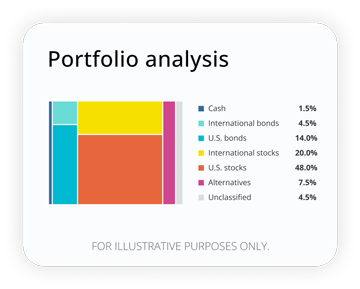
How well are your investments performing?
Analyze your portfolio in minutes and receive a target allocation for your goals.
1 Legal Zoom, “What Is a Transfer on Death Deed and How Does It Work?” January 31, 2025.
2 Congress.gov, “The Estate and Gift Tax: An Overview,” July 14, 2025.
3 ThinkAdvisor, “Here Are the States With Estate or Inheritance Taxes: 2025,” September 22, 2025.
RO4856533-0925
 Get The Currency newsletter



Matt Carey, CFP®
Contributor
Matt Carey, J.D., is a Senior Estate Planning Strategist at Empower. A CERTIFIED FINANCIAL PLANNER™ professional, he analyzes current estate plans, wills, and trusts in order to help clients identify inefficiencies and opportunities.
The content contained in this blog post is intended for general informational purposes only and is not meant to constitute legal, tax, accounting or investment advice. You should consult a qualified legal or tax professional regarding your specific situation. No part of this blog, nor the links contained therein is a solicitation or offer to sell securities. Compensation for freelance contributions not to exceed $1,250. Third-party data is obtained from sources believed to be reliable; however, Empower cannot guarantee the accuracy, timeliness, completeness or fitness of this data for any particular purpose. Third-party links are provided solely as a convenience and do not imply an affiliation, endorsement or approval by Empower of the contents on such third-party websites. This article is based on current events, research, and developments at the time of publication, which may change over time.
Certain sections of this blog may contain forward-looking statements that are based on our reasonable expectations, estimates, projections and assumptions. Past performance is not a guarantee of future return, nor is it indicative of future performance. Investing involves risk. The value of your investment will fluctuate and you may lose money.
Certified Financial Planner Board of Standards Inc. (CFP Board) owns the certification marks CFP®, CERTIFIED FINANCIAL PLANNER™, CFP® (with plaque design), and CFP® (with flame design) in the U.S., which it authorizes use of by individuals who successfully complete CFP Board's initial and ongoing certification requirements.