

How to choose a 529 plan
How to choose a 529 plan
A practical guide for what to look for in fees, tax benefits, investment options, and other features
How to choose a 529 plan
A practical guide for what to look for in fees, tax benefits, investment options, and other features

05.27.2026
Key takeaways
Compare total value — fees, investment quality, and performance can matter as much as state tax breaks.
Choosing a plan with low fees and solid long-term performance potentially can help maximize your education savings over time.
Starting early and contributing consistently can have a bigger impact than choosing the “perfect” plan.
As college costs continue to rise, many families turn to 529 plans to help save for future education expenses. In fact, Americans now hold some 17.7 million of these savings and prepaid plan accounts nationwide, totaling roughly $602.9 billion in assets.1 A 529 plan can offer federal tax-free growth and federal tax-free withdrawals for qualified education expenses, which may make it an attractive education savings tool for many. Keep in mind, state tax treatment may vary.
But choosing a plan can feel overwhelming. Nearly every state sponsors at least one 529 plan, and many plans are open to out-of-state residents, giving families potentially dozens of options to compare.2
Here are a few things to keep in mind when evaluating the choices.
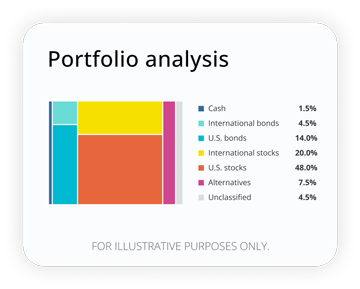
How well are your investments performing?
Analyze your portfolio in minutes and receive a target allocation for your goals.
529 plan state tax breaks and benefits
One of the first things to consider is whether your home state offers a tax deduction or credit for contributions — this can be a big differentiator among plans. Many states provide tax incentives for residents who invest in their in-state plan, which can create immediate savings on top of potential long-term investment growth.3
Families aren’t limited to their state’s plan. Most 529 plans are open to out-of-state residents, meaning you can shop nationally and choose a plan that best fits your needs, regardless of where you live.4
While some states require residents to contribute to their home state’s plan to qualify for tax breaks, others take a more flexible approach. For example, places like Arizona and Pennsylvania allow residents to claim a state tax break on 529 contributions regardless of which state’s plan they use.5 Some states without a state income tax — including Florida and Texas — generally don’t offer tax incentives tied to 529 contributions.
Keep in mind a state tax break for a plan does not automatically make it the best choice for your circumstances. For some savers, especially those in states with no income tax or no 529 tax incentives, an out-of-state plan may offer lower fees or better investment choices. For others, the in-state tax benefit can provide a meaningful boost that outweighs small differences in cost. The key is to review the breakdown of plan details by state to compare both the upfront tax savings and the long-term investment value before deciding where to open an account.6
Read more: 529 plan myths: 6 facts that could change how you save
Pay attention to 529 plan fees
Fees can quietly reduce long-term returns over time, especially for families who are saving over a 10–18-year span — so reviewing enrollment fees, annual maintenance fees and underlying investment expenses can be meaningful steps before opening an account.7
Key fee and expense categories to consider include:8
Management and administrative fees. These are ongoing costs for the management of the plan, including oversight, recordkeeping and customer service. Such fees typically are built into the overall expense structure of the plan and often range between 0.10%-0.70%.9
Underlying investment expenses. These represent costs of the funds within the plan and typically are expressed as expense ratios.
Sales charges. These fees are associated with advisor-sold plans and may be ongoing or charged up front.
Account maintenance fees. Some plans charge account holders flat or periodic fees for maintaining the account, often $10-$25 annually.10 Depending on the plan, these fees are sometimes waived if you meet certain conditions — such as a minimum balance requirement.
Understand the investment strategy
529 plans can offer a range of investment portfolios, so identifying the best option for your circumstances may depend on factors such as risk tolerance, time horizon, and your overall financial goals.
Age-based portfolios automatically shift to more conservative investments as the beneficiary approaches college age, which potentially can simplify decision-making for families.11 Families who prefer a more hands-on approach may opt for static portfolios, which keep the same mix of investments over time rather than adjusting automatically.12
Read more: What to do if you have an overfunded 529 plan
Review performance and long-term results
Past performance isn’t a guarantee of future returns, but it can still be a useful tool when comparing 529 plans. Looking at how a plan’s investment options have performed over time — especially relative to peers with similar risk levels — can help you assess consistency and overall quality.
Consistent, competitive returns over the long term may signal strong investment oversight and disciplined portfolio management. Some plans may deliver higher returns but with greater volatility, while others aim for steadier, more moderate growth. Think about how much risk you’re comfortable taking based on your time horizon and financial goals.
Be sure to make apples-to-apples comparisons as you assess performance. For example, age-based portfolios should be evaluated against other age-based portfolios, while static portfolios should be compared to funds with similar asset allocations.
Independent ratings can be a helpful starting point to narrow the field. Some research firms and education savings sites evaluate plans based on factors such as fees, investment performance, portfolio quality, and oversight, and publish annual plan rankings and comparison tools.13
Consider flexibility and withdrawal rules
529 plans have become more flexible in recent years, and because of the One Big Beautiful Bill Act, funds can now be used to cover an even wider range of education-related expenses.
Along with tuition, qualified 529 expenses generally include fees, books, computers, and some room-and-board costs. Funds can also be used for certain K-12 tuition expenses, registered apprenticeship programs and limited student loan repayment.
There are several options available in the event you overfund a 529 plan:
Unused dollars of up to $35,000 may be rolled into a Roth IRA for the beneficiary, subject to eligibility requirements, earned income requirements and lifetime limits. In general, the 529 account must have been open for at least 15 years, and certain recent contributions may not qualify.
If a child receives scholarships you can withdraw the equivalent amount from the 529 plan without paying the 10% penalty — but you’ll have to pay income tax on the earnings.
If a child chooses another path, and you do not use the funds for qualified expenses, you still have access to the funds, but you’ll likely pay taxes on the income and be subject to a 10% penalty on the earnings, not the contributions.
Be sure to review rules around changing beneficiaries, transferring, funds and potential penalties for nonqualified withdrawals before selecting a plan.14
Read more: What can 529 funds be used for? Get a Sense Check
Start saving early to optimize your choice
Choosing a 529 plan is important, but experts say starting early and contributing consistently may be even more impactful. With potential to benefit from compounded tax-free growth over time, even small recurring contributions can add up over the course of a child’s education savings timeline.
Remember, finding a 529 plan that has reasonable fees, a range of investment options, and features that align with your goals, budget, and timeline can matter more than finding the “perfect” one. The key is understanding the tradeoffs and getting started as soon as you can.
Investments in 529 plans are subject to market risk, including possible loss of principal. Before investing, consider the plan’s investment objectives, risks, charges, and expenses. Consider consulting a financial or tax professional regarding your individual situation before investing.
Past performance is no guarantee of future results.
1 Investment Company Institute, “Release: 529 Plan Program Statistics, December 2025,” March 4, 2026.
2 Forbes, “Compare 529 Plans by State,” May 26, 2025.
3 Saving for College, “Are 529 Contributions Tax Deductible? State-by-State Guide and What It’s Worth,” November 20, 2025.
4 Forbes, “Compare 529 Plans by State,” May 26, 2025.
5 Ibid.
6 Saving for College, “Find a 529 plan in your state,” accessed May 2026.
7 U.S. Securities and Exchange Commission Investor Bulletin, “10 Questions to Consider Before Opening a 529 Account - Investor Bulletin,” January 28, 2026.
8 Saving for College, “Understanding the 4 Key 529 Plan Fees and Expenses,” October 27, 2025.
9 Ibid.
10 Ibid.
11 Forbes, “Compare 529 Plans by State,” May 26, 2025.
12 U.S. Securities and Exchange Commission Investor Bulletin, “An introduction to 529 plans,” January 28, 2026.
13 Saving for College, “Best 529 plans of 2026,” accessed May 2026.
14 U.S. Securities and Exchange Commission Investor Bulletin, “10 Questions to Consider Before Opening a 529 Account - Investor Bulletin,” January 28, 2026.
RO5495870-0526
 Get The Currency newsletter



The Currency editors
Staff contributors
The CurrencyTM writers and editors cover the latest financial news and insights shaping how we live, work, and play. The team provides accurate, data-driven, and timely content aimed at empowering financial freedom for all.
The content contained in this blog post is intended for general informational purposes only and is not meant to constitute legal, tax, accounting or investment advice. You should consult a qualified legal or tax professional regarding your specific situation. No part of this blog, nor the links contained therein is a solicitation or offer to sell securities. Compensation for freelance contributions not to exceed $1,250. Third-party data is obtained from sources believed to be reliable; however, Empower cannot guarantee the accuracy, timeliness, completeness or fitness of this data for any particular purpose. Third-party links are provided solely as a convenience and do not imply an affiliation, endorsement or approval by Empower of the contents on such third-party websites. This article is based on current events, research, and developments at the time of publication, which may change over time.
Certain sections of this blog may contain forward-looking statements that are based on our reasonable expectations, estimates, projections and assumptions. Past performance is not a guarantee of future return, nor is it indicative of future performance. Investing involves risk. The value of your investment will fluctuate and you may lose money.
Certified Financial Planner Board of Standards Inc. (CFP Board) owns the certification marks CFP®, CERTIFIED FINANCIAL PLANNER™, CFP® (with plaque design), and CFP® (with flame design) in the U.S., which it authorizes use of by individuals who successfully complete CFP Board's initial and ongoing certification requirements.