

Family finances: Should kids get an allowance?
Family finances: Should kids get an allowance?
Allowances can help kids learn budgeting, saving, and investing early, with parents weighing weekly amounts, account options, and age-appropriate money lessons
Family finances: Should kids get an allowance?
Allowances can help kids learn budgeting, saving, and investing early, with parents weighing weekly amounts, account options, and age-appropriate money lessons

01.28.2026
Key takeaways
Budgeting strategies like 50-30-20 can help kids decide how to spend their money based on their priorities.
Using 529 plans and Roth IRAs can provide tax savings.
Allowances can build trust and knowledge sharing across kids and their adults.
Today’s youngest American consumers — known as Gen Alpha and born between 2010 and 2024 — now drive $101 billion in direct spending a year.1,2 They may be influencing parents to spend with their family’s cash and cards, though a popular question arises as children get older: Should kids get an allowance? The regular payments are another option to get kids started with money from an early age.
How much should kids get for an allowance?
According to Empower research, adults think a child’s average weekly allowance should be $36.52.
Why should kids get an allowance?
Learn to build a budget — and savings
Giving a child a certain amount of money a week is the traditional vision for an allowance, though monthly or yearly payments can also provide a learning and growth opportunity for kids to learn about money and start their own nest egg.
Regardless of the timing, deciding how to manage the money can get kids involved. The popular 50-30-20 budget framework can come in useful, providing kids guidelines in how they divvy up the categories. They can choose money goals that matter to them, such as charity/giving, personal spending money, and savings/investing.
Financial institutions may tailor services for kids including savings accounts, debit cards, and ways to invest.
Dive into investing and tax savings
A taxable brokerage account can be opened for a child by a parent or other family member, known as custodial accounts. Money in this type of account is owned by the child, and investments are managed by the assigned adult until the minor turns 18, at which they have full freedom to handle the account.
Read more: How to start investing: A beginner’s guide to investment basics
Some families may want to limit the access to the child’s investments or savings right at the cusp of adulthood, and 529 college savings accounts can be another option to house money to benefit a child — with additional guardrails.
529 accounts provide a way to save for eligible education costs, including tuition, tutoring, and test fees. Parents and other loved ones may contribute to the accounts, such as for birthdays or ongoing gifts, and the money can be invested into various funds to power potential growth.
These accounts have some flexibility should a child’s education plans change down the road. Assigning a new beneficiary allows the money to be transferred to another family member. Up to $35,000 may qualify to roll over into a Roth IRA retirement account, depending on when the money was deposited into the 529.
Read more: What can 529 funds be used for? Get a Sense Check
Kids who are getting paid — through odd jobs like babysitting or dog walking — may qualify for a custodial Roth IRA, a retirement account that can be opened by a parent for a minor who has earned income. Kids can benefit from potential tax-free investment growth and withdraw original contributions at any time, free of taxes and penalties.
Harness a longer time horizon
Kids have time on their side when it comes to money management and being able to stock away funds for when their expenses are likely to rise in the future. Empower’s free Investment Return Calculator can help visualize the power of compounding by showing how time can affect potential growth.
For example, over a period of 10 years, an initial investment of $10 (with $10 added weekly) could grow to $7,858. However, that amount drops to $3,188 (only 39% in comparison) when taking into account the same weekly deposits, though cutting the time to just five years.*
Empower research reveals that 43% of adults wish they could go back in time to start saving for retirement sooner. With people in their 20s now holding an average retirement savings of $127,166, according to Empower Personal Dashboard DataTM, getting started early could help avoid some money regret down the line.
Have essential money talks
For families, allowances can benefit beyond dollars and cents. An Empower study found that nearly three in five Americans (77%) did not feel they understood how money works until age 18 or later. A regular allowance lets parents open those lines of communication and have honest conversations about ways to handle money.
The act of giving and receiving allowance on a recurring basis can provide kids predictability, a chance to interact directly with parents, and the freedom to choose how to divide up the funds. Academic research explains how children can thrive on routines, such as regular household activities.3
Meanwhile, high schoolers may encounter personal finance more in their academic lives, as more than half of U.S. states now require a standalone course to be taken before graduation. Giving teens an allowance can give them a chance to apply what they learn to their real life.
Reinforce financial basics
About one in two Americans (49%) said they wish they had learned more about credit and debt before using a credit card, according to an Empower study. Millennial parents in particular have been getting their kids more involved in money matters by sharing account logins and discussing investment strategies.
Since the length of a person’s credit history can account for around 15% of their credit score, some parents have also been adding their younger children as authorized users on their own credit accounts to start building a file for them early.
Read more: 5 terms to know to use credit cards responsibly
Being transparent with kids about their money can build trust in what an allowance can do. Younger adults today have shown an inclination to mind their money in real time: 24% of Gen Z and 21% of Millennials monitor financial accounts several times a day, more than doubling the rate for Boomers (10%).
When should kids get an allowance?
Empower findings show there’s no single best age to start an allowance: 33% think ages 8–10 is the right time, 24% choose 11–13, and 22% would say the 5–7 range works.
With around 53% of young people (ages 16-24) having a summer job in 2025, setting a foundation with an allowance may help as kids grow and have more sources of their own income.4
More than two thirds (67%) of American families emphasize the importance of saving and investing, and allowances can give kids an outlet to take another step toward handling money on their own.
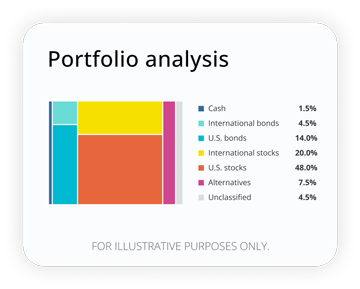
How well are your investments performing?
Analyze your portfolio in minutes and receive a target allocation for your goals.
* FOR ILLUSTRATIVE PURPOSES ONLY. These hypothetical illustrations do not reflect a particular investment and are not a guarantee of future results. Examples assume 10 (and 5) years of contributions at $10 a week, with contributions made at the end of each week. Both assume an 8% rate of return. Rates of return may vary. The illustration does not reflect associated fees, which could change the outcomes provided.
1 Axios, “ ‘A landmark generation’: Introducing Gen Alpha,” January 2024.
2 Axios, “Exclusive: America's youngest consumers drive almost half of household spending,” August 2025.
3 Wiley Online Library, “Routines and child development: A systematic review,” December 2023.
4 Bureau of Labor Statistics, “Employment and unemployment among youth – summer 2025,” accessed January 2026.
RO5159290-0126
 Get The Currency newsletter



The Currency editors
Staff contributors
The CurrencyTM writers and editors cover the latest financial news and insights shaping how we live, work, and play. The team provides accurate, data-driven, and timely content aimed at empowering financial freedom for all.
The content contained in this blog post is intended for general informational purposes only and is not meant to constitute legal, tax, accounting or investment advice. You should consult a qualified legal or tax professional regarding your specific situation. No part of this blog, nor the links contained therein is a solicitation or offer to sell securities. Compensation for freelance contributions not to exceed $1,250. Third-party data is obtained from sources believed to be reliable; however, Empower cannot guarantee the accuracy, timeliness, completeness or fitness of this data for any particular purpose. Third-party links are provided solely as a convenience and do not imply an affiliation, endorsement or approval by Empower of the contents on such third-party websites. This article is based on current events, research, and developments at the time of publication, which may change over time.
Certain sections of this blog may contain forward-looking statements that are based on our reasonable expectations, estimates, projections and assumptions. Past performance is not a guarantee of future return, nor is it indicative of future performance. Investing involves risk. The value of your investment will fluctuate and you may lose money.
Certified Financial Planner Board of Standards Inc. (CFP Board) owns the certification marks CFP®, CERTIFIED FINANCIAL PLANNER™, CFP® (with plaque design), and CFP® (with flame design) in the U.S., which it authorizes use of by individuals who successfully complete CFP Board's initial and ongoing certification requirements.