

What can 529 funds be used for? Get a Sense Check
What can 529 funds be used for? Get a Sense Check
In this edition of Sense Check, Empower financial professional Nick Ryan gives his two cents on the top questions families have about 529 plans: What the funds can be used for, what has changed recently, and what happens if your child doesn’t go to college.
What can 529 funds be used for? Get a Sense Check
In this edition of Sense Check, Empower financial professional Nick Ryan gives his two cents on the top questions families have about 529 plans: What the funds can be used for, what has changed recently, and what happens if your child doesn’t go to college.

12.12.2025
Key takeaways
- 529 funds can be used for more than just college tuition, including room and board, books, supplies, computers, internet access, K–12 tuition, and some student loans.
- If the funds aren’t used, they can be transferred to another family member, rolled over into a Roth IRA (up to $35,000), or withdrawn with taxes and a 10% penalty on the earnings.
- Contributing early gives more time for tax-free potential growth, easing the financial burden when education bills start arriving.
529 plans offer tax-free growth and flexible uses, making them a smart way to save for a child’s education while keeping options open if plans change.
If you're wondering what 529 funds can be used for, you're not alone. As a financial advisor, I get the question all the time from parents, grandparents — even people who haven’t had kids yet. It’s a smart question, because 529 plans have always offered powerful tax advantages, and now, they’re more flexible than ever. As of July 2025, with the passage of the One Big Beautiful Bill Act, 529 plan funds can now be used to cover an even wider range of education-related expenses.
What is a 529 plan?
First, let’s get down to basics. The 529 plan is arguably the best savings vehicle for a college education — but it’s also much more than that. A 529 plan is a tax-advantaged investment account designed to help families pay for a wide range of education expenses — from college tuition to room and board, books, K–12 private school, or even student loan payments.
Anyone can open a 529 plan for a child, grandchild, or even yourself. However, you should know that there may be gift tax consequences if your contributions, plus any other gifts, to a particular beneficiary exceed $19,000 during the year for 2025,with the same annual threshold applying for 2026.1 529 plans are flexible, tax-efficient, and widely used by parents looking to get ahead of rising education costs.
529 plan qualified expenses: What counts and what doesn’t
College tuition is the big one when it comes to qualified expenses, but 529 plans can cover way more than that. A lot of people think these accounts are just for college, but they actually cover a broad range of education-related costs. Knowing what’s qualified — and what’s not — can help you make the most of your savings and avoid unnecessary taxes or penalties.
Here’s a breakdown of what 529 funds can typically be used for according to the IRS and under the new bill:2,3
- Tuition and fees at eligible colleges, universities, vocational schools, and some K–12 programs
- Tuition, testing fees, and costs for books, equipment, and continuing education required to obtain or maintain a professional credential (effective for distributions on or after July 5, 2025)
- Expenses for special needs services at an eligible post-secondary school
- Books and supplies required for coursework
- Computers, internet access, and educational software
- Meal plans and campus food costs
- Up to $10,000 paid as principal or interest on qualified student loans (lifetime limit per beneficiary)
- K–12 tuition (up to $10,000 per year, per beneficiary in 2025; increasing to $20,000 from Jan 1, 2026 under the new legislation)
- K-12 expenses (effective for distributions on or after July 5, 2025):
- Curriculum materials
- Tutoring services
- Online education platforms or subscriptions
- Educational therapies for students with disabilities
- Standardized test fees
- Dual-enrollment tuition for college courses taken during high school
Keep in mind: Expenses like transportation, health insurance, and off-campus rent and groceries that exceeds the school’s cost-of-attendance limit typically don’t qualify. And while 529 plans can cover many types of expenses, most families are just trying to save enough for tuition and fees.4
The Empower college savings calculator is an awesome resource. You can use this free tool to estimate the average cost of college over four years based on your state and determine how much to save, including any potential shortfall.
What happens to unused 529 funds?
One of the biggest concerns I hear from clients is: “What if my kid doesn’t go to college?” And that’s a valid question. The good news is that 529 plans are built with flexibility. If one kid doesn’t go to school, you can transfer those savings to another child — as long as they’re related.5
If your child does go to college, but gets a scholarship to attend, you can take out the equivalent amount from the 529 plan without paying the 10% penalty, but you’ll have to pay income tax on the earnings.6
Finally, you have the option of rolling over up to $35,000 from a 529 account into a Roth IRA for a beneficiary if they don’t use it for eligible education expenses.
Even if none of those options apply, you still have access to the funds. You’d just pay income tax and a 10% penalty on the earnings, not the contributions.7 And remember, there’s no time limit on these accounts. A 529 can sit there and grow until it’s needed — for a sibling, a future grandchild, or even for continuing education down the line.
My final two cents
A lot of people become hyper focused on paying for their child’s education, and while that’s admirable, it’s just as important to make sure your own financial house is in order too. Still, it’s never too late to start saving in a 529 plan — but the earlier you do, the more time compound earnings have the potential to work in your favor. And hey, 529 contributions may not be the most exciting gift, but instead of toys they’ll forget, a few bucks into their education fund can make a lasting difference.
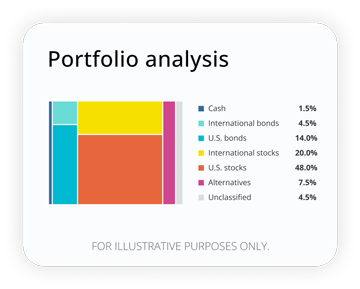
How well are your investments performing?
Analyze your portfolio in minutes and receive a target allocation for your goals.
1 IRS, “IRS releases tax inflation adjustments for tax year 2026, including amendments from the One, Big, Beautiful Bill,” October 2025.
2 IRS, “Publication 970 Tax Benefits for Education,” November 2024.
3 My529, “Federal changes to qualified education expenses,” July 2025.
4 Federal Student Aid, “What does cost of attendance (COA) mean?” July 2025.
5 IRS, “Publication 970 Tax Benefits for Education,” November 2024.
6 IRS, “Topic no. 313, Qualified tuition programs (QTPs),” January 2025.
7 IRS, “Topic no. 313, Qualified tuition programs (QTPs),” January 2025.
RO5053070-1225
 Get The Currency newsletter



Nick Ryan, CFP®
Contributor
Nick Ryan is a Senior Financial Professional at Empower. A CERTIFIED FINANCIAL PLANNER™ professional, he provides proactive, holistic financial guidance across a wide range of topics including investment management, financial planning, and more.
The content contained in this blog post is intended for general informational purposes only and is not meant to constitute legal, tax, accounting or investment advice. You should consult a qualified legal or tax professional regarding your specific situation. No part of this blog, nor the links contained therein is a solicitation or offer to sell securities. Compensation for freelance contributions not to exceed $1,250. Third-party data is obtained from sources believed to be reliable; however, Empower cannot guarantee the accuracy, timeliness, completeness or fitness of this data for any particular purpose. Third-party links are provided solely as a convenience and do not imply an affiliation, endorsement or approval by Empower of the contents on such third-party websites. This article is based on current events, research, and developments at the time of publication, which may change over time.
Certain sections of this blog may contain forward-looking statements that are based on our reasonable expectations, estimates, projections and assumptions. Past performance is not a guarantee of future return, nor is it indicative of future performance. Investing involves risk. The value of your investment will fluctuate and you may lose money.
Certified Financial Planner Board of Standards Inc. (CFP Board) owns the certification marks CFP®, CERTIFIED FINANCIAL PLANNER™, CFP® (with plaque design), and CFP® (with flame design) in the U.S., which it authorizes use of by individuals who successfully complete CFP Board's initial and ongoing certification requirements.
The content contained in this blog post is intended for general informational purposes only and is not meant to constitute legal, tax, accounting or investment advice. You should consult a qualified legal or tax professional regarding your specific situation. No part of this blog, nor the links contained therein is a solicitation or offer to sell securities. Compensation for freelance contributions not to exceed $1,250. Third-party data is obtained from sources believed to be reliable; however, Empower cannot guarantee the accuracy, timeliness, completeness or fitness of this data for any particular purpose. Third-party links are provided solely as a convenience and do not imply an affiliation, endorsement or approval by Empower of the contents on such third-party websites. This article is based on current events, research, and developments at the time of publication, which may change over time.
Certain sections of this blog may contain forward-looking statements that are based on our reasonable expectations, estimates, projections and assumptions. Past performance is not a guarantee of future return, nor is it indicative of future performance. Investing involves risk. The value of your investment will fluctuate and you may lose money.
Certified Financial Planner Board of Standards Inc. (CFP Board) owns the certification marks CFP®, CERTIFIED FINANCIAL PLANNER™, CFP® (with plaque design), and CFP® (with flame design) in the U.S., which it authorizes use of by individuals who successfully complete CFP Board's initial and ongoing certification requirements.