

Q2 2025 Wealth Watch Report: Net worth surges $7T, biggest jump since 2021
Q2 2025 Wealth Watch: Net worth surges $7T, biggest jump since 2021
Household wealth climbed 4.4% from Q1 2025 to Q2 2025, as retirement balances continued their upward momentum.
Q2 2025 Wealth Watch: Net worth surges $7T, biggest jump since 2021
Household wealth climbed 4.4% from Q1 2025 to Q2 2025, as retirement balances continued their upward momentum.

10.02.2025

Listen
·Q2 2025 Wealth Watch: Net worth surges $7T, biggest jump since 2021
Key takeaways
- Retirement savers held steady in Q2, with IRA balances clocking record highs.
- U.S. household net worth surged 4.4% to $167.3 trillion – the largest jump since Q1 2021.
- Wealth gains were driven primarily by strong stock market performance and rising real estate values.
The Currency’s quarterly Wealth Watch report tracks the distribution of American wealth against the backdrop of saving trends, investing patterns, and financial market conditions.
Average retirement account balances remain strong
Retirement savers saw notable gains in Q2 as account balances increased across the board, according to Empower Personal DashboardTM data. The average 401(k) climbed to $315,820, while 403(b) plans reached $133,562 — both continuing their upward momentum.
IRAs hit a record high of $266,953, up almost 7% from a year ago.* Roth IRAs also grew, averaging $92,619. The gains were fueled primarily by strong stock market performance, with consistent contributions likely providing additional support.
| Q2 2025 | Q2 2024 | Q2 2023 |
401(k) | $315,820 | $304,335 | $271,094 |
IRA | $266,953 | $250,065 | $216,294 |
Roth IRA | $92,619 | $88,112 | $79,416 |
403(b) | $133,562 | $125,114 | $112,856 |
Net worth figures signal U.S. households are wealthier than ever
Federal Reserve data reveals U.S. wealth is gaining strong momentum: U.S. household net worth surged 4.4% to $167.3 trillion in Q2 — the largest quarterly increase since Q1 2021, when net worth jumped 5.1%. The increase marks one of the strongest quarters of the past decade.1
Americans’ net worth averaged $569,711 at the end of Q2, Empower Personal DashboardTM data shows. Across generations, averages range from $86,637 for Gen Z to nearly $1.5 million for Baby Boomers.
- Gen Z: $86,637
- Millennials: $305,454
- Gen X: $1,024,334
- Baby Boomers: $1,498,976
- Silent Generation: $1,294,472
Equities and real estate power $7T wealth gain in Q2
What’s driving notable net worth growth? The Federal Reserve’s Distribution of Household Wealth report shows the growth of American household wealth in Q2 2025 was led by strong gains in stock market holdings and real estate, with retirement accounts also adding momentum.2
Quarterly highlights
📈 Stocks & mutual funds surged almost 10%, driving the majority of household wealth growth.
🏡 Real estate rose nearly 3%, reflecting ongoing home price gains.
💰 Retirement accounts (401k, IRA, 403b, etc.) climbed 6.6%, boosted by contributions and market performance.
🏦 Traditional pensions edged up less than 1%, reflecting their more stable structure.
💼 Private businesses and other assets were flat, adding little to overall growth.
Household assets by category (Q2 vs Q1, in $ trillions)
Asset category | Q2 2025 | Q1 2025 | Change (%) |
Real estate | 49.32 | 47.99 | +2.8% |
Consumer durable goods | 8.47 | 8.30 | +2.0% |
Stocks & mutual funds | 51.19 | 46.72 | +9.6% |
Traditional pensions | 18.00 | 17.88 | +0.7% |
Retirement accounts (401k, IRA, 403b, etc.) | 15.33 | 14.38 | +6.6% |
Private businesses | 15.53 | 15.52 | +0.1% |
Other assets | 28.99 | 28.82 | +0.6% |
Total assets | 186.82 | 179.62 | +4.0% |
American wealth shaped by place, progress, and strategy
Where wealth lives
Among the top 15 states by net worth, wealth is growing the fastest in Wyoming (+11%), Wisconsin (+6.8%), and Iowa (+6.7%). But it’s the Northeast that claims the highest average net worth, with Connecticut and New Jersey leading at $815,324 and $778,722, respectively.
Read more: Top 15 states by average net worth
Saving against the clock
Empower data shows younger workers outpacing early retirement savings benchmarks, while older cohorts are juggling competing priorities as they enter retirement. Twenty-somethings’ 401(k) balances are roughly double the typical 1x salary benchmark of $49,954; those in their 30s are just above the 3x salary target of $193,931.
Read more: Retirement savings goals 2025: 20-somethings have double the recommended balance
Strategies that stack
Americans are combining multiple wealth-building strategies to reach their financial goals. According to Empower research, the top wealth-builders are investing (26%), career advancement (25%), maximizing retirement contributions (24%), and side hustles (24%).
Read more: The rise of the “wealth multitasker”
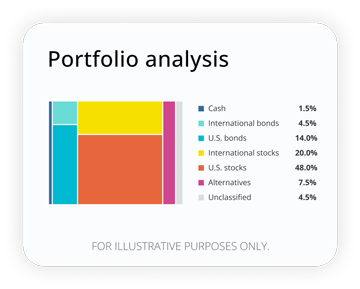
How well are your investments performing?
Analyze your portfolio in minutes and receive a target allocation for your goals.
*Per Empower Personal DashboardTM data, dating back to January 2023.
1 Federal Reserve Bank of St. Louis, “Households; Net Worth, Level [BOGZ1FL192090005Q],” September 2025.
2 Federal Reserve, “Distribution of Household Wealth in the U.S. since 1989,” September 2025.
RO4859122-1025
 Get The Currency newsletter



The Currency editors
Staff contributors
The CurrencyTM writers and editors cover the latest financial news and insights shaping how we live, work, and play. The team provides accurate, data-driven, and timely content aimed at empowering financial freedom for all.
The content contained in this blog post is intended for general informational purposes only and is not meant to constitute legal, tax, accounting or investment advice. You should consult a qualified legal or tax professional regarding your specific situation. No part of this blog, nor the links contained therein is a solicitation or offer to sell securities. Compensation for freelance contributions not to exceed $1,250. Third-party data is obtained from sources believed to be reliable; however, Empower cannot guarantee the accuracy, timeliness, completeness or fitness of this data for any particular purpose. Third-party links are provided solely as a convenience and do not imply an affiliation, endorsement or approval by Empower of the contents on such third-party websites. This article is based on current events, research, and developments at the time of publication, which may change over time.
Certain sections of this blog may contain forward-looking statements that are based on our reasonable expectations, estimates, projections and assumptions. Past performance is not a guarantee of future return, nor is it indicative of future performance. Investing involves risk. The value of your investment will fluctuate and you may lose money.
Certified Financial Planner Board of Standards Inc. (CFP Board) owns the certification marks CFP®, CERTIFIED FINANCIAL PLANNER™, CFP® (with plaque design), and CFP® (with flame design) in the U.S., which it authorizes use of by individuals who successfully complete CFP Board's initial and ongoing certification requirements.