

This savings account has tax advantages for life
This savings account has tax advantages for life
5 reasons why a health savings account could be key in a financial toolkit
This savings account has tax advantages for life
5 reasons why a health savings account could be key in a financial toolkit

11.14.2025

Listen
·This savings account has tax advantages for life
Key takeaways
People participating in high-deductible health plans could pair an HSA for additional savings power
Assets held in HSAs could reach $175 billion next year
2026 contribution limits for HSAs have risen to $4,400 (individuals) and $8,750 (family coverage)
With health costs taking more money and attention from people’s budgets, considering a health savings account could help ease stress. The portability of HSAs is also attractive to workers at any stage of their career.
Health insurance costs in the United States have been on the rise: The typical family premiums paid by employees rose in 2025 to around $26,993 (a 6% jump), and it’s expected that employers could see a 9% price hike in 2026.1
A cost-saving option increasingly in the mix are health savings accounts (HSAs), which are expected to hold over $175 billion in assets in 2026. These special savings accounts are available to people who enroll in a high-deductible health plan; in 2023, 30% of U.S. workers participated in one.2
Under a high-deductible health plan (HDHP), people typically pay lower monthly premiums, though the amount of out-of-pocket expenses incurred can be higher before the insurance company pays its share.3 People enrolling in these plans weigh the cost of paying now (via lower premiums) with the possibility of paying later (via additional expenses). Striking a balance can greatly depend on individual health situations – and the availability of savings to cover costs down the line.
In tandem with high-deductible plans, employers can offer health savings accounts, which help pay for unreimbursed medical expenses. These include coinsurance, copayments, deductibles, and other qualified medical items and services defined by the IRS.4
Empower research reveals that more than a third of Americans (35%) feel like their expenses are adding up this year. Trying to save money now — via a HDHP’s lower monthly insurance premiums -— could be a tradeoff people are willing to make, and the backstop of a health savings account may be helpful if expenses arise.
Health savings accounts offer several advantages for people participating in HDHPs and looking to be tax-savvy.
Benefit #1: Tax-deductible contributions
Money contributed to a health savings account is tax-deductible, or if contributions are made through payroll deductions, the funds are set aside on a pre-tax basis. In either case, the contributions can help reduce taxable income. Employers also have the option to contribute to workers’ accounts, as part of their compensation and benefit offerings.
For 2026, the ceiling is higher for HSA savers: 2026 contribution limits have been boosted to $4,400 for individuals and $8,750 for those using a HDHP with family coverage.5 People who are 55 or older by the end of the tax year can also set aside an additional $1,000 as a catch-up contribution.6
Benefit #2: Any earnings can grow tax-free
Once the account is funded with cash, people may be able to invest their contributions -- depending on if the HSA has a certain threshold or minimum for funds. Under IRS rules, any dividends, interest, or investment gains within the HSA can accumulate tax-free.7
For those familiar with a Roth IRA for retirement savings, it’s a similar setup in terms of money being able to potentially grow tax-free within the account; however, funds contributed into a Roth IRA use post-tax dollars.
The potential for growth can pay off in an HSA: At the end of 2024, HSA savers ages 55 and over held $63 billion in their accounts, amounting to a 21% year-over-year increase.8
Benefit #3: Tax-free withdrawals for medical spending
Rounding out the “triple tax advantage” that HSAs can bring is being able to withdraw funds from the account to use for eligible medical expenses — tax-free. Remember that state income taxes may still apply and HSA funds used for non-qualified medical expenses may be subject to applicable federal and state income taxes and/or penalties.
People have been putting money toward health items and services in 2025, spending an average of $489.70 a month from January through October, according to Empower Personal DashboardTM data. It’s a jump compared to last year, when the average healthcare spending across all 12 months of 2024 was $396.
Benefit #4: HSAs aren’t tied to a specific employer
Both contributions and earnings within a health savings account are assigned to a person, not a company. That means money doesn’t disappear or get held in limbo when a person leaves a job. Through this portability rule, HSAs can follow savers and have the potential to grow throughout their career, even into retirement.9
Read more: Investing in Yourself: How to navigate savings in the 2025 job market
Being able to transition to new industries or roles without stressing about moving HSA money could be helpful as Americans have progressively stayed in their jobs for less time. In January 2024, the median amount of time workers had been with their current employer stood at 3.9 years, the lowest level since January 2002.10
Benefit #5: HSAs don’t have a ‘use it or lose it’ rule
Workers may hear about both health savings accounts and medical flexible spending accounts (FSAs) when starting a new job or learning about benefits packages during their employer’s open enrollment season. While both accounts can be a way to pay for out-of-pocket medical expenses strategically with pre-tax funds, the flexibility of HSAs is a key differentiator.
In general, people must use money put into a FSA within the specific plan year, though employers can offer limited grace periods for both submitting claims and rolling over funds into the next year.11 It’s worth checking with the workplace about an account’s specific terms and conditions.
Read more: Turn open enrollment into a savings check-up
The time limitations could also affect how people approach the flex account: For people who want to ensure they spend everything they’re contributing, they could be overly cautious in estimating their expenses, thus underutilizing the potential tax benefits.
In comparison, funds within health savings account don’t have an expiration date, rolling over throughout the lifetime of the account. As healthcare expenses could reach $413,000 for some American couples in retirement, the longevity of an HSA could be a good resource to tap down the line when costs could climb.
Savings potential beyond health
Beyond the tax benefits health savings accounts offer, they also stand out in terms of timing. Younger workers could set up with an HSA upon enrolling in their first high-deductible health plan, which could give them decades of potential savings before retirement. With the ability to designate a beneficiary for an HSA, the account’s funds can also play a role in estate planning.12
With almost half of Americans (45%) admitting they didn’t prepare financially as early as they should have, according to Empower research, health savings accounts could be a way to accelerate money goals — or help catch up — starting now.
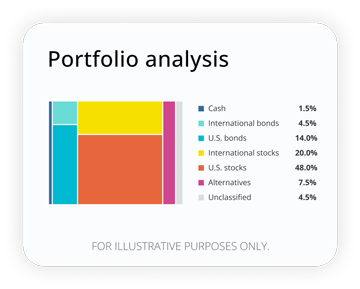
How well are your investments performing?
Analyze your portfolio in minutes and receive a target allocation for your goals.
1 Fortune, “The ‘quiet alarm bell’ on U.S. health costs: Employers are backed into a corner, and workers are paying the price,” October 2025.
2 Peterson-KFF Health System Tracker, “High deductible plans,” accessed November 2025.
3 Healthcare.gov, “High Deductible Health Plan (HDHP),” accessed November 2025.
4 IRS, “Publication 502 (2024), Medical and Dental Expenses,” accessed November 2025.
5 IRS, “Rev. Proc. 2025-19,” accessed November 2025.
6 IRS, “HSA Contribution Limits,” accessed November 2025.
7 IRS, Publication 969 (2024), Health Savings Accounts and Other Tax-Favored Health Plans,” accessed November 2025.
8 Devenir, “2024 Devenir & HSA Council Demographic Survey Findings,” July 2025.
9 IRS, “Publication 969 (2024), Health Savings Accounts and Other Tax-Favored Health Plans,” accessed November 2025.
10 U.S. Bureau of Labor Statistics, “Employee Tenure in 2024,” September 2024.
11 Healthcare.gov, “Using a Flexible Spending Account (FSA),” accessed November 2025.
12 Thomson Reuters Tax, “What Happens to the Funds in an HSA After the Account Holder Dies?” March 2022.
RO4986046-1125
 Get The Currency newsletter



The Currency editors
Staff contributors
The CurrencyTM writers and editors cover the latest financial news and insights shaping how we live, work, and play. The team provides accurate, data-driven, and timely content aimed at empowering financial freedom for all.
The content contained in this blog post is intended for general informational purposes only and is not meant to constitute legal, tax, accounting or investment advice. You should consult a qualified legal or tax professional regarding your specific situation. No part of this blog, nor the links contained therein is a solicitation or offer to sell securities. Compensation for freelance contributions not to exceed $1,250. Third-party data is obtained from sources believed to be reliable; however, Empower cannot guarantee the accuracy, timeliness, completeness or fitness of this data for any particular purpose. Third-party links are provided solely as a convenience and do not imply an affiliation, endorsement or approval by Empower of the contents on such third-party websites. This article is based on current events, research, and developments at the time of publication, which may change over time.
Certain sections of this blog may contain forward-looking statements that are based on our reasonable expectations, estimates, projections and assumptions. Past performance is not a guarantee of future return, nor is it indicative of future performance. Investing involves risk. The value of your investment will fluctuate and you may lose money.
Certified Financial Planner Board of Standards Inc. (CFP Board) owns the certification marks CFP®, CERTIFIED FINANCIAL PLANNER™, CFP® (with plaque design), and CFP® (with flame design) in the U.S., which it authorizes use of by individuals who successfully complete CFP Board's initial and ongoing certification requirements.