

A $1 trillion holiday season: Sparked by prices or purchases?
A $1 trillion holiday season: Sparked by prices or purchases?
Analysts say this year’s retail cheer comes with a caveat: Growth appears steady on paper, but most of it reflects higher prices rather than heavier spending
A $1 trillion holiday season: Sparked by prices or purchases?
Analysts say this year’s retail cheer comes with a caveat: Growth appears steady on paper, but most of it reflects higher prices rather than heavier spending

12.02.2025

Listen
·A $1 trillion holiday season: Sparked by prices or purchases?
Key takeaways
- Consumers expect to spend around $890 each this holiday season — around 70% of which will be spent on gifts.
- Forecasts for holiday retail sales growth vary from 2.5% to 4.2% year-over-year, but beneath the sparkle, higher prices rather than higher demand are driving the gains.
- Value-conscious choices will likely define the season as shoppers get savvier about when and how they spend and tap into technology to stay on budget.
Shoppers are gearing up to buy selectively this holiday season, balancing festive spirits with financial caution as inflation and higher prices reshape how, and where, people spend.
Americans plan to spend around $890.49 per person on holiday gifts, food, decorations and other seasonal items, according to The National Retail Federation (NRF). The festive tally represents a 1.3% drop from last year, though it remains the second-highest on record.1
Inflation may be shaping budgets, but it’s not dulling the spirit of generosity: Most holiday shoppers still plan to devote the largest share of their spending — about $627.93 — to gifts.2
Holiday gains driven by price premiums
With tariffs squeezing margins and inflation weighing on wallets, retail sales expectations are mixed this year. The NRF expects holiday sales could surpass $1 trillion in 2025, up 4.2% over 2024.3
Bain & Company projects a similar growth rate around 4% this year, reaching roughly $975 billion. By their estimates, online channels will shine the brightest, with e-commerce sales predicted to rise 5% or more, compared with 2.7% growth in-store. By category, furniture and home furnishings may see modest gains (1% to 5%), while electronics and appliances could decline slightly (-5% to -1%), and department stores are likely to post the weakest results (-5% or more). That 4% growth trails the 10-year average of 5.2%, underscoring a slower-moving season.4
But while the headline number suggests a healthy season, analysts predict that inflation, not enthusiasm, is doing most of the lifting. EY Parthenon expects a more modest 2.5% increase, most of which comes from higher prices, not higher demand. In dollar terms, sales could exceed $1 trillion, but with retail price inflation running above 2%, real growth is closer to flat when compared to last year.5
Holiday prices past
Consumers will spend around $263 on seasonal items like food, candy, cards, and decorations for the holidays.6 The cost of many of these holiday staples has climbed sharply in recent years. Here’s how the price of key festive essentials has changed over the past 12 months — and compared with five years ago — according to the Consumer Price Index (CPI).7
Holiday item | Price vs. 1 year ago | Price vs. 5 years ago |
Food at home | +2.7% | +25.7% |
Candy | +9.8% | +36.6% |
Household furnishings and supplies | +3% | +17% |
Gift wrap and stationery | +3.1% | +36.6% |
Postage and delivery services | +4.7% | +24.1% |
Electricity | +5.1% | +35.9% |
Outdoor equipment and supplies | +4.3% | +22.5% |
September 2025 vs September 2024 and September 2020. Unadjusted percentage change.
Holiday staples are pricier than they were a year ago, especially at the grocery store. The cost of food at home is up 2.7% from last year and 25.7% higher than in 2020, while candy has jumped 9.8% year over year and 36.6% over the past five years.
Powering holiday lights will also cost more, with electricity prices up 5.1% from 2024 and 35.9% since 2020. Wrapping the perfect gift isn’t cheap either — gift wrap and stationery have climbed 3.1% in the past year and 36.6% over five. Even postage and delivery services are 4.7% more expensive than last year and 24.1% higher than five years ago.
Outdoor equipment and household furnishings saw smaller increases of 4.3% and 3%, year-over-year, offering a bit of relief for those decking the halls this season.
Read more: The cost of cheer: Tracking America’s holiday spending surge
Shopping smart to save
People will keep shopping this year — but continue to get savvier about when and how they spend. PwC predicts value-conscious choices will define the season, with 53% of Americans reporting that price increases will affect their spending decisions this year.8 For many, that means jumping on promotions as they emerge: Retail buyers expect 76% of consumers to only buy discretionary products during promotional periods, per a Deloitte survey.9
Driven by discounts
Empower research shows 43% of Americans plan their holiday shopping budgets around Black Friday and Cyber Monday deals. This year, a record 202.9 million consumers shopped during the five-day holiday weekend from Thanksgiving Day through Cyber Monday, according to the National Retail Federation.10
Shopping is already underway for 42% of consumers: 54% to spread out gift shopping budgets, 41% to avoid last-minute stress, and 40% because prices and promotions are too good to pass up.11 Adobe Analytics predicts discounts will run as high as 28% off listed prices through Cyber Week.12
Buy Now, Pay Later (BNPL) props up spending
BNPL is set to drive $20.2 billion in online spending this holiday season, a 11% increase year-over-year.13 Half of consumers plan to use the flexible payment option over the holidays, with providers such as PayPal driving demand through new offerings such as 5% cash back on BNPL purchases through the end of the year.14,15
Taking on tech
A third of Americans say they’ll use generative AI in their shopping journey this year — more than double the 2024 figure.16 Gen Z appears to be reshaping holiday shopping patterns; not only are they more likely to seek deals (95%), but they’re also turning to AI (43%) for inspiration and product discovery and are using digital tools to find the best prices. This season, Gen Z is planning to spend 34% less than last year.
Read more: Holiday shopping goes high-tech
What are people gifting?
Americans put the going rate for a holiday gift at $64, according to Empower research. Three-quarters say gifts have become more expensive due to tariffs and inflation, while six in ten believe gifting culture has gotten “out of hand.” Nearly half admit to feeling “gift fatigue.”
This year, gift cards dominate both the giving and receiving lists. Shoppers plan to give them to friends (52%), family (47%), and kids (35%), and more than half say they top their own wish lists.17,18 Empower’s data also shows that 79% of people now view cash and gift cards as more acceptable presents than in the past.
Top trending toys this year include Labubu Dolls, LEGO sets, and MrBeast Lab Toys. The iPhone 17, Oura ring, and Kindle Colorsoft are among the top electronics, while other key drivers of holiday spending include the Nintendo Switch 2, PlayStation 5, and Dyson Airwrap Multi Styler.19 The least welcome gifts under the tree? Home improvement items, favored by just 16% of respondents.20
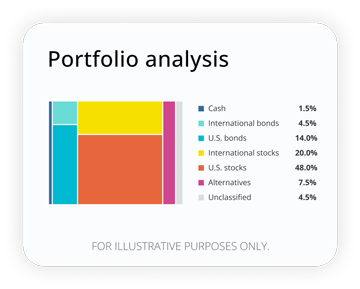
How well are your investments performing?
Analyze your portfolio in minutes and receive a target allocation for your goals.
1 National Retail Federation, “Consumers to Spend Second-Highest Amount on Record, According to NRF Holiday Survey,” October 2025.
2 Ibid.
3 National Retail Federation, “NRF Expects Holiday Sales to Surpass $1 Trillion for the First Time in 2025,” November 2025.
4 Bain & Company, “2025 Holiday Shopping Outlook,” September 2025.
5 EY Parthenon, “Pricing to drive modest 2025 US holiday retail sales,” October 2025.
6 National Retail Federation, “Winter Holiday Data and Trends,” October 2025.
7 U.S. Bureau of Labor Statistics, “Consumer Price Index – September 2025,” October 2025.
8 PwC, “Holiday Outlook 2025,” September 2025.
9 Deloitte, “‘Tis the season for smarter sourcing: How AI is helping some retailers rethink holiday buying strategies,” July 2025.
10 National Retail Federation, "Thanksgiving Holiday Weekend Draws a Record 203 Million Shoppers," December 2025.
11 National Retail Federation, “Winter Holiday Data and Trends,” October 2025.
12 Adobe, “Adobe: U.S. Holiday Shopping Season to Cross $250 Billion Online, Rising 5.3% YoY,” October 2025.
13 Ibid.
14 PayPal, “From AI to BNPL, PayPal Survey Reveals How Merchants Can Win the Holidays,” October 2025.
15 PayPal, “More Rewards, More Flexibility: PayPal Introduces 5% Cash Back on Buy Now Pay Later Purchases this Holiday Season,” October 2025.
16 PwC, “Holiday Outlook 2025,” September 2025.
17 Ibid.
18 National Retail Federation, “Winter Holiday Data and Trends,” October 2025.
19 Adobe, “Winter’s here — and so are the holiday retail trends,” September 2025.
20 National Retail Federation, “Winter Holiday Data and Trends,” October 2025.
RO4989806-1125
 Get The Currency newsletter



The Currency editors
Staff contributors
The CurrencyTM writers and editors cover the latest financial news and insights shaping how we live, work, and play. The team provides accurate, data-driven, and timely content aimed at empowering financial freedom for all.
The content contained in this blog post is intended for general informational purposes only and is not meant to constitute legal, tax, accounting or investment advice. You should consult a qualified legal or tax professional regarding your specific situation. No part of this blog, nor the links contained therein is a solicitation or offer to sell securities. Compensation for freelance contributions not to exceed $1,250. Third-party data is obtained from sources believed to be reliable; however, Empower cannot guarantee the accuracy, timeliness, completeness or fitness of this data for any particular purpose. Third-party links are provided solely as a convenience and do not imply an affiliation, endorsement or approval by Empower of the contents on such third-party websites. This article is based on current events, research, and developments at the time of publication, which may change over time.
Certain sections of this blog may contain forward-looking statements that are based on our reasonable expectations, estimates, projections and assumptions. Past performance is not a guarantee of future return, nor is it indicative of future performance. Investing involves risk. The value of your investment will fluctuate and you may lose money.
Certified Financial Planner Board of Standards Inc. (CFP Board) owns the certification marks CFP®, CERTIFIED FINANCIAL PLANNER™, CFP® (with plaque design), and CFP® (with flame design) in the U.S., which it authorizes use of by individuals who successfully complete CFP Board's initial and ongoing certification requirements.