

10 ways you may be leaving money on the table
10 ways you may be leaving money on the table
Learn how to take advantage of benefits, tax breaks, and savings sources already available to you
10 ways you may be leaving money on the table
Learn how to take advantage of benefits, tax breaks, and savings sources already available to you

06.17.2026
Key takeaways
- Claim it if it’s yours: Employer matches, tax credits, and workplace benefits could provide valuable financial advantages that many people overlook.
- Tax breaks can add up: Accounts like Health Savings Accounts (HSA), Flexible Spending Accounts (FSA), and Roth IRAs may help reduce taxes now or potentially create tax-free growth in the future though withdrawal restrictions generally apply.
- Small moves can have a big impact: Seemingly modest benefits could compound over time.
Economic uncertainties may have many Americans looking to maximize every dollar. When money feels tight, a natural reaction can be to focus on cutting costs. But another strategy could be hiding in plain sight: Making sure you're taking advantage of benefits, tax breaks, and workplace programs that could put extra dollars back in your pocket later.
While there’s no true source of “free money,” there are opportunities that can help reduce taxes, boost savings, and grow wealth over time. Here are 10 ways to help ensure you don’t leave money on the table.
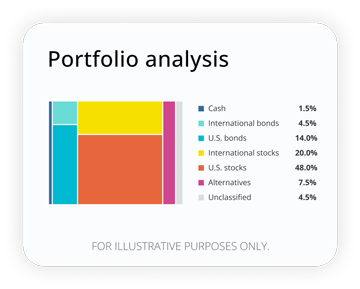
How well are your investments performing?
Analyze your portfolio in minutes and receive a target allocation for your goals.
1. Get the full value of your 401(k) match
A 401(k) match can be a valuable workplace benefit with potential to accelerate your long-term savings growth. More than half of workplace plans offer a 5% match cap, which is essentially “free” money you receive by contributing to your account — yet some workers fail to contribute enough to earn the full match.
Even modest employer contributions potentially can compound into additional retirement dollars over a career. For example, let’s say you earn $65,000 annually and contribute 5%, or $3,250, to your 401(k) each year. Your employer matches up to 5%, so you receive the full match of $3,250, which essentially doubles your overall yearly contribution. Based on a 6% annual rate of return, you could potentially accumulate as much as $1,082,547 in matching contributions and investment growth over a 40-year career.1
Keep in mind, based on IRS contribution limits, you can usually contribute more than the employer match — and older workers may be eligible to make catch-contributions on top of that. Since contributions are made with pre-tax dollars, this can add even more money to your pocket.
Read more: What is 401(k) matching and how does it work?
2. Maximize your Health Savings Account
Health Savings Accounts (HSAs) can offer a powerful combination of tax savings and long-term growth potential that can help boost wealth over time. Under currently law, they feature a unique triple tax advantage: Contributions can reduce current taxable income, investments can potentially grow tax-free, and withdrawals for qualified medical expenses are tax-free. This means, if you plan accordingly, more of your money stays with you instead of going to taxes.
HSAs also offer flexibility that could pay off over time. Since there’s no “use-it-or-lose-it” rule, any unused HSA funds will not expire at the end of the year and can roll over indefinitely — and potentially supplement retirement savings over time by covering qualified medical expenses.
In 2026, eligible individuals can contribute up to $4,400 to an HSA, while families can contribute up to $8,750 — and if you’re 55 or older you can contribute an additional $1,000.
Read more: HSA benefits: What are the benefits of a health savings account?
3. Claim every tax credit you could be entitled to
It can be easy to focus on tax deductions — but claiming eligible credits can directly reduce the amount of current taxes you owe. Tax credits generally fall into three main categories: nonrefundable, refundable, and partially refundable. They all generally follow the same basic rules, but can impact your tax bill or refund differently.
- Nonrefundable tax credits can offset your current tax liability but are only applied to reduce or zero out your liability. They do not create a refund if there’s any remaining tax credit amount.
- Refundable tax credits can both reduce the amount of current taxes you owe and trigger a refund of up to the full amount of the tax credit under certain circumstances.
- Along with reducing your calculated tax liability, partially refundable credits may also increase your refund amount by a percentage of the credit.
Missing a tax credit could mean leaving money with the IRS that could have stayed in your bank account. A tax professional can help identify what you're eligible to claim based on your individual circumstances.
Read more: Tax credits: Everything you need to know
4. Use family-focused tax breaks
Families may have access to additional tax-saving opportunities tied to childcare, education expenses, and dependents that sometimes are underutilized. For many households, these savings can potentially amount to hundreds or even thousands of dollars annually.
For example, some 46 million taxpayers claim the Child Tax Credit each year, which can unlock up to $2,200 per qualifying child in tax savings.2 If the credit exceeds income taxes owed, taxpayers can receive as much as $1,700 per child in refunds through another credit, the Additional Child Tax Credit.
Families who pay a provider to care for a child while they work or look for work may be eligible for the Child and Dependent Care Credit of up to $3,000 for one qualifying individual or $6,000 for two or more qualifying individuals. Programs like daycare, summer day camps, and after-school care are eligible expenses.
Depending on eligibility, parents may also qualify for credits tied to college expenses, student loan interest, or education savings accounts.
Read more: Tax planning for parents: Credits, 529s, and dependent care explained
5. Lower your current taxes with a Flexible Spending Account
Employer-sponsored Flexible Spending Accounts (FSAs) allow workers to set aside pre-tax dollars, which can potentially lower taxable income while helping cover qualified medical expenses — including prescription medications, copayments, insurance premiums and deductibles, and coinsurance.
Employees can contribute up to $3,400 in 2026, yet many do not take full advantage. The average FSA contribution is $1,291, according to the most recent data from the Employee Benefit Research Institute.3
The primary drawback of FSAs is they typically have use-it-or-lose-it rules, making it important to estimate healthcare spending carefully. Some plans do allow carryovers of up to $680.
Families who contribute to a Dependent Care FSA through work may unlock even more savings by using pre-tax dollars to pay for eligible childcare expenses.
Read more: FSA vs. HSA: What’s the difference?
6. Consider investing in a Roth account for potential future tax-free gains
For savers who expect to be in a higher tax bracket later in life — or who simply like the certainty of knowing their retirement withdrawals won't generate a tax bill — a Roth IRA or Roth qualified plan account can provide meaningful long-term tax advantages..
The potential financial rewards of a Roth account aren’t immediate: Contributions are funded with after-tax dollars, meaning taxes are paid upfront. The potential payoff comes later: Roth account investments can potentially grow tax-free, and qualified withdrawals may be federally tax-free if IRS rules are met.4 This means future earnings that might otherwise be subject to taxes stay in your pocket.
Eligible savers can contribute up to $7,500 annually to a Roth IRA, with those age 50 and older eligible for an additional $1,100 catch-up contribution. For younger workers with decades before retirement, that potential tax-free growth could compound over time to create a substantial advantage.
Read more: Roth IRA contribution and income limits for 2026
7. Take advantage of an Employee Stock Purchase Plan
Employee stock purchase plans (ESPPs) can be beneficial wealth-building tools for workers at publicly traded companies. Some plans allow employees to purchase company shares at discounts of up to 15% below market value. Many include a "look-back provision," which bases the purchase price on the stock’s value either at the beginning or end of the offering period.
Keep in mind not all ESPPs follow the same rules. Along with the specific benefits a company chooses to attach to its plan, plan structures, terms, and tax implications vary depending on whether the plan is a qualified ESPP, which are subject to IRS rules, or a nonqualified ESPP, which are not. It’s important to research the details before you enroll to determine if participating is right for you. As with any investment, consider your entire financial picture, including your other investment holdings, and evaluate whether your portfolio remains appropriately diversified based on your risk tolerance and financial goals.
Read more: Employee stock purchase plans: A guide to benefits and risks
8. Tap into workplace perks
Workplace benefits can be worth far more than many employees realize. Along with healthcare and workplace savings plans, many employers offer other perks that can provide opportunities for spending less out of pocket. These might include childcare reimbursement, commuting subsidies, tuition reimbursement, wellness discounts, fitness club memberships, financial counseling, mental health services, and more.
Annual open enrollment season can be a good chance to optimize your savings. Take the time to review the full menu of options available to you to help ensure you’re utilizing the perks and extras that could benefit your bottom line.
Read more: The benefits blueprint: Benefits to build financially resilient workforces
9. Put rewards perks to work
As a general rule of thumb, paying off credit cards right away is the best way to avoid accumulating debt. When used wisely, credit cards can serve as a valuable financial tool to help build credit, consolidate debt, and in some cases, to capture financial incentives like cashback, rewards points, and access to experiences.
Rewards credit cards can help you get more value from spending you already intend to do. Many of today’s luxury credit cards position themselves not just as a part payment tool, but also as a lifestyle enhancer by offering perks like lounge access, gym credits, or even app subscriptions. The catch? These cards can come with sizeable fees, so it’s important to weigh the benefits against any potential costs. Rewards only work in your favor if balances are paid in full. Interest charges can quickly outweigh any points earned.
Read more: Luxury credit cards get an upgrade
10. Avoid costly tax mistakes
Uncovering savings sources isn't only about finding new opportunities — it's also about avoiding preventable losses. It’s not uncommon for taxpayers to overlook deductions and some of the tax credits mentioned above, or to enter incorrect information or miss filing deadlines. These errors can reduce refunds, delay payments, or increase tax bills unnecessarily.
Before filing, take a second look. A few extra minutes reviewing your return could help ensure you keep every dollar you're entitled to.
Read more: Math mistakes to missed credits: Common tax oversights to avoid
Final thoughts
Many Americans spend time searching for ways to earn more money — but making sure you're not leaving money behind matters too. Some of the biggest financial opportunities don't require a raise, a side hustle, or an investment windfall. Instead, they come from fully utilizing benefits, tax breaks, and workplace programs that may already be available to you.
Taking the time to review your workplace benefits, retirement accounts, and tax situation today could potentially translate into additional savings, tax reductions, or investment growth in the years ahead. When every dollar counts, making the most of the money that’s already within reach can be a smart financial move for your future.
1 FOR ILLUSTRATIVE PURPOSES ONLY. This hypothetical illustration does not reflect a particular investment and is not a guarantee of future results. It assumes a 6% annual rate of return, reinvestment of earnings, and no withdrawals. Rates of return may vary. This illustration does not reflect any associated charges, expenses, or fees, which could change the outcomes provided. This is not intended to be investment, fiduciary, financial, legal, or tax advice.
2 Tax Policy Center, “What is the Child Tax Credit?” accessed June 2026.
3 Employee Benefit Research Institute, “New Analysis of 3.2 Million Flexible Spending Accounts Finds Average Contributions Increasing While Half Forfeiting Funds to Their Employers,” May 8, 2024.
4 Roth withdrawals are federally tax-free if they are qualified distributions as defined by the IRS. State and local taxes may apply. For a distribution to be qualified, the account must have been open for at least five years, and the withdrawal must occur after age 59½, death, or disability. Contributions may be withdrawn at any time without penalty. Earnings withdrawn before those conditions are met may be subject to taxes and penalties. Tax laws are subject to change. State and local taxes may still apply.
RO5579941-0626
 Get The Currency newsletter



The Currency editors
Staff contributors
The CurrencyTM writers and editors cover the latest financial news and insights shaping how we live, work, and play. The team provides accurate, data-driven, and timely content aimed at empowering financial freedom for all.
The content contained in this blog post is intended for general informational purposes only and is not meant to constitute legal, tax, accounting or investment advice. You should consult a qualified legal or tax professional regarding your specific situation. No part of this blog, nor the links contained therein is a solicitation or offer to sell securities. Compensation for freelance contributions not to exceed $1,250. Third-party data is obtained from sources believed to be reliable; however, Empower cannot guarantee the accuracy, timeliness, completeness or fitness of this data for any particular purpose. Third-party links are provided solely as a convenience and do not imply an affiliation, endorsement or approval by Empower of the contents on such third-party websites. This article is based on current events, research, and developments at the time of publication, which may change over time.
Certain sections of this blog may contain forward-looking statements that are based on our reasonable expectations, estimates, projections and assumptions. Past performance is not a guarantee of future return, nor is it indicative of future performance. Investing involves risk. The value of your investment will fluctuate and you may lose money.
Certified Financial Planner Board of Standards Inc. (CFP Board) owns the certification marks CFP®, CERTIFIED FINANCIAL PLANNER™, CFP® (with plaque design), and CFP® (with flame design) in the U.S., which it authorizes use of by individuals who successfully complete CFP Board's initial and ongoing certification requirements.