

Turn open enrollment into a savings check-up
Turn open enrollment into a savings check-up
Reframing this annual benefits selection window can offer a chance to maximize savings and strengthen financial well-being
Turn open enrollment into a savings check-up
Reframing this annual benefits selection window can offer a chance to maximize savings and strengthen financial well-being

10.05.2026
Key takeaways:
- Open enrollment can serve as an annual financial check-up, not just a health plan review
- Reassessing coverage may prevent overpaying for healthcare
- HSAs and FSAs can offer possible tax advantages to help boost long-term savings
It may be tempting to treat open enrollment season like a once-a-year formality — select a health insurance plan and move on. But this annual window can also be an opportunity to pause, take a broader look at overall financial well-being, and rethink some money-related choices. Approaching open enrollment as a built-in “financial check-up” and making small adjustments can potentially lead to meaningful savings throughout the year.
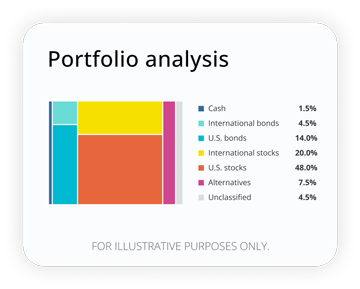
How well are your investments performing?
Analyze your portfolio in minutes and receive a target allocation for your goals.
Reassess health coverage
While it can be easy to simply pick the same health plan each year, costs and needs can change over time — and upfront costs don’t always equate to long-term savings.
It can be worthwhile to use the open enrollment period to evaluate plan details like premiums, copayments, deductibles, and any other potential out-of-pocket expenses to identify the plan that best fits individual or family needs and help avoid paying more than necessary for coverage.
How do these align with doctor visits and coverage used in the past year? Be sure to look at specifics of what’s covered and at what cost, for everything from annual visits and preventative screenings to immunizations. Taking a critical, closer look might reveal that a different plan may offer better value to realistically meet needs. For instance, those who expect frequent medical visits might benefit from a plan with higher premiums but lower cost-sharing, while individuals with minimal healthcare needs may prefer a lower-premium option.
Read more: Over half of Americans choose their benefits by price
Leverage tax-advantaged accounts
If Health Savings Accounts (HSAs) and Flexible Spending Accounts (FSAs) are offered as part of a benefits plan, adjusting contributions to these accounts during open enrollment can go beyond helping manage medical expenses to potentially help boost long-term savings and minimize tax liability.
HSAs. HSAs offer a unique trifecta of tax advantages: Contributions are tax-deductible, any earnings are tax-free, and withdrawals for qualified medical expenses are tax-free.1 In 2026, the IRS raised HSA limits to $4,400 for individuals and $8,750 for families, and people age 55 and over can contribute an additional $1,000, as a catch-up amount, bringing their individual HSA maximum to $5,400 for 2026. HSA limits for 2027 increase to $4,500 for individuals and $9,000 for families, with the same catch-up amount limit as in 2026. HSA funds roll over from year to year with no “use-it-or-lose-it” penalty, and unused balances can be invested.
Read more: What is a health savings account (HSA)?
FSAs. FSAs allow for contributions to be made with pre-tax dollars, which can reduce taxable income in the short term. The FSA contribution limit is $3,400 for 2026.However, unlike HSAs, FSAs don’t roll over fully — they carry over only $680 or have a short grace period to use it or lose it.
Read more: What is an FSA? Uses, Rules, and 2026 Limits
Optimize retirement savings
Since the focus is already on benefit elections and payroll adjustments during open enrollment, it can also be a good time to revisit retirement contributions. Increasing contributions to a 401(k) or other workplace plan by just 1% can potentially lead to growth over time through the power of compounding.
Employers may offer a 401(k) matching program, where they match a portion of an employee’s contribution. And maximizing this benefit creates potential to meaningfully accelerate retirement savings. Be sure to pay attention to contribution amounts to get the match and not leave money on the table.
Read more: Understanding compound interest and its power
Tap into additional benefit perks
Keep in mind, open enrollment extends beyond healthcare coverage. Employers might offer optional benefits such as disability insurance, life insurance, or legal assistance programs. Other perks — such as tuition reimbursement, financial counseling, or mental health services — can further strengthen both financial and personal well-being. Be sure to explore any extras, like fitness club memberships, wellness discounts, and other offerings you may be underutilizing. Reviewing the full menu of available options could uncover opportunities for spending less out of pocket.
Make it a habit
Turning open enrollment into a built-in annual check-up can be one more step toward taking charge of long-term financial health. Making it part of a yearly routine can create a recurring opportunity to not only stay on top of healthcare needs but also keep retirement savings, tax-advantaged accounts, and other workplace perks aligned with changing goals. Over time, these small but intentional adjustments can potentially add up to stronger financial wellness and greater peace of mind year after year.
Read more: Time for a check-up: 7 questions to test your financial health
1 Contributions, any earnings, and withdrawals are federal income tax-free if used to pay for qualified medical expenses. State income taxes may still apply. HSA funds used for nonqualified medical expenses may be subject to applicable federal and state income taxes and/or penalties.
RO5985206-1026
 Get The Currency newsletter



The Currency editors
Staff contributors
The CurrencyTM writers and editors cover the latest financial news and insights shaping how we live, work, and play. The team provides accurate, data-driven, and timely content aimed at empowering financial freedom for all.
The content contained in this blog post is intended for general informational purposes only and is not meant to constitute legal, tax, accounting or investment advice. You should consult a qualified legal or tax professional regarding your specific situation. No part of this blog, nor the links contained therein is a solicitation or offer to sell securities. Compensation for freelance contributions not to exceed $1,250. Third-party data is obtained from sources believed to be reliable; however, Empower cannot guarantee the accuracy, timeliness, completeness or fitness of this data for any particular purpose. Third-party links are provided solely as a convenience and do not imply an affiliation, endorsement or approval by Empower of the contents on such third-party websites. This article is based on current events, research, and developments at the time of publication, which may change over time.
Certain sections of this blog may contain forward-looking statements that are based on our reasonable expectations, estimates, projections and assumptions. Past performance is not a guarantee of future return, nor is it indicative of future performance. Investing involves risk. The value of your investment will fluctuate and you may lose money.
Certified Financial Planner Board of Standards Inc. (CFP Board) owns the certification marks CFP®, CERTIFIED FINANCIAL PLANNER™, CFP® (with plaque design), and CFP® (with flame design) in the U.S., which it authorizes use of by individuals who successfully complete CFP Board's initial and ongoing certification requirements.