

HSA, FSA & HRA reimbursement explained
HSA, FSA & HRA reimbursement explained
Tax-advantaged healthcare accounts like HSAs, FSAs, and HRAs can lower taxable income, but timing, documentation, and rules determine how and when reimbursements work
HSA, FSA & HRA reimbursement explained
Tax-advantaged healthcare accounts like HSAs, FSAs, and HRAs can lower taxable income, but timing, documentation, and rules determine how and when reimbursements work

03.25.2026
Key takeaways
Tax savings can require a closer look since reimbursement rules and timelines vary by account type.
Receipts and explanations of benefits from insurance companies are essential documentation.
Keeping a system to track reimbursements is key to reaping the maximum benefits of these accounts.
Accounts designed to help Americans save on healthcare costs let people save on taxes, though they require work for the account holder to get that money back as reimbursements. Contributions to health savings accounts (HSAs), medical flexible savings accounts (FSAs), and health reimbursement arrangements (HRAs) lower overall taxable income, though to get the full benefit of these accounts, you need to strategically decide how to spend the funds. The process for HSA reimbursement isn’t the same as medical flex accounts, for example.
Around half of people with FSA accounts forfeit some of their contributions each year, because medical FSA accounts have a “use it or lose it” approach where funds have a strict timetable. On average, people let more than $400 expire a year.1
In 2025, people spent an average of $486.93 on health care and medical charges, according to Empower Personal DashboardTM data. That’s a 10% year-over-year jump from 2024’s amount of $442.44. Healthcare costs also rise as people get older, so having clarity on if, how, and when to get reimbursed plays a larger role.
Which tax-advantaged accounts require reimbursement?
HSAs: People can delay reimbursement, and there is no time limit on being reimbursed as long the expenses happened after you opened the health savings account. However, you’ll need to hang on to all the relevant receipts and paperwork.2
Medical FSA: Funds are “use it or lose it.” Plans often end the spending period at the end of the calendar year, though some also allow a grace period into March of the next calendar year. Depending on the plan, you may be able to roll over up to $680 in 2026 contributions into 2027.
Read more: Medical FSAs: Use it or lose it time is here
HRAs: The timelines and maximum amounts allowed for reimbursement depend on how an employer sets up their HRA plan. It’s especially important to check your individual situation and plan documents before determining the timeline for when to seek reimbursement.3
Read more: HRA vs. HSA: Which health account is right for you?
What expenses qualify for reimbursement?
Products and services that are covered by a health savings account, flexible spending account or health reimbursement account include some common and less expected medical items:4
Prescription medications
Medical equipment (like blood pressure monitors, wheelchairs)
Assistive items (like a shower chair or grab bars for the bathroom)
Vision care (like eyeglasses, lenses, contact solution)
Skin care (including acne treatments, red-light therapy)
The guidelines between what does and does not qualify can be tricky when shopping in the moment. For example, some “beauty aisle” items like sunscreen and petroleum jelly are covered, while shampoo, shaving cream, and skin moisturizer are not.5
Medical procedures and services can also qualify:6
Office visits (medical, dental or vision)
Dental care (exams, fillings, orthodontia, dentures)
X-rays and other imaging
Read more: What can I use my HSA for?
What paperwork do I need to submit a reimbursement?
For common qualifying items like over-the-counter medications or first aid equipment, you aren’t limited to in-person pharmacies to buy; many big-box stores and pharmacies like Target and Walgreens offer sections of their websites with eligible goods.7,8 Amazon.com’s dedicated storefront also allows people to pay the retailer directly with a FSA or HSA card, avoiding manual reimbursements.9
To streamline receipts and make it easier to add up multiple expenses, it can be a good move to separate items you want to get reimbursed for into a separate transaction from other things you’re buying (though not required).
Difference between receipt and explanation of benefits
Claiming eligible health services requires more detail, and either a medical receipt or an explanation of benefits (EOB) from your insurance company can qualify as long as the documentation addresses:10
Patient name (if bought from a retail store, will not be included)
Provider name (can be the store of purchase, name of medical office)
Service date
Service type (description of the service provided or item bought)
Cost (the amount that you paid out-of-pocket)
A provider like a doctor’s office or hospital can give you an itemized receipt when you make a copay or pay for a visit in full. Direct-to-consumer telehealth companies also can provide eligible care and goods and include reimbursement invoices.11
An EOB is sent by an insurance company after service occurs to the plan subscriber. Be on the look-out for these after each visit; they can be sent electronically or via physical mail depending on your preferences. The section in the EOB outlining “What you owe” or “Patient balance” is the amount to claim on a reimbursement form.12
How do I keep track of medical reimbursements?
Getting reimbursed for an FSA, HSA, or HRA can involve many steps from initially paying for the items/services and then getting that money back. Having a system in place that works for you can benefit your wider approach to money: More than half (57%) of U.S. workers say that when their finances feel disorganized, their financial stress grows, according to Empower research.
It’s important to decide how to keep receipts and EOBs organized. For paper receipts from a doctor’s office, you can scan them at home or take a photo after the visit, and some account servicers offer smartphone apps to upload documentation. If you prefer physical copies of documents, make sure the reimbursement account will accept mailed copies.
Keeping your own electronic or printed-out spreadsheet can help “fill in the blanks” as reimbursement claims are fulfilled. Even if you use an FSA or HSA card during the transaction, you should still retain a receipt for documentation. Make sure to include a section listing when you receive the reimbursement payment (such as through direct deposit), so those deposits don’t get lost in a checking or savings account’s daily shuffle. Keeping a running total of how much you’ve claimed helps determine how much more you have left to spend.
What if I forget to submit claims for reimbursement?
The impact of not filing claims for reimbursement is different depending on which kind of health-related account you’re using.
More than half of employers give workers more time to use some unused FSA funds into the next calendar year, though it’s common to see people fill up their end-of-year cart, stocking up on health basics and over-the-counter goods.13
Those with HSAs can claim eligible health expenses down the line, as those accounts have no time limit on reimbursement. Another benefit of HSAs is that the funds can be used for any purpose after the account holder turns 65. However, consider the impact of these non-medical withdrawals at tax time; the amount is taxed as regular income when you file.
Planning ahead for reimbursements
Using these types of accounts can result in tax savings and help you get a better sense of how much you’re spending on healthcare. Estimating costs using the previous year’s actual bills and reimbursements could better inform decisions on which benefits to pick during open enrollment decisions and how much to contribute.
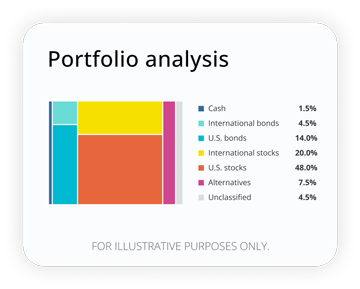
How well are your investments performing?
Analyze your portfolio in minutes and receive a target allocation for your goals.
1 The Wall Street Journal, “It’s Time to Spend Your FSA Money Before Your Employer Gets What’s Left,” December 2025.
2 Healthcare.gov, “Understanding Health Savings Account-eligible plans,” accessed March 2026.
3 IRS, “FAQs on New Health Coverage Options for Employers and Employees,” accessed March 2026.
4 HSA Store, “The Complete HSA Eligibility List,” accessed March 2026.
5 Ibid
6 Ibid
7 Target, “FSA/HSA Shop,” accessed March 2026.
8 Walgreens, “Maximize your FSA funds,” accessed March 2026.
9 Amazon.com, “FSA store,” accessed March 2026.
10 FSA Store, “FSA Reimbursement: Filing Claims, Rules and Deadlines,” accessed March 2026.
11 FSA Store, “Telehealth,” accessed March 2026.
12 Centers for Medicare & Medicaid Services, “How to read an explanation of benefits (EOB),” accessed March 2026.
13 The Wall Street Journal, “It’s Time to Spend Your FSA Money Before Your Employer Gets What’s Left,” December 2025.
RO5328994-0326
 Get The Currency newsletter



The Currency editors
Staff contributors
The CurrencyTM writers and editors cover the latest financial news and insights shaping how we live, work, and play. The team provides accurate, data-driven, and timely content aimed at empowering financial freedom for all.
The content contained in this blog post is intended for general informational purposes only and is not meant to constitute legal, tax, accounting or investment advice. You should consult a qualified legal or tax professional regarding your specific situation. No part of this blog, nor the links contained therein is a solicitation or offer to sell securities. Compensation for freelance contributions not to exceed $1,250. Third-party data is obtained from sources believed to be reliable; however, Empower cannot guarantee the accuracy, timeliness, completeness or fitness of this data for any particular purpose. Third-party links are provided solely as a convenience and do not imply an affiliation, endorsement or approval by Empower of the contents on such third-party websites. This article is based on current events, research, and developments at the time of publication, which may change over time.
Certain sections of this blog may contain forward-looking statements that are based on our reasonable expectations, estimates, projections and assumptions. Past performance is not a guarantee of future return, nor is it indicative of future performance. Investing involves risk. The value of your investment will fluctuate and you may lose money.
Certified Financial Planner Board of Standards Inc. (CFP Board) owns the certification marks CFP®, CERTIFIED FINANCIAL PLANNER™, CFP® (with plaque design), and CFP® (with flame design) in the U.S., which it authorizes use of by individuals who successfully complete CFP Board's initial and ongoing certification requirements.