

💰Knowledge pays
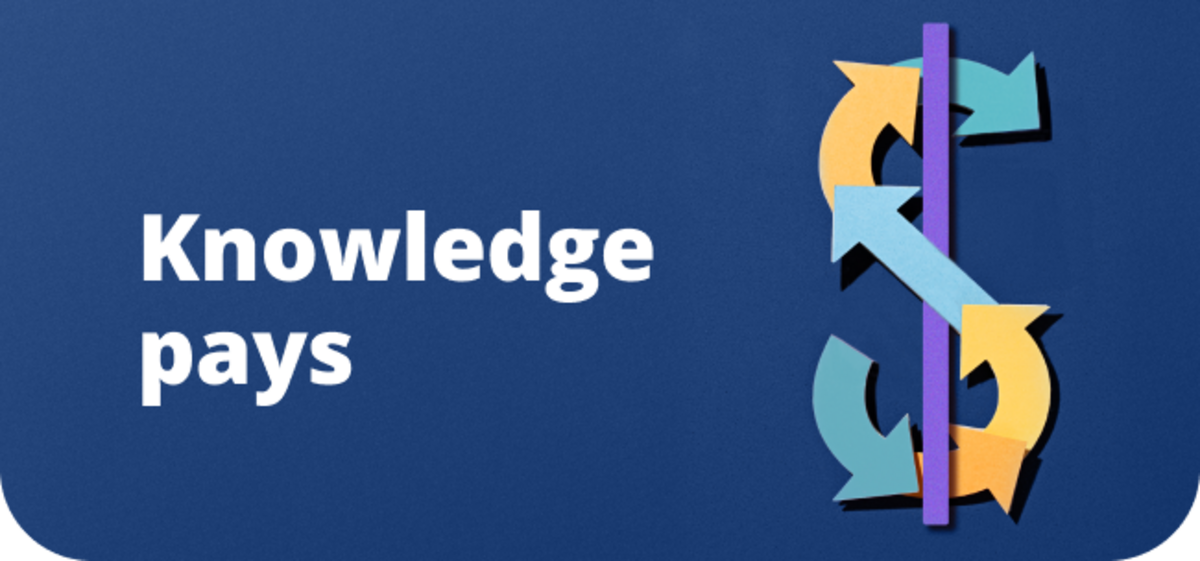
Knowledge can pay. Americans estimate they lost about $948 last year to financial literacy gaps — adding up to roughly $246 billion nationwide. A refresher on core skills from The CurrencyTM can help close those gaps and build confidence.
Key building blocks to financial literacy include tracking income and spending, saving early to harness potential compounding, building and maintaining credit, and managing debt — habits that can reinforce each other over time.
Financial Literacy Month in April can be a great time to get started. Learning along the way also matters; even the best habits and plans can require regular check-ins and adjustments.
— The Editors

👪 Early lessons: More than half of Gen Alpha's parents are already teaching kids about money, often before age 4, to build skills and confidence. High schools are also stepping up: 39 states require students to take a personal finance class before graduation — covering real-world topics like budgeting, credit, taxes, and investing.
🏠 Credit know-how: Credit scores can be an afterthought* for many young adults until a big moment like buying a car or home makes them critical. While models vary and scores can fluctuate, the fundamentals still hold: pay on time, keep balances low, and build a history. Perfect scores usually matter more for bragging rights than better terms.
⬆️ Roth advantage: Gen Z and Millennials continue to put a growing share of retirement savings into Roth IRAs — a combined 27.3% of their portfolios in 2025, according to Empower Personal DashboardTM data. Roth balances among those generations have risen steadily since 2022, despite market swings.
💰 Cash flow: Regardless of age or how much you make, managing money can often depend on knowing how it moves. Tracking income, spending, and savings can reveal where to adjust — from reallocating discretionary spending to automating savings. Small shifts can help your dollars work better over time.

Tuition equation
The cost of college is front and center for many families as the May 1 deadline* for accepting offers and putting down tuition deposits nears for many schools.
For many families, an achievable savings plan means covering a portion of expenses, with the rest coming from other sources. More than 85% of first-time students receive some form of financial aid, including grants, scholarships, and loans.
Whether targeting a dollar amount or a fixed share of costs, families that start early with tools like 529 plans can yield tax advantages and let potential compounding help do some of the heavy lifting.

Know your worth
WNBA players just scored a nearly 400% pay increase* with negotiating guidance from Nobel-winning economist Claudia Goldin. Her data-driven approach and focus on league revenue sharing for player salaries and benefits helped secure the largest pay jump in league history.
You don’t need a Nobel Prize to negotiate your own pay. Research, planning, and clear communication can help land a higher starting point that can compound into long-term pay growth. The Currency breaks the process down with tips to negotiate salary like a pro.

Price watch
Average gas prices surpassing $4 per gallon for the first time since 2022 are reshaping* spring and summer travel plans. Some travelers are opting for shorter trips and closer destinations, while others are shifting costs elsewhere in their vacation budgets.
Accounting for gas prices can often depend on where you live or plan to go: California is seeing the highest average price per gallon at $5.84, while Oklahoma currently has the cheapest average at $3.38. See how your state stacks up on The Currency.TM

Get financially happy
Put your money to work for life and play
*Third-party data is obtained from sources believed to be reliable; however, Empower cannot guarantee the accuracy, timeliness, completeness, or fitness of this data for any particular purpose. Third-party links are provided solely as a convenience and do not imply an affiliation, endorsement, responsibility, or approval by Empower of the contents on such third-party websites.
RO5404417-0426 WF-6172144-0426
 Be current.


The Currency editors
Staff contributors
The CurrencyTM writers and editors cover the latest financial news and insights shaping how we live, work, and play. The team provides accurate, data-driven, and timely content aimed at empowering financial freedom for all.
The content contained in this blog post is intended for general informational purposes only and is not meant to constitute legal, tax, accounting or investment advice. You should consult a qualified legal or tax professional regarding your specific situation. No part of this blog, nor the links contained therein is a solicitation or offer to sell securities. Compensation for freelance contributions not to exceed $1,250. Third-party data is obtained from sources believed to be reliable; however, Empower cannot guarantee the accuracy, timeliness, completeness or fitness of this data for any particular purpose. Third-party links are provided solely as a convenience and do not imply an affiliation, endorsement or approval by Empower of the contents on such third-party websites. This article is based on current events, research, and developments at the time of publication, which may change over time.
Certain sections of this blog may contain forward-looking statements that are based on our reasonable expectations, estimates, projections and assumptions. Past performance is not a guarantee of future return, nor is it indicative of future performance. Investing involves risk. The value of your investment will fluctuate and you may lose money.
Certified Financial Planner Board of Standards Inc. (CFP Board) owns the certification marks CFP®, CERTIFIED FINANCIAL PLANNER™, CFP® (with plaque design), and CFP® (with flame design) in the U.S., which it authorizes use of by individuals who successfully complete CFP Board's initial and ongoing certification requirements.