

What is the average credit score? See how you compare
What is the average credit score? See how you compare
The average U.S. credit score was 715 in late 2025. Learn why scores are so important to financial health
What is the average credit score? See how you compare
The average U.S. credit score was 715 in late 2025. Learn why scores are so important to financial health

01.28.2026
Key Takeaways
- FICO and VantageScore both use a 300–850 scale, but they differ in how heavily they weigh factors such as payment history and balances.
- Credit scores influence loan approvals and interest rates, and they can also affect insurance premiums, housing decisions, and some employment screenings.
- Scores below 600 can significantly limit access to credit, while superprime scores may unlock lower borrowing costs and added financial benefits.
Your credit score is one of the single most important numbers related to your personal finances. It’s a snapshot of your overall credit health. And it’s used by lenders and other financial services providers to determine your eligibility for loans, credit cards, insurance, and more.
The average credit score as of September 2025 was 715, though this may vary according to your age and credit history.1 Knowing the average credit score and how credit scores are determined can help you build yours to improve your overall financial health.
Understanding credit scoring models
Most people assume they have just one credit score. However, there are two popular credit scoring models that are used, each of which can result in a unique credit score.
Explanation of FICO score
FICO was the first credit scoring model created by the Fair Isaac Corporation more than 25 years ago. It remains the most popular credit scoring model today, used by 90% of top lenders.2
FICO scores fall in a range from 300 to 850. They fall into the following categories:
- 300-580: Poor
- 580-669: Fair
- 670-739: Good
- 740-799: Very good
- 800+: Exceptional
FICO scores are calculated based on the following factors:
- Payment history: 35%
- Amounts owed: 30%
- Length of credit history: 15%
- Credit mix: 10%
- New credit: 10%
Read more: What is an interest rate?
Explanation of VantageScore
VantageScore was created in 2006 by the three credit bureaus to provide competition for FICO scoring. VantageScore combines the contents of all three credit bureaus to create one credit report.
Like FICO scores, VantageScores fall in a range from 300 to 850 and fall into the following ranges:
- 300-600: Subprime
- 601-660: Near prime
- 661-780: Prime
- 781-850: Superprime
VantageScore considers the following factors when setting your scores:
- Payment history: 40%
- Depth of credit: 21%
- Credit utilization: 20%
- Balances: 11%
- Recent credit: 5%
- Available credit: 3%
Significance of your credit score
Your credit score plays many roles in your personal finances. One of the most significant roles your credit score plays is in loan eligibility. First, your credit score determines whether you’re eligible for certain loans. Certain lenders and loan types have credit score minimums in place. In the case of mortgages, those minimum requirements are universal. In other cases, they vary from lender to lender.
Your interest rate also impacts the interest rate you can get on a loan. A good or excellent credit score can help you land the best interest rates, while a poor credit score will result in a much higher score. The difference in the interest rates you get based on your credit score can make the difference in tens of thousands — or even hundreds of thousands — in interest over your entire life.
Your credit score also plays a role in some areas you may not be aware of. For example, your credit score can determine insurance eligibility and what insurance premiums you’re offered. A landlord may also check your credit when deciding whether to rent you an apartment. Finally, employers can even check your credit report when deciding whether to offer you a job.
The challenges of sub-600 credit scores
Having a credit score below 600 presents some unique challenges. As we’ve discussed, your credit score can affect everything from your interest rate on a loan to the ability to rent an apartment.
Unfortunately, a poor credit score can bleed into many areas of your life. First, to qualify for a conventional conforming mortgage, one must have a credit score of at least 620. As a result, those with sub-600 credit scores won’t qualify. And considering your credit score is also a factor in renting an apartment, a poor credit score can contribute to housing insecurity.
Another thing to consider is that someone with poor credit will pay considerably higher interest rates on loans. And considering that people with poor credit are often those struggling in other areas of their personal finances, these increased interest costs may be even more impactful.
The advantage of “Superprime” scores
Nearly 1 in 4 consumers (23%) had FICO Scores of 800 or higher in 2025, according to Experian data.3 A credit score this high comes with plenty of benefits, including easier access to loans, lower interest rates on loans, lower insurance premiums, and more.
Another unique benefit of having excellent credit goes beyond the concept of saving money. A high credit score can actually help you make money.
Many of the best rewards credit cards are limited to borrowers with good or excellent credit. Those cards can help you earn cash back and travel points on your spending at a rate much higher than on credit cards available to borrowers with fair credit.
Read more: Who needs perfect? For credit scores, it pays to be in the ballpark
How to improve your credit score
The importance of your credit score and what having a good credit score can do for you is clear. But how can you actually get there? There are some simple steps you can take to achieve a high credit score to help you optimize your financial health.
- Check your credit health: The first step to improving your credit health is getting in tune with where your credit is. Not only will checking your credit help you figure out where you’re starting from, but it will also help you spot and dispute any errors on your credit report that might be holding you back.
- Monitor your credit regularly: Once you know where your credit is at, it’s important to stay up-to-date moving forward. You can set up credit monitoring to ensure you’re alerted when there are changes to your credit report and score.
- Pay your bills on time: Your payment history is the most important factor that influences your credit report. You can improve your score over time by consistently paying your bills on time. Additionally, you can improve your score by catching up on any past-due bills that are currently showing delinquent on your credit report.
- Reduce your credit utilization: Your credit utilization is the percentage of your revolving credit in use. You can reduce your credit utilization in two ways: paying down your revolving debt balances and requesting higher credit limits.
- Optimize your credit mix: Your credit mix refers to the different types of credit on your credit report, including credit cards, mortgages, installment loans, etc. While it’s not a requirement to have one of each type of credit on your report, it can benefit you to have a mix of at least two.
- Keep credit lines open: It can be tempting to close out old credit cards that you don’t use anymore, but doing so could hurt your credit score. Not only will it reduce your available credit (and increase your credit utilization), but it will also reduce the age of your credit.
- Avoid opening new credit: New credit can be helpful when it increases your available credit or improves your credit mix, but opening new credit accounts initially has a negative impact on your credit report. Avoid shopping around for credit too often and limit hard inquiries to necessary situations.
- Become an authorized user: Becoming an authorized user on someone else’s credit card is a useful hack that allows you to instantly improve all of the credit score factors, assuming that person uses their credit card responsibly. It gives you credit for that account’s long payment history while improving your credit utilization.
- Seek professional help: With hard work and a bit of time, it’s entirely possible to improve your credit score on your own. But if you really feel you need help, there are credit counseling services that can help you improve your credit score. Just be on the lookout for predatory services that are out to get your money.
The bottom line
Credit scores are based on factors such as payment history, balances, and credit longevity. Lower scores can restrict access to credit and raise borrowing costs, while higher scores can open the door to better rates and financial flexibility. The good news is that steps can be taken to improve credit health.
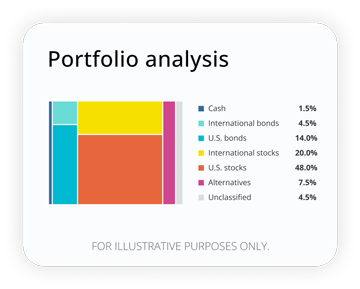
How well are your investments performing?
Analyze your portfolio in minutes and receive a target allocation for your goals.
1 “FICO Releases Inaugural FICO Score® Credit Insights Report Highlighting Major Shifts in Consumer Credit,” September 2025
2 FICO, “Basic Facts About FICO Scores®,” accessed January 2026.
3 Experian, “Have Many Americans Have a 800 Credit Score or Higher?” July 2025.
RO5159743-0126
 Get The Currency newsletter



The Currency editors
Staff contributors
The CurrencyTM writers and editors cover the latest financial news and insights shaping how we live, work, and play. The team provides accurate, data-driven, and timely content aimed at empowering financial freedom for all.
The content contained in this blog post is intended for general informational purposes only and is not meant to constitute legal, tax, accounting or investment advice. You should consult a qualified legal or tax professional regarding your specific situation. No part of this blog, nor the links contained therein is a solicitation or offer to sell securities. Compensation for freelance contributions not to exceed $1,250. Third-party data is obtained from sources believed to be reliable; however, Empower cannot guarantee the accuracy, timeliness, completeness or fitness of this data for any particular purpose. Third-party links are provided solely as a convenience and do not imply an affiliation, endorsement or approval by Empower of the contents on such third-party websites. This article is based on current events, research, and developments at the time of publication, which may change over time.
Certain sections of this blog may contain forward-looking statements that are based on our reasonable expectations, estimates, projections and assumptions. Past performance is not a guarantee of future return, nor is it indicative of future performance. Investing involves risk. The value of your investment will fluctuate and you may lose money.
Certified Financial Planner Board of Standards Inc. (CFP Board) owns the certification marks CFP®, CERTIFIED FINANCIAL PLANNER™, CFP® (with plaque design), and CFP® (with flame design) in the U.S., which it authorizes use of by individuals who successfully complete CFP Board's initial and ongoing certification requirements.