

How to negotiate salary
How to negotiate salary
When and how to negotiate salary offers to maximize total compensation
How to negotiate salary
When and how to negotiate salary offers to maximize total compensation

12.02.2025

Listen
·How to negotiate salary
Key takeaways:
- Negotiating salary can increase long-term earnings, raises, and bonuses
- It is common for employers to expect salary negotiations as part of the offer process
- Less than half of U.S. employees negotiate, but doing so could raise offers by nearly 40%
- Research, planning, and clear communication can make an impact
Salary negotiations can significantly impact long-term compensation, including raises and bonuses. Many employers expect candidates to negotiate.
Salary negotiations can be an uncomfortable subject, but they play an important role in determining long-term earning potential. A higher starting salary could influence future raises, bonuses, and total compensation growth.
Some companies even expect candidates to negotiate on salary, meaning that a well-prepared approach might help compensation reflect one’s experience and skills.1 Yet research indicates that only 44% of US employees report negotiating their salary.2 However, workers who negotiate pay could receive 38% more than the initial offer.3 Almost a third (28%) receive the full amount requested.
Still, some would-be employees aren’t sure how to begin, or how to decide on a counteroffer amount. Research, planning, and clear communication could place a job candidate in a stronger and more grounded position during salary discussions.
The essential role of research during salary negotiations
Researching salaries can be a solid first step in the negotiation process. Some roles might have pay differences based on a candidate’s credentials, management responsibilities, or technical skill sets.4 Others could shift salaries based on industry demand, the job market, economic factors, and regional differences in living costs.5
Geography also matters when it comes to salary expectations. Wages for the same occupation can vary by more than 50% across regions, but it’s not a guarantee that offers will match these differences.6 Therefore, salary counteroffers could benefit from including both national benchmarks and location-specific figures.
When jobseekers account for these factors, pay discussions might reflect a more accurate picture of the position's salary. These research steps could help create a clearer view of how the role fits into the broader labor market, making it easier to approach salary negotiations with a grounded sense of one’s own value.
Read more: Average salary by state
Why negotiating salary matters
Not negotiating salary could result in leaving money on the table. Fifty percent of men and 61% of women did not negotiate when offered a job, according to one recent survey, which could mean leaving potential compensation on the table.7
Negotiating a salary could feel uncomfortable, whether it’s over concerns about appearing ungrateful or difficult or other personal reasons. But employers generally anticipate these conversations: Up to 70% of hiring managers expect candidates to negotiate compensation packages, yet a number of job seekers skip this step. Workers who do could see real gains.8
Before the negotiation, prepare like a pro
Preparation before entering salary negotiations could potentially help smooth out concerns about making the right salary counteroffer or maintaining a positive relationship with the company.
It's critical to know one’s worth and highlight achievements. When preparing to negotiate salary, consider:
- Making note of specific achievements at prior jobs that apply directly to the role offered
- Outline responses for employer questions or objections in case further explanation for a counteroffer is necessary
- Identify tradeoffs in lieu of a higher salary, such as work environments, equity, or paid time off
- Prepare a concise summary outlining the reasons why the counteroffer is reasonable and rooted in facts
Read more: What a $100,000 salary really buys in five cities
During the negotiation, communicate with confidence
Navigating a salary negotiation can be easier with a clear plan in mind. These examples offer practical starting points for how to start and what to consider.
When to start salary negotiations
Most compensation discussions begin after a formal offer is extended. Expressing enthusiasm for the opportunity before addressing compensation helps create a constructive tone. Once the offer is presented, a salary negotiation can proceed with clarity and professionalism.
How to present a data-driven salary counteroffer
A counteroffer that’s supported by market research often forms the centerpiece of a salary negotiation. Candidates frequently reference salary benchmarks, relevant experience, and role expectations when presenting a revised figure. Bringing in a range, rather than a single number, might also signal flexibility and create more room for constructive, good-faith negotiations.
Negotiate beyond salary
Some organizations have limited flexibility on base compensation. In these cases, it could be helpful to look at other components of a total compensation package. This could take the form of additional paid time off, flexible work arrangements, signing bonuses, or professional development opportunities. Nearly two-thirds of people who negotiated for benefits beyond salary report receiving at least some of what they requested. Negotiating salary alongside these other elements might allow for a more comprehensive discussion.
After the negotiation, confirm the agreement
Once an agreement is reached, written confirmation becomes essential. A formal offer letter should reflect the negotiated salary, job title, start date, and any additional compensation terms. Reviewing these details helps ensure that the offer is accurate and aligned with the terms of the negotiation.
Follow up professionally
A brief follow-up message can help close the process on a positive note. This step confirms the decision to move forward while reinforcing appreciation for the opportunity. The note does not need to be extensive: A short email confirming agreement to the revised agreement (or original terms, if negotiations are not possible) closes the loop, and will often signal to employers that it’s time to progress to next steps.
Common mistakes to avoid when negotiating salary
Several missteps can limit the effectiveness of salary negotiation. For example, failing to follow up in writing, or accepting the first offer too quickly, could close off opportunities for more favorable terms.
Salary negotiation e-mail and script examples
Negotiating salary may feel unfamiliar. Having examples ready before the conversation can help. The following samples provide practical language for asking about salary in a way that’s both confident and professional.
Salary negotiation e-mail template
Thank you for the offer. Based on market research and the responsibilities of this role, salary closer to $X would be more consistent with comparable positions. Please let me know if there is flexibility in the compensation package.
Conversation script example
Recruiter: The offer is $70,000.
Candidate: Thank you for the offer. This role is an exciting opportunity. Based on recent experience and market benchmarks, a salary closer to $78,000 would better align with similar positions. Is there room for adjustment?
Approaching salary negotiations with confidence
Negotiating salary might not be a comfortable part of the job-hunting experience, but every element of research and preparation could increase the odds of a better outcome. When compensation is treated as an iterative conversation, rather than a fixed figure, candidates may be able to open the door to more opportunities, stronger benefits, and pay structures that reflect their worth.
FAQ
How much should someone ask for when negotiating salary?
Many individuals request 10 to 20% above the initial offer when supported by market data and experience. A range-based counteroffer can signal flexibility while still keeping expectations higher.9
When should salary be brought up during the interviewing hiring process?
Salary discussions typically begin after a formal job offer is made.10 Expressing interest in the role first sets a collaborative tone before addressing compensation.
Is it OK to negotiate salary after accepting an offer?
Salary negotiation typically occurs before assigning an offer letter.11 Renegotiating after acceptance is generally limited to instances where key details change.
How does someone ask for a higher salary confidently?
Confidence in salary negotiations often originates from preparation, finding relevant data, and using clear reasoning that connects compensation to experience and responsibilities.
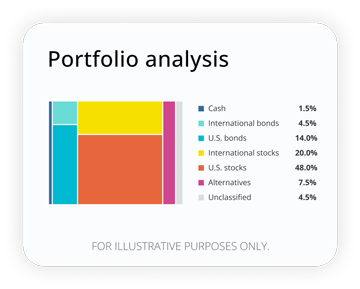
How well are your investments performing?
Analyze your portfolio in minutes and receive a target allocation for your goals.
1 Harvard Law School, “How to Negotiate a Higher Salary after a Job Offer,” October 2025
2 Yale University, “Salary Negotiations,” Accessed November 2025
3 Pew Research Center, “When negotiating starting salaries, most U.S. women and men don’t ask for higher pay,” April 2023
4 U.S. Bureau of Labor Statistics, “When Two Workers Doing the Same Job Earn Different Pay,” February 2017
5 SHRM, “When Two Workers Doing the Same Job Earn Different Pay,” February 2027
6 U.S. Bureau of Labor Statistics, “Occupational Employment and Wages,” May 2024
7 Pew Research Center, “When negotiating starting salaries, most U.S. women and men don’t ask for higher pay,” April 2023
8 University of Texas, “Negotiating Job Offers,” Accessed November 2025
9 University of Colorado Boulder, “Salary Negotiation,” Accessed November 2025
10 New York State Department of Labor, “Salary Negotiation Guide,” Accessed November 2025
11 Harvard Law School, “How to Negotiate a Higher Salary after a Job Offer,” October 2025
RO5016346-1125
 Get The Currency newsletter



The Currency editors
Staff contributors
The CurrencyTM writers and editors cover the latest financial news and insights shaping how we live, work, and play. The team provides accurate, data-driven, and timely content aimed at empowering financial freedom for all.
The content contained in this blog post is intended for general informational purposes only and is not meant to constitute legal, tax, accounting or investment advice. You should consult a qualified legal or tax professional regarding your specific situation. No part of this blog, nor the links contained therein is a solicitation or offer to sell securities. Compensation for freelance contributions not to exceed $1,250. Third-party data is obtained from sources believed to be reliable; however, Empower cannot guarantee the accuracy, timeliness, completeness or fitness of this data for any particular purpose. Third-party links are provided solely as a convenience and do not imply an affiliation, endorsement or approval by Empower of the contents on such third-party websites. This article is based on current events, research, and developments at the time of publication, which may change over time.
Certain sections of this blog may contain forward-looking statements that are based on our reasonable expectations, estimates, projections and assumptions. Past performance is not a guarantee of future return, nor is it indicative of future performance. Investing involves risk. The value of your investment will fluctuate and you may lose money.
Certified Financial Planner Board of Standards Inc. (CFP Board) owns the certification marks CFP®, CERTIFIED FINANCIAL PLANNER™, CFP® (with plaque design), and CFP® (with flame design) in the U.S., which it authorizes use of by individuals who successfully complete CFP Board's initial and ongoing certification requirements.