

Pay yourself first: What it means and how to start
Pay yourself first: What it means and how to start
Paying yourself first means saving part of your income before spending. You can choose a sustainable amount, automate savings, and keep essential bills covered
Pay yourself first: What it means and how to start
Paying yourself first means saving part of your income before spending. You can choose a sustainable amount, automate savings, and keep essential bills covered

10.16.2026
Key takeaways
- Pay yourself first, also called reverse budgeting, means setting aside money for savings or investing before allocating the rest to expenses.
- Automatic transfers can help you pay yourself first consistently, setting aside part of each paycheck for emergencies and long-term goals.
- You can choose a savings amount that fits your income and essential expenses, then adjust it as your budget and financial goals change.
Some 45% of Americans wished they had saved earlier and more consistently to prepare for major life changes, according to Empower research. Traditional budgeting strategies often prioritize bills and expenses ahead of savings or investing, but the pay yourself first strategy changes the game plan.
Also referred to as reverse budgeting, the pay yourself first strategy makes saving a planned priority while keeping enough money available for essential bills and minimum debt payments. The aim is to make saving a consistent part of your budget rather than an afterthought.
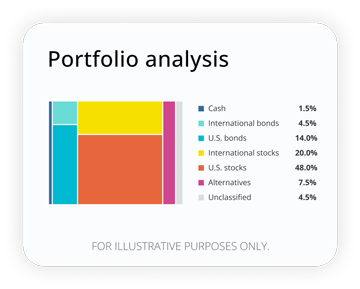
How well are your investments performing?
Analyze your portfolio in minutes and receive a target allocation for your goals.
What does it mean to pay yourself first?
To pay yourself first means to set aside money for savings, investing, or other future goals before covering expenses. Traditional budgeting methods often prioritize necessary expenses before saving or investing. Paying yourself first reverses the process — first moving a portion of funds into savings or another account before using the rest to cover your expenses.
Examples of paying yourself first
The pay yourself first budget can be used for different saving and investment goals, including:
- Payroll contributions to a workplace retirement plan, like a 401(k) or 403(b), or a health savings account (HSA), before each paycheck is deposited.
- Automatic transfers to a dedicated savings or investment account, like an IRA or high-yield savings account (HYSA), after paychecks are deposited.
- Scheduling extra payments toward debt principal, such as student loans or mortgages, after paychecks are deposited.
- Redirecting a portion of any additional income, such as raises or bonuses, to savings before increasing spending.
Why paying yourself first can work
Paying yourself first means lesser amounts remain accessible in your everyday account. As a result, there can be less temptation to spend money before it’s set aside, making saving a consistent habit.
Paying yourself first does not mean you can ignore essential bills, payments, and other expenses. A sustainable recurring amount is identified to always remain? in your everyday account to cover necessary financial obligations.
How much should you pay yourself first?
There are different methods for determining how much to pay yourself first. Some savers choose to set aside a fixed percentage of income, such as 10% or 20% of recurring pay checks. Others choose to dig deeper into their finances and align monthly cash flow and financial obligations with when they hope to reach specific savings goals. Regardless of approach, it’s important to identify a sustainable amount that can be consistently set aside for saving or investing without causing significant financial strain. This amount can be adjusted as necessary to account for changes in cash flow or time horizons.
Goals with identifiable timelines, such as saving for retirement or a child’s education, are often easier to plan for than attempting to prepare for an unexpected financial emergency. You can estimate a target amount and subtract any amount you already have saved, then divide the result by the number of pay periods remaining until your target date. The final amount is roughly what you would need to “pay yourself” from each paycheck to support this goal.
Read more: 6 ways to balance your saving, debt payoff, and investing goals
How to pay yourself first step-by-step
The overall process for paying yourself first consists of six steps:
- Review take-home pay and essential obligations: Identify what funds remain after each month or paycheck that can be diverted to savings or look for opportunities to reduce spending. The Empower Budget & Cash Flow Planner can help estimate monthly spending and income.
- Identify your goal: Start with a specific goal and target rather than a broader approach such as to “save more” for an emergency fund or meeting a future expense. Consider your timeline for achieving this targeted goal.
- Set a sustainable transfer amount: Begin with a small, repeatable amount or percentage of each paycheck to be placed in savings. Consider your monthly cash flow to determine what amount can be set aside without creating financial strain.
- Separate savings from everyday spending: Open or use an existing account for your savings. For example, 401(k)s and IRAs are common destinations for retirement savings, while high-yield savings accounts (HYSAs) are often used for near-term goals.
- Automate your contributions: Consider setting up automatic payroll retirement deductions or bank transfers to a savings account. This can help with consistency and timing.
- Review and adjust: Your contribution amounts can be adjusted as your cash flow and financial priorities change. Regular financial reviews can help identify shifts in income and monthly expenses that may allow additional funds to be directed toward savings.
Read more: How to set financial goals & stick to them in 5 steps
Pay yourself first example
Say you take home $2,000 after taxes per pay period and need $1,200 on average to cover bills and necessary payments. After reviewing your monthly spending habits, you determine that your nonessential spending comes to around $500 each period.
After subtracting your average expenses (essential and non-essential), you’re typically left with around $300 each pay period.
In this scenario, using the pay yourself first strategy, you might:
- Immediately pay yourself $300 (directing $150 to a retirement account and $150 to a savings account)
- Use the $1,200 to cover essential expenses
- Keep the remaining $500 in your checking account to spend or keep as a buffer
This is one example of what a pay yourself first budget might look like. Each person’s individual financial picture and goals are different. Taking the time to evaluate your own finances in detail may feel like an undertaking, but it’s essential for creating a personalized budget that works for you.
FAQ
Should you pay yourself first before paying bills?
Paying yourself first means making savings a planned priority. It does not mean letting bills go unpaid. While a portion of income is immediately set aside, enough money should remain in your everyday account to cover necessary expenses and to leave a buffer for discretionary spending.
Does paying down debt count as paying yourself first?
Paying down any debt, especially high-interest debt, can be part of your pay yourself first strategy. Minimum required payments count toward your essential expenses, while extra payments toward a debt’s principal can be included in the amount you pay yourself.
Consider balancing the pay yourself approach with other important goals, such as building an emergency fund, rather than replacing them. The amount that you would typically put into savings can be split or otherwise divided between both goals. This can help minimize compound interest while creating a cushion for future emergencies that otherwise might result in additional debt.
Read more: How to pay off debt
Is paying yourself first the same as the 50/30/20 rule?
Paying yourself first and the 50/30/20 rule are two distinct concepts, but they can be used together to build a comprehensive budgeting strategy.
The 50/30/20 rule is a percentage framework that divides take-home pay among needs (50%), wants (30%), and savings and debt repayment (20%). Using the pay yourself first strategy, you would immediately set aside the 20% portion of planned savings into a separate account. The 50% is then used to cover essential expenses, while the 30% acts as a buffer for discretionary spending.
How often should you pay yourself first?
Aligning contributions with pay periods can help improve consistency, as can setting a monthly schedule. The key is to transfer funds to savings as they become available, while keeping in mind when major bills and payments are typically due.
For example, say you’re generally paid twice a month, and most of your expenses are concentrated around the beginning of the month. You could schedule two different transfers to savings: a smaller transfer after the first paycheck when major bills and payments are due, and a larger transfer after the second paycheck when your expenses are lower.
RO6024511-1026
 Get The Currency newsletter



The Currency editors
Staff contributors
The CurrencyTM writers and editors cover the latest financial news and insights shaping how we live, work, and play. The team provides accurate, data-driven, and timely content aimed at empowering financial freedom for all.
The content contained in this blog post is intended for general informational purposes only and is not meant to constitute legal, tax, accounting or investment advice. You should consult a qualified legal or tax professional regarding your specific situation. No part of this blog, nor the links contained therein is a solicitation or offer to sell securities. Compensation for freelance contributions not to exceed $1,250. Third-party data is obtained from sources believed to be reliable; however, Empower cannot guarantee the accuracy, timeliness, completeness or fitness of this data for any particular purpose. Third-party links are provided solely as a convenience and do not imply an affiliation, endorsement or approval by Empower of the contents on such third-party websites. This article is based on current events, research, and developments at the time of publication, which may change over time.
Certain sections of this blog may contain forward-looking statements that are based on our reasonable expectations, estimates, projections and assumptions. Past performance is not a guarantee of future return, nor is it indicative of future performance. Investing involves risk. The value of your investment will fluctuate and you may lose money.
Certified Financial Planner Board of Standards Inc. (CFP Board) owns the certification marks CFP®, CERTIFIED FINANCIAL PLANNER™, CFP® (with plaque design), and CFP® (with flame design) in the U.S., which it authorizes use of by individuals who successfully complete CFP Board's initial and ongoing certification requirements.