

✏️ Do your homework

08.27.2026
Class is back — and so are the costs, with school shopping projected to reach a record $103.5 billion this year. Families with K-12 students expect to spend an average of $863, while college households could spend $1,437.
What’s on the list matters. Prices for kids’ apparel and computers are up 3.9% each since last summer; software and accessories have jumped 21.2%. School supplies and footwear are up a modest 1.2% and 2.1%, respectively — well below overall inflation of 3.4%.
Nearly half (47%) of shoppers plan to buy the essentials first and add items throughout the year. Reusing supplies, finding discounts, and shopping secondhand are other ways to stretch the budget.
— The Editors

🎓 Qualified answer: A 529 can cover more than college tuition but not every school expense qualifies. Learn which costs make the cut — from books and computers to certain K-12 expenses — and the rules to know before making a withdrawal.
📚 Investing 101: Investing for kids can build long-term savings while teaching money skills along the way. Compare 529 plans, custodial accounts, IRAs, and other options to see how they stack up by goal, taxes, and ownership.
🩺 Know the difference: Back-to-school season can also put family healthcare expenses in focus. HSAs and HRAs can help cover eligible costs, but who funds and owns the account — and what happens to unused money — can differ.
📝 Pop quiz: Nearly three-in-four Americans (73%) say well-being is rooted in the security that comes with a financial plan. Put yours to the test with seven questions spanning essential subjects like spending, debt, emergency savings, and retirement.

Salary study
Salary ranges can be a starting point for job candidates, but they also leave plenty of room for interpretation. An analysis of nearly 10 million U.S. job postings found* the average pay range spanned about $38,000.
A little homework can help narrow the gap. The latest wage data* from the U.S. Bureau of Labor Statistics provides benchmarks for about 830 occupations across* all states and roughly 530 areas. With numbers in hand, you can prepare for a salary negotiation and make your case.

Past due
Some 16% of U.S. adults said they paid a bill late or skipped a payment last year. When a payment slips, the sooner you act, the better: Added fees, interest, and potential credit impacts can follow.
Creditors generally don’t report late payments to credit bureaus until they’re at least 30 days overdue. Use that time to check what you owe, contact the company, and get payments back on schedule.
If a missed payment signals a bigger squeeze, you can revisit your budget and spending or use tools like the Empower Personal Dashboard™ to help you see where your money is going.

After school
The back-to-school budget goes beyond books and backpacks. About two-thirds of parents with kids in organized sports spend* up to $2,000 a year on equipment, fees, training, and travel, while roughly 20% spend between $2,000 and $5,000.
Those costs can mean trade-offs elsewhere. KPMG found* families may cut back on dining out, leisure, and entertainment to keep kids in the game. A sinking fund can help families plan ahead for sports costs and ease the squeeze on other spending.

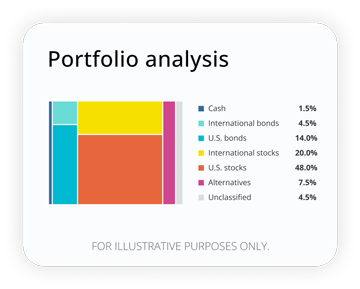
How well are your investments performing?
Analyze your portfolio in minutes and receive a target allocation for your goals.
*Third-party data is obtained from sources believed to be reliable; however, Empower cannot guarantee the accuracy, timeliness, completeness, or fitness of this data for any particular purpose. Third-party links are provided solely as a convenience and do not imply an affiliation, endorsement, responsibility, or approval by Empower of the contents on such third-party websites.
RO 5859538-0826 WF- 6894151-0826
 Get The Currency newsletter



The Currency editors
Staff contributors
The CurrencyTM writers and editors cover the latest financial news and insights shaping how we live, work, and play. The team provides accurate, data-driven, and timely content aimed at empowering financial freedom for all.
The content contained in this blog post is intended for general informational purposes only and is not meant to constitute legal, tax, accounting or investment advice. You should consult a qualified legal or tax professional regarding your specific situation. No part of this blog, nor the links contained therein is a solicitation or offer to sell securities. Compensation for freelance contributions not to exceed $1,250. Third-party data is obtained from sources believed to be reliable; however, Empower cannot guarantee the accuracy, timeliness, completeness or fitness of this data for any particular purpose. Third-party links are provided solely as a convenience and do not imply an affiliation, endorsement or approval by Empower of the contents on such third-party websites. This article is based on current events, research, and developments at the time of publication, which may change over time.
Certain sections of this blog may contain forward-looking statements that are based on our reasonable expectations, estimates, projections and assumptions. Past performance is not a guarantee of future return, nor is it indicative of future performance. Investing involves risk. The value of your investment will fluctuate and you may lose money.
Certified Financial Planner Board of Standards Inc. (CFP Board) owns the certification marks CFP®, CERTIFIED FINANCIAL PLANNER™, CFP® (with plaque design), and CFP® (with flame design) in the U.S., which it authorizes use of by individuals who successfully complete CFP Board's initial and ongoing certification requirements.