

Missed a payment? What happens next and how to limit the effects
Missed a payment? What happens next and how to limit the effects
A late bill payment can lead to fees, added interest, and changes to your credit score, but acting quickly may help avoid more financial impact
Missed a payment? What happens next and how to limit the effects
A late bill payment can lead to fees, added interest, and changes to your credit score, but acting quickly may help avoid more financial impact

08.11.2026
Key takeaways
- Late payments are generally reported to credit bureaus after 30 days and can remain on a credit report for up to seven years.
- The average credit-card late fee is about $32.
- Budget adjustments, debt repayment strategies, and bill assistance programs may help prevent future missed payments.
If you’ve ever missed a payment on a credit card, mortgage, or other loan, you’re not alone. It’s a money situation that’s on more people’s minds as U.S. household debt reached $18.8 trillion in the second quarter of 2026.1
In 2025, 16% of U.S. adults said they had paid a bill late or skipped a payment, according to new research from the Federal Reserve Board.2 Even one late payment can come at a cost; credit card late fees, for example, average about $32.3
While one-off late fees may not seem like too big of a deal, missed payments can cause bigger ripple effects on your finances — such as additional interest and potentially hurting your credit score.
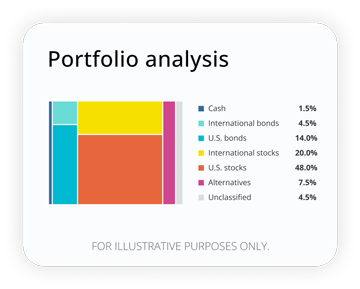
How well are your investments performing?
Analyze your portfolio in minutes and receive a target allocation for your goals.
What to do when you miss a payment
Make contact when you miss the payment deadline
Maybe you realize you missed a payment by one day — or it’s more than 30 days delinquent and you’ve received an email or notification. Regardless of how far you’re past the deadline, your next move should be with the company you need to pay. Whether that’s a utility, cable/phone company, credit card issuer, or mortgage lender, start by logging into your account or contacting customer service to understand the exact dollar amount you owe.
During the call or chat, make sure you understand:
- How much the minimum payment is
- How much you’re being charged in additional penalties (such as late fees)
- How much you’re being charged in interest — accumulating daily interest on outstanding balances could grow debt quickly.
- When your next required payment is due
You can stop any interest from accumulating if you’re able to pay off the whole outstanding balance (plus any late fees that may apply). Otherwise, try to make at least the minimum payment that your provider discloses.
Emergency savings can also help you get caught up. As of May 2026, 55% of American adults had three months’ worth of emergency savings, and avoiding additional interest on an overdue bill may be a good reason to tap into those funds.4
Read more: 5 terms to know to use credit cards responsibly
Tips for talking to your lender about missed payments
A credit card company, bank, or lender could have some flexibility to waive or adjust fees related to a late payment — but you won’t know unless you ask. Emphasize your history with the institution when you get in touch, and mention if you have a strong payment history or multiple accounts or services that demonstrate your loyalty as a customer.5
If you’ve been affected by a natural disaster or personal emergency, explain the circumstances to the representative and ask what options may be available to help you recover financially.6
Making your case could take on new meaning as AI expands its uses: Up to 80% of digital customer service interactions could be handled by the growing technology within the next five years.7
Moving beyond a missed payment
Once you’ve decided on how to handle the initial payment, use the next month’s billing cycle to stay diligent on managing your account. Check the next statement closely to ensure that the action you took after the missed payment has been reflected correctly.
Looking ahead can pay off, too. Consider setting up email, text, or push notifications for upcoming due dates, account activity, or transactions over a specific dollar amount. Making use of those and other features can help you stay on top of your accounts and avoid surprises when it’s time to pay.
How a missed payment affects your credit score
Your credit score is an important measure used by lenders and providers to help decide whether you qualify for new credit cards, loans, insurance, and other financial services. Your credit report shows active lines of credit, balances, lenders, payment histories, and other categories maintained by the three U.S. credit reporting bureaus. Americans can request a free credit report annually to review their score, accounts, and check for any reporting errors.
Read more: What is the average credit score? See how you compare
Payment history accounts for up to 35% of your credit score, making missed payments potentially significant. So how long do late payments stay on your credit report?
Creditors generally won’t report a late payment until it’s at least 30 days overdue, at which point the debt is considered delinquent.8 A mortgage payment that’s 30 days late could impact your credit score by as much as 150 points — depending on your financial situation — and stay on your credit report for up to seven years. That’s in addition to any penalties or fees your loan servicer can charge.9
Getting bills under control
Balancing income and expenses remain a challenge for many Americans. In April 2026, inflation outpaced wage growth for the first time in three years.10 Empower research found Americans were equally likely to name income and expenses (35% each) as their biggest impediments to financial happiness.
Revisit your budget
Taking an afternoon to more closely examine your finances can help whether you already have a budget or are starting from scratch, review your income and non-essential spending to see where your money is going. A tool like the free Empower Personal DashboardTM can help connect your accounts.
From there, you can decide how much needs to go toward fixed expenses and where there’s room to pull back — with the goal of putting more of that money toward your bills. For each major expense — credit card, mortgage / rent, utilities, etc — determine how much you can realistically set aside for each.
Read more: How to pay off debt
Consider debt options
Missing a payment could be a wake-up call to look more closely at outstanding bills and see if there are other ways to manage your debt.
For past-due accounts that are accumulating interest, trying a couple of common debt payoff options could be a good place to start:
- Debt snowball approach: This strategy builds momentum by paying off your smallest amount of debt first — regardless of the interest rate — and then paying off the next-highest amount, and so on. For example, you might pay off a $500 energy bill before putting money toward a credit card bill with a balance in the thousands of dollars.
- Debt avalanche approach: This tactic focuses on minimizing interest costs by paying the debt with the highest interest rate first. In this scenario, you would prioritize a loan with a 20% interest rate (even if you owe thousands of dollars on it) rather than a smaller-amount bill with a 9% interest rate.
With new rules established starting in July 2026, current federal student loan borrowers should also check where their debt stands. You may need to enroll in a new repayment plan, or your repayment period could change — as several previous income-driven plans are being phased out.
Read more: Student loan overhaul: What borrowers need to know
Ask if bills can be lowered
Money management and handling your bills doesn’t have to happen alone. Financial professionals can help with budget breakdowns and setting money goals, while the companies you’re paying may offer programs to make bills more manageable.
Staying current on bills isn’t just about timely money transfers, it’s also about making sure the costs fit your financial situation. If you’re struggling to keep up, it’s worth checking to see if you’re eligible for any payment help.
You can also check for local arrangements and state or federal benefits you may qualify for. Support could help cover certain bills directly or free up money elsewhere in your budget.11
For utility bills, you can check with your local provider about types of assistance such as one-time help for a particular billing cycle, customized payment plans that spread out overall costs over time, or ongoing discounts based on household income or participation in other programs.12,13
Around 40% of American adults have some kind of medical debt, and a variety of organizations and charities tied to specific conditions or causes can help pay medical bills.14,15
About 60% of U.S. hospitals are non-profits and are required by federal law to have a financial assistance policy (FAP) for patients. If qualifications are met, you could see bills reduced or possibly eliminated.16
Aligning the timing
Missing a bill payment can be frustrating, but it can also be a reason to reassess your budget and payment routines.
Taking steps to catch up, staying on top of future due dates, and reaching out of assistance if needed can help put your bills and your broader finances on better footing.
1 Federal Reserve Bank of New York, “Household Debt Balances Decreased Slightly; Credit Card Delinquency Transition Rates Remained Steady,” August 2026.
2 Board of Governors of the Federal Reserve System, “Report on the Economic Well-Being of U.S. Households in 2025 - May 2026,” accessed August 2026.
3 The New York Times, “Court Scraps $8 Credit Card Late Fee Limit, at Consumer Bureau’s Request,” April 2025.
4 Board of Governors of the Federal Reserve System, “Report on the Economic Well-Being of U.S. Households,” accessed August 2026.
5 FDIC, “Overdraft and Account Fees,” accessed August 2026.
6 CFPB, “Start recovering and rebuilding your financial life,” accessed August 2026.
7 CNBC, “‘I hate customer-service chatbots’: The consumer-AI refund relationship is off to a rocky start,” April 2026.
8 Experian, “Can One 30-Day Late Payment Hurt Your Credit?” July 2025.
9 Rocket Mortgage, “The hidden costs of late mortgage payments,” September 2025.
10 Retail Dive, “Inflation hits 3.8%, outpaces wage growth for first time in 3 years,” May 2026.
11 211.org, “Help Paying Bills,” accessed August 2026.
12 PG&E, “Financial Assistance,” accessed August 2026.
13 Southern California Edison, “Bill Assistance Programs,” accessed August 2026.
14 KFF, “Americans’ Challenges with Health Care Costs,” April 2026.
15 GoodRX, “Need Help Paying Medical Bills? 9 Programs and Organizations That Offer Assistance,” May 2025.
16 Health Bill Central, “Your Rights: What Hospitals Must Tell You About Financial Assistance,” accessed August 2026.
RO5828732-0826
 Get The Currency newsletter



The Currency editors
Staff contributors
The CurrencyTM writers and editors cover the latest financial news and insights shaping how we live, work, and play. The team provides accurate, data-driven, and timely content aimed at empowering financial freedom for all.
The content contained in this blog post is intended for general informational purposes only and is not meant to constitute legal, tax, accounting or investment advice. You should consult a qualified legal or tax professional regarding your specific situation. No part of this blog, nor the links contained therein is a solicitation or offer to sell securities. Compensation for freelance contributions not to exceed $1,250. Third-party data is obtained from sources believed to be reliable; however, Empower cannot guarantee the accuracy, timeliness, completeness or fitness of this data for any particular purpose. Third-party links are provided solely as a convenience and do not imply an affiliation, endorsement or approval by Empower of the contents on such third-party websites. This article is based on current events, research, and developments at the time of publication, which may change over time.
Certain sections of this blog may contain forward-looking statements that are based on our reasonable expectations, estimates, projections and assumptions. Past performance is not a guarantee of future return, nor is it indicative of future performance. Investing involves risk. The value of your investment will fluctuate and you may lose money.
Certified Financial Planner Board of Standards Inc. (CFP Board) owns the certification marks CFP®, CERTIFIED FINANCIAL PLANNER™, CFP® (with plaque design), and CFP® (with flame design) in the U.S., which it authorizes use of by individuals who successfully complete CFP Board's initial and ongoing certification requirements.