

Gold vs. silver investing: 5 things to know in 2026
Gold vs. silver investing: 5 things to know in 2026
Rising demand and price swings are putting gold and silver back in focus, but there are key differences in liquidity, uses, and volatility
Gold vs. silver investing: 5 things to know in 2026
Rising demand and price swings are putting gold and silver back in focus, but there are key differences in liquidity, uses, and volatility
05.14.2026
Key takeaways
Gold’s larger, more liquid market contrasts with silver’s industrial demand and sharper price swings
Both metals are viewed as diversification tools but are taxed as collectibles, with up to a 28% capital gains rate.
The silver market is 90% smaller than gold’s reach.
Precious metals have been taking the spotlight recently in investors’ portfolios: Nearly two in five Americans age 35-64 (38.6%) bought gold or silver over the past 12 months, according to a January survey, and more than 90% of those buyers could purchase more in 2026.1
Gold and silver prices soared last year — gold rose 44% and silver surged 145%.2,3 Prices continue to fluctuate in 2026, as of May 11:4
Metal | Price change, 1 day | Price change, 1 month |
Gold | 0.48% | -0.14% |
Silver | 7.41% | 14.23% |
Worldwide demand for gold has increased, as central banks outside of the U.S. have added to their holdings after the start of the Middle East conflict. Precious metals are commonly seen as investor hedges against macroeconomic volatility and inflation, since their value is stored outside of financial markets and there’s fundamentally a limited supply.5
For investors monitoring the silver and gold markets or looking to get started in precious metals, here are five things to keep in mind for 2026.
3 differences between gold and silver
Gold is a more liquid market
Getting started with precious metals investing has become easier as their popularity has grown over the past several years. Big-box club Costco added gold bars to its inventory in 2023 and now sells silver, too.6
The market for silver is about a tenth of the size of gold’s share, and silver could be getting even tighter with mining production falling over the past decade.7
Investors can turn to local, in-person coin shops or online dealers if they’re looking to sell their metals for a quick payout. However, changes in spot prices can affect whether coin stores put limits on what they’re accepting.8
Read more: Is jewelry a good investment?
One caveat with silver can be the spread — the difference between buying and selling prices — which tends to widen more during times of market volatility than it does for gold, a generally more stable market.9
Silver has more uses across the economy
When it comes to jewelry and kitchen silverware, the cool-colored metal you see is likely sterling silver — a blend of pure silver and other metals that adds strength and durability for everyday use.10
Prices for these items have been outpacing inflation, which stands at an annual 3.8% clip: According to the Consumer Price Index, dishes and flatware prices have risen 15.4% since last April, while jewelry is up 16.1%, with metal costs a contributing factor.
Jewelry maker Pandora announced in February that it’s adding platinum-plated versions of pieces to lower the impact of silver prices on its business.11
Silver also holds other industrial uses:12
Silver is part of the equation as demand rises for electric cars due to rising gas prices. A typical electric vehicle includes 25 grams of silver in its components, while larger EVs can have double the amount.
The metal is a component in AI chips used in servers and data centers, which are expected to see a global spend of $939 billion by 2028.
As of mid-January, the amount of silver (in paste form) used in solar panel production made up 29% of the total cost of a single panel. The solar industry accounted for about 17% of overall silver demand last year.13
Silver prices are lower than gold, but can be more volatile
Spot gold prices are higher per ounce than silver, ending May 11 at $4,741.26 and $86.37, respectively.14 Silver’s lower cost can make it more accessible for investors to gain exposure to the market, though the global demand for silver bars and coins in 2026 is expected to increase by 18%.15
Silver has seen much larger price swings in early 2026: Between Jan. 1 and Jan. 27, the price gained nearly 56%, but then fell around 29% by Feb. 2.16
Silver doesn’t attract the same demand as gold does from central banks and relies more on its industrial applications. If that usage slips or shifts, it may have a domino effect on the market for silver.17
2 ways silver and gold are similar
Both gold and silver can diversify your portfolio
Precious metals are generally seen as a safe-haven investment, with strong investor demand during times of economic uncertainty, such as rising interest rates.
However, gold and silver in their physical form don’t generate interest or dividends, compared to other investment choices.
Both precious metals are taxed as collectibles
As with all investments, people must consider how silver or gold’s potential growth and price changes can impact their tax situations.
Capital gains occur when you sell an asset that’s increased in value compared to the original cost basis. In the case of precious metals, physical silver and gold are treated as collectibles for tax purposes, which means they’re subject to a maximum capital gains tax rate of 28%.18
State tax rules vary for gold and silver, so consulting a tax professional or financial advisor can help determine how best to structure your tax strategies, such as if you want to balance your portfolio performance with tax-loss harvesting.
Read more: How do investing decisions affect taxes? Get a Sense Check
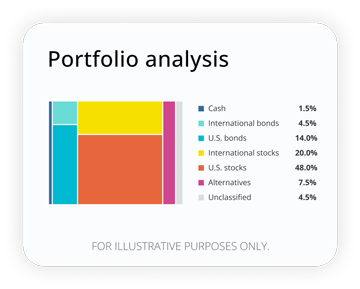
How well are your investments performing?
Analyze your portfolio in minutes and receive a target allocation for your goals.
1 PR Newswire, “New Survey: 38.6% of Americans Aged 35-64 Bought Gold or Silver; Over 9 in 10 Buyers Plan to Buy Again In 2026,” January 2026.
2 World Gold Council, “Gold Demand Trends: Q4 and Full Year 2025,” January 2026.
3 Forbes, “Silver Surged 145 Percent In 2025 As Commodities Reasserted Themselves” accessed January 2026.
4 Trading Economics, “Gold,” accessed May 2026.
5 The New York Times, “Why Countries Are Stocking Up on Gold,” May 2026.
6 Costco, “Precious Metals,” accessed May 2026.
7 CNBC, “Silver hit record highs in 2025 — here’s why the ‘Devil’s metal’ could have further to run,” November 2025.
8 Business Insider, “Coin shops say they're swimming in so much silver and gold that they're having to limit purchases,” February 2026.
9 GoldSilver, “Gold vs Silver: The Liquidity Difference That Matters,” accessed May 2026.
10 JM Bullion, “What is the value of sterling silver?” accessed May 2026.
11 CBS News, “As silver prices soar, jeweler Pandora turns to platinum,” February 2026.
12 CNBC, “Silver hit record highs in 2025 — here’s why the ‘Devil’s metal’ could have further to run,” November 2025.
13 Bloomberg, “Silver’s Rally Slams Solar Makers Struggling With Losses,” January 2026.
14 Trading Economics, “Gold,” accessed May 2026.
15 Reuters, “Silver faces sixth year of deficit with stock drawdown raising squeeze risks, research shows,” April 2026.
16 CBS News, “Here's how silver's price has changed in 2026 (and what investors should consider now),” April 2026.
17 Business Insider, “Silver's record break above $60 shows how central the metal has become to the AI build-out,” December 2025.
18 Yahoo Finance, “Investing in silver or other metals? Here's how to avoid taxes.” March 2026.
Investing in gold, silver, and other precious metals involves risk and may not be suitable for all investors. The value of precious metals can fluctuate significantly based on market conditions, including changes in supply and demand, interest rates, currency values, geopolitical events, and broader economic factors.
Precious metals are often used as a tool for portfolio diversification; however, diversification does not guarantee a profit or protect against losses. Allocations to gold or silver should be considered as part of a broader, balanced investment strategy.
RO5486231-0526
 Get The Currency newsletter


The Currency editors
Staff contributors
The CurrencyTM writers and editors cover the latest financial news and insights shaping how we live, work, and play. The team provides accurate, data-driven, and timely content aimed at empowering financial freedom for all.
The content contained in this blog post is intended for general informational purposes only and is not meant to constitute legal, tax, accounting or investment advice. You should consult a qualified legal or tax professional regarding your specific situation. No part of this blog, nor the links contained therein is a solicitation or offer to sell securities. Compensation for freelance contributions not to exceed $1,250. Third-party data is obtained from sources believed to be reliable; however, Empower cannot guarantee the accuracy, timeliness, completeness or fitness of this data for any particular purpose. Third-party links are provided solely as a convenience and do not imply an affiliation, endorsement or approval by Empower of the contents on such third-party websites. This article is based on current events, research, and developments at the time of publication, which may change over time.
Certain sections of this blog may contain forward-looking statements that are based on our reasonable expectations, estimates, projections and assumptions. Past performance is not a guarantee of future return, nor is it indicative of future performance. Investing involves risk. The value of your investment will fluctuate and you may lose money.
Certified Financial Planner Board of Standards Inc. (CFP Board) owns the certification marks CFP®, CERTIFIED FINANCIAL PLANNER™, CFP® (with plaque design), and CFP® (with flame design) in the U.S., which it authorizes use of by individuals who successfully complete CFP Board's initial and ongoing certification requirements.