

📅 The long game

03.19.2026
Tax filing tends to grab headlines this time of year: The average refund is up 10.6% year over year as of early March, hitting $3,676.* But the real story may be how to shape tax outcomes over the long game.
Financial choices made throughout the year — from investing and tax-loss harvesting to retirement contributions, student loan payments, and health savings accounts (HSAs) — can help people avoid withholding errors, missed credits or deductions, and surprise bills that are already baked in by filing time.
Here’s how a long-game approach can pay off at tax time.
— The Editors

🏁 Finish line: With higher refunds expected this year, some taxpayers may use the boost to buy a car. Used vehicle prices averaged $25,533* in January, down from about $28,000 in 2022 — and some analysts anticipate a strong selling season, fueled by more discretionary income from refunds. Others may devote refund dollars to longer-term goals: investing, paying down debt, or building up emergency savings.
⛽ Pumped up: The national average price for regular gas is up to $3.84* per gallon as of March 18 compared with $3.08 a year ago and still below the record U.S. average of $5.02 in June 2022. With road trip season around the bend, dollars may not stretch as much in some states: Fueling up is most expensive in California at $5.53 a gallon, and least pricey in Kansas at $3.15.
🍔 Sizzling strategy: Hamburger connoisseurs can parlay their expertise into a dream job and a $100,000* annual paycheck as Chief Tasting Officer (CTO) at Wendy’s. The fast-food chain wants to up its social media game with a “chill” CTO who has screen presence, social savvy, and an appetite for the brand. Meanwhile, consumers at the grocery store may have a beef with the meat’s rising prices, which are up 14.4% year over year.

Not so taxing
With $124 trillion in wealth set to change hands across generations by 2048, estate and inheritance taxes — and how to avoid them — may be top of mind for some.
The good news? Most families are not affected: In 2026 the federal estate tax threshold is $15 million per individual and $30 million per couple, and there’s no federal tax on inheritances. Keep in mind though that 12 states impose estate taxes and five states tax inheritances.
Making quarterly estimated tax payments can be a good way to help stay ahead of the game and avoid higher-than-expected Tax Day bills or penalties.

Next quarter moves
Leaving the workforce doesn’t mean retiring from taxes — but it can change the rules of the game. There are several nuances to keep in mind that could affect tax bills for retirees:
Required Minimum Distributions (RMDs) from certain tax-deferred retirement accounts generally begin by age 73 and can affect taxable income.
Unless Social Security benefits are the only source of retirement income, as much as 50% up to 85% of benefits may be taxable.
Retirees can take advantage of a temporary Social Security tax exemption of up to $6,000 for individuals (up to $12,000 for couples) from 2025 through 2028. However, the exemption phases out at higher incomes.
Long-term capital gains are still taxed at 0%, 15%, or 20%, depending on taxable income.
Read more about how to plan for taxes in retirement on The CurrencyTM.

Pet plays
The wellness trend is flowing over to pets, with some families shelling out $1,000 on a single grooming session and upwards of $11,000 annually. The pet wellness industry is projected to reach $19.5 billion this year and $46.7 billion* by 2036.
Some 97% of owners consider their furry friends part of the family. But the IRS takes a different view — pets are not recognized as dependents and most routine pet-related costs generally are not deductible.
There are certain circumstances, however, that do allow filers to write off pet expenses on their taxes, including foster pets, service animals, and necessary business uses. Read more on The Currency.

👓 ICYMI — The latest on housing, taxes, and finances:
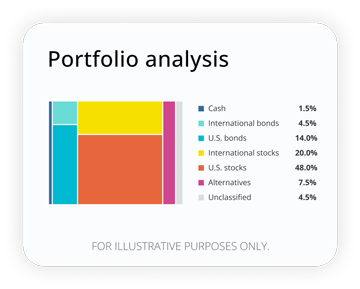
How well are your investments performing?
Analyze your portfolio in minutes and receive a target allocation for your goals.
*Third-party data is obtained from sources believed to be reliable; however, Empower cannot guarantee the accuracy, timeliness, completeness, or fitness of this data for any particular purpose. Third-party links are provided solely as a convenience and do not imply an affiliation, endorsement, responsibility, or approval by Empower of the contents on such third-party websites.
RO5296859-0326 WF5945750-0326
 Get The Currency newsletter



The Currency editors
Staff contributors
The CurrencyTM writers and editors cover the latest financial news and insights shaping how we live, work, and play. The team provides accurate, data-driven, and timely content aimed at empowering financial freedom for all.
The content contained in this blog post is intended for general informational purposes only and is not meant to constitute legal, tax, accounting or investment advice. You should consult a qualified legal or tax professional regarding your specific situation. No part of this blog, nor the links contained therein is a solicitation or offer to sell securities. Compensation for freelance contributions not to exceed $1,250. Third-party data is obtained from sources believed to be reliable; however, Empower cannot guarantee the accuracy, timeliness, completeness or fitness of this data for any particular purpose. Third-party links are provided solely as a convenience and do not imply an affiliation, endorsement or approval by Empower of the contents on such third-party websites. This article is based on current events, research, and developments at the time of publication, which may change over time.
Certain sections of this blog may contain forward-looking statements that are based on our reasonable expectations, estimates, projections and assumptions. Past performance is not a guarantee of future return, nor is it indicative of future performance. Investing involves risk. The value of your investment will fluctuate and you may lose money.
Certified Financial Planner Board of Standards Inc. (CFP Board) owns the certification marks CFP®, CERTIFIED FINANCIAL PLANNER™, CFP® (with plaque design), and CFP® (with flame design) in the U.S., which it authorizes use of by individuals who successfully complete CFP Board's initial and ongoing certification requirements.