

Tax planning for the sandwich generation: How to minimize taxes before filing
Tax planning for the sandwich generation: How to minimize taxes before filing
Paying attention to income sources and strategic saving can help sandwich-generation adults be more prepared at filing time
Tax planning for the sandwich generation: How to minimize taxes before filing
Paying attention to income sources and strategic saving can help sandwich-generation adults be more prepared at filing time

02.11.2026
Key takeaways
- Longer lifespans and unpaid caregiving are raising the financial and mental load for adults supporting both children and aging parents.
- Additional income like required minimum distributions and work bonuses could increase overall tax burden.
- Using tax credits and tax-advantaged accounts can help offset caregiving expenses.
The average American lifespan has been rising, with life expectancy at 79 years in 2024 — an all-time high since the government began tracking in 1900.1 With more years to live comes the need for more savings, for that money to stretch longer, and possibly more people to assist with aging.
Some 7.6 million Americans providing unpaid eldercare are also parents with children under 18 living at home, based on the most recent data from the Bureau of Labor Statistics data.2 Caught in the middle of covering these familial responsibilities are adults caring for both their parents and kids of their own, known as the “sandwich generation.” The group is most closely associated with Generation X, generally between the ages of 45 and 60.
Adults in this situation may see higher overall household expenses or could need to reduce work hours or quit a job to free up time. These caregivers’ impact is estimated to be worth $691 billion in non-monetary contributions a year.3
Tax planning can be a meaningful way for “sandwiched” adults to manage competing priorities for their time and money. Leveraging these money moves throughout the year can help avoid surprises when it’s time to file.
Track how income sources impact taxes
Families covering multiple age groups may see their cash flow come from various jobs and income sources, and managing those earlier in the year can give a clearer picture at tax season, especially around which tax bracket you’ll fall into.
Older generations of parents and grandparents could be taking required minimum distributions (RMDs) from employer-sponsored retirement plans and traditional IRAs, which may increase their taxable income. RMDs are taxed at the person’s regular income tax rate. However, Roth 401(k) accounts and Roth IRAs do not require RMDs while the account owner is still alive; the withdrawals take effect once the accounts are transferred to their beneficiaries.4
It’s also important to stay on top of tax withholding, as America’s “pay as you go” system requires diligent employer withholding via form W-4 or estimated tax payments throughout the year to avoid potential penalties and interest.
An Empower study shows around a third of Americans (32%) expect to receive a work bonus, so understanding how that extra income is taxed as “supplemental wages” can help clarify a person’s overall tax burden.
Determine dependents, tax credits, and deductions
The question, “Who can be claimed as a dependent?” is especially relevant for sandwich-generation adults juggling commitments across generations. The IRS divides dependents into two categories, with some general guidelines, and the IRS dives further into additional criteria:5
A qualifying child:
- Is your son, daughter, stepchild, eligible foster child, brother, sister, half-sister or -brother, stepbrother, stepsister, adopted child or the child of one of them
- Is 18 or younger, or under 24 if they’re a full-time student; permanently disabled children are eligible for life
- Lives with you more than half the year, generally
- Receives more than half of their financial support from you
Meanwhile, a qualifying relative:
- Isn’t a qualifying child of any taxpayer
- Is a member of your household for the entire year, generally
- Has gross income of less than $5,050
- Gets over half of their financial support from you
If you claim a family member as a dependent on your federal tax return, they still may need to file a return of their own; the IRS outlines the filing requirements for dependents.
Some sandwiched adults who claim dependents on their taxes can unlock certain tax credits and deductions relevant to their situation and adjusted gross income (AGI), including:
- Earned income tax credit
- Child tax credit, which has been raised to $2,200 for 2025 and will adjust for inflation starting this year.
- Medical and dental expenses deduction6
- Child and dependent care tax credit, which applies to expenses like daycare and summer camps7
- American opportunity tax credit, for eligible college student expenses8
Consulting a tax professional can help determine specific eligibility for tax credits.
It’s also worth running the scenarios to see if itemizing or taking the standard deduction has a better financial outcome for filing, as some sandwiched adults could qualify for a larger standard deduction that applies to taxpayers 65 and older. There’s an additional deduction from 2025 to 2028, though the amount varies depending on filing status and is phased out for those with modified adjusted gross income over $75,000 ($150,000 for joint filers).
Read more: Standard deduction: Tax advantage
Use tax-advantaged accounts strategically
529 for college savings
Being tax-savvy also applies to where people are putting their savings. Several types of accounts have tax benefits can make savings work harder — and serve the financial needs of a multigenerational family.
Investing in a child’s education via a 529 investment account can be an opportunity for younger generations to avoid large amounts of student loan debt while building generational wealth for the family overall. A 529 plan can be attractive for families, as any earnings within the plan grow free of federal taxes and are not subject to tax upon withdrawal — if the funds are put toward eligible education expenses.
Older relatives can also pass down their money as a “giving while living” inheritance tactic by making deposits into a child’s 529 plan. Keep in the mind the $19,000 annual gift tax exclusion that parents and relatives could be up against; this limits how much people can give to an individual before gift tax applies.
There’s also the option to roll over up to $35,000 of eligible 529 funds into a Roth IRA for the child, which can accelerate their retirement savings.
401(k)s and IRA for retirement
Empower research found that Americans want to retire by age 58 on average, with at least $1.06 million in retirement savings. Contributing what you can to tax-advantaged retirement accounts like 401(k)s and IRAs could help keep that nest egg on track while still leaving enough cash flow for everyday expenses across the family. Even a slight increase to contributing from a work raise or yearly bonus can keep long-term savings moving forward without as much visible impact to your accounts, since the money is automatically deducted from paychecks.
Read more: Here’s what saving 1% more could mean for your retirement
Balancing a family’s money goals
Sandwich-generation adults may feel a lot of pressure from caring for older and younger relatives, though keeping a family in financial balance also means not fully ignoring individual money milestones.
Keeping taxes in mind throughout the year can help people juggling many family needs stay both mentally grounded and financially prepared.
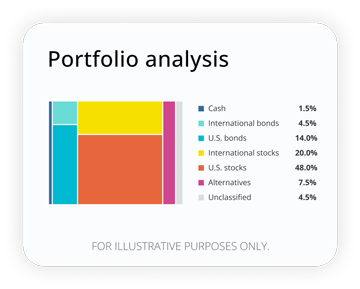
How well are your investments performing?
Analyze your portfolio in minutes and receive a target allocation for your goals.
1 NPR, “U.S. life expectancy hits a new high as deaths from overdoses and COVID fall,” January 2026.
2 U.S. Bureau of Labor Statistics, “Unpaid Eldercare in the United States News Release,” September 2025.
3 Patterson, S. E. (2022), “Feeling the Squeeze,” Contexts, accessed February 2026.
4 IRS, “Retirement plan and IRA required minimum distributions FAQs,” accessed February 2026.
5 IRS, “Dependents,” accessed February 2026.
6 IRS, “Publication 502 (2024), Medical and Dental Expenses,” accessed February 2026.
7 IRS, “Child and Dependent Care Credit information,” accessed February 2026.
8 IRS, “American Opportunity Tax Credit,” accessed February 2026.
RO5204311-0226
 Get The Currency newsletter



The Currency editors
Staff contributors
The CurrencyTM writers and editors cover the latest financial news and insights shaping how we live, work, and play. The team provides accurate, data-driven, and timely content aimed at empowering financial freedom for all.
The content contained in this blog post is intended for general informational purposes only and is not meant to constitute legal, tax, accounting or investment advice. You should consult a qualified legal or tax professional regarding your specific situation. No part of this blog, nor the links contained therein is a solicitation or offer to sell securities. Compensation for freelance contributions not to exceed $1,250. Third-party data is obtained from sources believed to be reliable; however, Empower cannot guarantee the accuracy, timeliness, completeness or fitness of this data for any particular purpose. Third-party links are provided solely as a convenience and do not imply an affiliation, endorsement or approval by Empower of the contents on such third-party websites. This article is based on current events, research, and developments at the time of publication, which may change over time.
Certain sections of this blog may contain forward-looking statements that are based on our reasonable expectations, estimates, projections and assumptions. Past performance is not a guarantee of future return, nor is it indicative of future performance. Investing involves risk. The value of your investment will fluctuate and you may lose money.
Certified Financial Planner Board of Standards Inc. (CFP Board) owns the certification marks CFP®, CERTIFIED FINANCIAL PLANNER™, CFP® (with plaque design), and CFP® (with flame design) in the U.S., which it authorizes use of by individuals who successfully complete CFP Board's initial and ongoing certification requirements.