

Investing in Yourself: How to navigate savings in the 2025 job market
Investing in Yourself: How to navigate savings in the 2025 job market
Switching jobs can be a chance to take a closer look at key investment vehicles across real estate, savings accounts, and taxes
Investing in Yourself: How to navigate savings in the 2025 job market
Switching jobs can be a chance to take a closer look at key investment vehicles across real estate, savings accounts, and taxes

10.01.2025

Listen
·Investing in Yourself: How to navigate savings in the 2025 job market
Key takeaways
Americans have been saving around 4% or more of their income in 2025.
Rising U.S. home prices could make home equity options more appealing.
Rolling over workplace retirement accounts can help keep potential compounding on track.
Workers may face career transitions this year as overall hiring appears to cool. How people approach the changing landscape can illustrate Americans’ views on building wealth, as seen in Empower research.
Americans have seen a slower pace of hiring in today’s job market. However, some workers may treat this time as an opportunity to boost their savings. Across the U.S., the personal savings rate has been above 4% since January 2025, and over the past year, average hourly earnings increased by 3.7%.1
The median amount Americans have stored away for emergencies is $500, based on an Empower study, and more than half of people (52%) regret not starting an emergency fund sooner. Building up that safety net can be key to hedge against future job changes.
As people look to where their savings could be most valuable, thinking beyond a checking or savings account may be a worthwhile deep dive.
Use specialized accounts to continue overall saving
Job moves may bring fluctuations in take-home pay, so existing income could be reduced or may need to stretch further. Looking into accounts tailored to specific spending categories could free up savings for down the line.
Consider home equity options
As mortgage rates have dropped recently, people with real estate under their belt could examine their home value. The median sale price of existing homes in the U.S. sat at $422,400 as of July 2025, though people changing jobs may not want to sell their home or relocate, possibly taking on a new mortgage.2
Those planning to stay put have another financial option that has been flying under the radar for many people. Home equity is the difference between what a home is valued at and the amount still owed on a mortgage, and the measure has been rising as home prices have generally increased.
As of the second quarter of 2025, American homeowners have accumulated over $35.7 billion in equity, setting a new all-time high.3 However, almost seven in ten (69%) mortgage holders haven’t tapped into their home equity in the past two years nor considered it, according to Empower findings.
A home equity loan operates like a second fixed-rate mortgage, where borrowers are given a lump sum upfront and then make payments on a set schedule. Meanwhile, a home equity line of credit (HELOC) lets borrowers use some of their equity, repay that debt, and repeat if needed. Lenders determine the amount that borrowers can access with a HELOC, and people should pay attention to how the interest rates are set with a HELOC — as they may fluctuate depending on the setup.4
Don’t forget about dedicated health savings
From ongoing prescriptions to unexpected doctor’s visits, paying for healthcare can be an important — and sometimes hard to anticipate — part of people’s budgets. Americans spent an average of $463.60 on healthcare and medical costs in August 2025, according to Empower Personal DashboardTM data.
Whether someone has access to employer-sponsored health insurance can influence how long people stay in jobs or whether they take on a new role. When asked which workplace benefit was most important, 70% of people put healthcare and medical plans at the top of the list, based on Empower findings. For people who have lost health benefits, people may have the choice to continue their coverage through the federal COBRA (Consolidated Omnibus Budget Reconciliation Act) program. This temporary extension is not automatic, and it applies to certain types of employers. The amount an employee would pay each month can also vary widely.5
How much a household pays to get health insurance can depend on many factors. For a couple with two kids (0-14), monthly premiums for private health insurance could run an average of $1,506.
One type of healthcare savings account can be especially useful for people transitioning jobs. A health savings account (HSA) requires enrollment in a high-deductible health plan, and employee contributions can lower taxable income, while employers are also able to contribute to these plans. The key advantage of HSAs for job switchers is that the funds are assigned to a specific person, so the account is portable through different jobs, a career break, or even retirement. That also means throughout life stages, the funds can leverage the power of compounding.
Read more: What to know about HSAs, FSAs and HRAs in 2025
Manage 401(k) savings when leaving a job
More than two in five Americans (42%) see retirement planning as their biggest opportunity to grow their wealth, as found in an Empower study, and workplace savings plans can be a key way to meet that goal. Over half of people (55%) plan to or currently rely on their personal savings and investments such as 401(k) plans and IRAs to help drive income in retirement.
Leaving a job or starting a new job could bring the chance to revisit the setup involved with a 401(k). Options include rolling over existing retirement savings into a new employer’s plan, if a new job is on the horizon; a rollover into a traditional or Roth IRA could be a good fit otherwise. Regardless of which account type is decided, it’s important to check out the offerings (such as fees, investment choices, and contribution limits) in deciding what’s the best next step forward.
Consider all your options, including taxes, fees and expenses, before moving money between accounts. Assess all benefits of current accounts before moving money.
Read more: How to roll over a 401(k)
Spot opportunities in a tax return
Having new or additional income streams (such as from unemployment benefits, severance payments, or multiple jobs) can make filing taxes more complex. This July also brought the passage of sweeping U.S. tax reforms from the “big, beautiful bill” that could affect people’s next tax return and beyond. Though a tax filing could be a place to maximize deductions. How people calculate their taxes could mean the difference between owing money and getting a refund.
The number of refunds issued over this past tax season dropped 0.4% compared to last year, though the amount people received saw a bump. As of May 9, the average tax refund amount was $2,939, a payout 2.4% higher than last year.6
Around 90% of people choose to take the standard deduction while filing a federal tax return.7 Enlisting the help of a tax professional or using a product that incorporates a pro’s input could help identify whether to itemize deductions, clarify the many types of taxable income, and inform filers how tax credits work (and which could apply to their situation if they aren’t sure), among other questions.
Sustaining money goals for the future
Going through career adjustments can bring finances to the forefront. Empower findings show that people think about money around four hours a day, and any developments to one’s job or income could bump that number up higher. Weighing the options for smart saving can be a long-term investment: 35% of people actively work to improve their financial situation when they think about money.
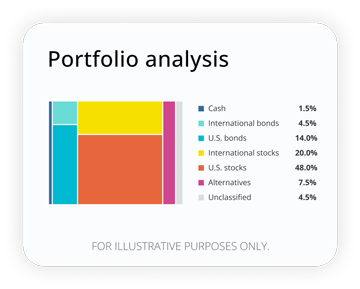
How well are your investments performing?
Analyze your portfolio in minutes and receive a target allocation for your goals.
1 Federal Reserve Bank of St. Louis, “Personal Saving Rate,” accessed September 2025.
2 Federal Reserve Bank of St. Louis, “Median Sales Price of Existing Homes,” accessed September 2025.
3 Federal Reserve Bank of St. Louis, “Households; Owners' Equity in Real Estate, Level,” accessed September 2025.
4 The New York Times, “Homeowners Tap Into Their Rising Home Equity,” October 2024.
5 U.S. Department of Labor, “Continuation of Health Coverage (COBRA),” accessed September 2025.
6 Internal Revenue Service, “Filing season statistics for week ending May 9, 2025,” accessed September 2025.
7 Internal Revenue Service, “Direct File, Deductions,” accessed September 2025.
RO4856526-0925
 Get The Currency newsletter


The Currency editors
Staff contributors
The CurrencyTM writers and editors cover the latest financial news and insights shaping how we live, work, and play. The team provides accurate, data-driven, and timely content aimed at empowering financial freedom for all.
The content contained in this blog post is intended for general informational purposes only and is not meant to constitute legal, tax, accounting or investment advice. You should consult a qualified legal or tax professional regarding your specific situation. No part of this blog, nor the links contained therein is a solicitation or offer to sell securities. Compensation for freelance contributions not to exceed $1,250. Third-party data is obtained from sources believed to be reliable; however, Empower cannot guarantee the accuracy, timeliness, completeness or fitness of this data for any particular purpose. Third-party links are provided solely as a convenience and do not imply an affiliation, endorsement or approval by Empower of the contents on such third-party websites. This article is based on current events, research, and developments at the time of publication, which may change over time.
Certain sections of this blog may contain forward-looking statements that are based on our reasonable expectations, estimates, projections and assumptions. Past performance is not a guarantee of future return, nor is it indicative of future performance. Investing involves risk. The value of your investment will fluctuate and you may lose money.
Certified Financial Planner Board of Standards Inc. (CFP Board) owns the certification marks CFP®, CERTIFIED FINANCIAL PLANNER™, CFP® (with plaque design), and CFP® (with flame design) in the U.S., which it authorizes use of by individuals who successfully complete CFP Board's initial and ongoing certification requirements.