

How do I know if I’m ready to retire? Get a Sense Check
How do I know if I’m ready to retire? Get a Sense Check
In this edition of Sense Check, Empower’s Kristina Behrens, CFP®, APMA®, weighs in on some common questions about retirement readiness — from visualizing what retirement might look like to building a savings strategy that can evolve over time.
How do I know if I’m ready to retire? Get a Sense Check
In this edition of Sense Check, Empower’s Kristina Behrens, CFP®, APMA®, weighs in on some common questions about retirement readiness — from visualizing what retirement might look like to building a savings strategy that can evolve over time.

09.15.2025
Key takeaways
There’s no one-size-fits-all retirement number, but aim to save about 25x annual expenses and withdraw less than 4% each year
Current budget can be a base, but expect some expenses to drop (childcare, mortgage) and others to rise (travel, healthcare, gifting)
Circumstances and goals can evolve over time, so retirement planning can be a process of revisiting and adjusting over time
Retirement readiness doesn’t come down to a single number. It depends on vision, desired lifestyle, income sources, and how expenses may change over time.
“How do I know if I’m ready to retire?” It’s a question that may come up for most people — and the answer is, “it depends.” The fact is there’s not a one-size-fits-all magic number. It’s highly individualized and can look different for everyone depending on personal circumstances.
Visualize your future
Start with the basics: When you think about retirement, what does it look like? For example, do you picture your “future self” living where you are now or relocating to a different city, state, or even country? Do you envision maintaining your current lifestyle, or adding in discretionary spending items like travel or hobbies? Gaining this kind of clarity up front can guide the financial decisions that follow. Even if retirement feels far off, as your vision evolves you can fine-tune in an effort to help make your plan more resilient.
Make an income “pie”
Once you have a sense of your retirement goals, the next step is to take inventory of expected income sources you may have in retirement to supplement your portfolio — in other words, the pieces that make up your total income pie. Some considerations may include potential Social Security benefits, pensions, rental income, or part-time work. This helps with backing into a target number that can work for you.
Timing for taking Social Security will factor in here. You can start receiving benefits as early as 62, but if you do, your monthly check will be smaller. Waiting until your full retirement age — usually around 67 — means you’ll get your full benefit, and if you hold off until 70, your benefit keeps growing, about 8% more each year. The “right” time really depends on your personal situation — are you still working, do you have other savings to lean on, and what’s your health and family history like? Couples also have options — for example, one spouse might start earlier while the other delays to maximize the bigger benefit. Since so many factors play a role, it can make sense to run the numbers with a professional and figure out what works best for you.
Estimate spending
To estimate spending, look at your current budget with the assumption that you’ll want to at least be able to maintain your current certain standard of living in retirement, whether it’s the day-to-day essentials, going out to eat, or traveling. Consider fixed and variable expenses, some of which will fall away over time, like costs for childcare and commuting, or a mortgage that might be paid down. Likewise, expenses you might expect to increase are most often discretionary ones, such as outlays for travel, hobbies, and maybe possible expenditures relating to grandchildren. As families grow, you may want to do more gifting, which should be incorporated into the budget. Also, be sure to consider things like insurance and healthcare expenses. Underestimating these can be a common retirement planning pitfall.
Looking at the overall picture, ideally, you want to keep ahead of inflation — whether through portfolio growth or Social Security income, using about a 3.5% inflation target. If the budgeting exercise becomes overwhelming, another approach is to aim to replace about 75% of your current household income in retirement.
Savings strategy
Based on this, how much should you aim to save? A high-level rule is to aim for 25 times your annual expenses. But using a retirement planning tool can help with building a plan that’s realistic and sustainable, targeting a more tangible savings number, and doing a periodic pulse check to see if savings is on track. Even if retirement is 30 years down the line, these tools can help with formulating a plan by playing out different scenarios for savings, earnings, lifestyle, and retirement timeline.
Transition from saving to spending
When the time comes to retire, it can be a total lifestyle shift. You may be used to getting a paycheck and suddenly you’re not. Beginning to draw on accounts can feel uncomfortable, but keep in mind, that’s their purpose. A good rule of thumb is to aim to withdraw less than 4% of the portfolio value each year with the goal stretching it over a 30-year lifespan.
Final thoughts
Retirement readiness isn’t about reaching a single number — it’s shaped by the life you envision and the resources available to support it. Factors such as your budget, savings, income sources, Social Security timing, and portfolio mix all play a role. Because circumstances can shift over time, retirement planning is often an ongoing process of checking in, refining, and adjusting as goals and needs evolve. The bottom line is that it’s important to have a well-diversified portfolio so that you can continue to live your day-to-day without worrying about what’s happening with the markets.
FAQs about retirement readiness
How do I know if I’m on track for retirement?
Use a retirement planning tool to do a pulse check and make adjustments as needed to align with personal circumstances and goals.
When should I start planning for retirement?
It helps to start as early as possible, since saving and investing can build momentum over time. But planning at any stage can make a difference — the key is to begin wherever you are and revisit the plan over time.
How much should I expect to spend in retirement?
Spending varies, but your current budget can be a useful baseline. Some expenses may decrease (like commuting or childcare) while others may increase (such as healthcare, travel, or hobbies).
What if I don’t feel “ready” when the time comes?
Retirement can be a big lifestyle shift and feel unsettling, but revisiting your plan regularly and making adjustments as circumstances change along the way can help build confidence.
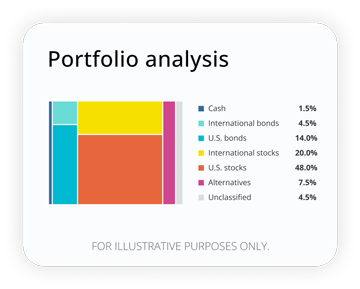
How well are your investments performing?
Analyze your portfolio in minutes and receive a target allocation for your goals.
RO4819266-0925
 Get The Currency newsletter


Kristina Behrens, CFP®, APMA®
Contributor
Kristina Behrens is a Financial Planner at Empower. She coaches clients to build successful wealth building habits from mindset to successful saving and investing.
The content contained in this blog post is intended for general informational purposes only and is not meant to constitute legal, tax, accounting or investment advice. You should consult a qualified legal or tax professional regarding your specific situation. No part of this blog, nor the links contained therein is a solicitation or offer to sell securities. Compensation for freelance contributions not to exceed $1,250. Third-party data is obtained from sources believed to be reliable; however, Empower cannot guarantee the accuracy, timeliness, completeness or fitness of this data for any particular purpose. Third-party links are provided solely as a convenience and do not imply an affiliation, endorsement or approval by Empower of the contents on such third-party websites. This article is based on current events, research, and developments at the time of publication, which may change over time.
Certain sections of this blog may contain forward-looking statements that are based on our reasonable expectations, estimates, projections and assumptions. Past performance is not a guarantee of future return, nor is it indicative of future performance. Investing involves risk. The value of your investment will fluctuate and you may lose money.
Certified Financial Planner Board of Standards Inc. (CFP Board) owns the certification marks CFP®, CERTIFIED FINANCIAL PLANNER™, CFP® (with plaque design), and CFP® (with flame design) in the U.S., which it authorizes use of by individuals who successfully complete CFP Board's initial and ongoing certification requirements.