

📦 On the move

03.12.2026
Some 40% of Americans will be on the move in 2026 — and one of the biggest financial decisions that comes with relocating is whether to rent or buy.
In 23 of the 50 largest metro areas — including Chicago, Miami, and Pittsburgh — buying is cheaper than renting. In 27, renting costs less.
The true cost of owning also goes beyond the monthly expense, factoring in taxes, insurance, maintenance, and the down payment. Before you make your next move, here’s how today’s housing market stacks up.
— The Editors

🌭American adventure: From beach towns to big cities, the U.S. has plenty of retirement relocation options — but two states stand out, according to Empower analysis. With the median U.S. existing-home price at $396,800* in January 2026, where you choose to live can have one of the biggest impacts on your retirement budget.
📝 Paperwork checkpoint: Double-check the details on your tax return before crossing the filing finish line. Math errors and incorrect Social Security numbers are just some of the common snags that can delay your journey to post-tax season. Check out The CurrencyTM to learn about the most common tax filing mistakes.
🛣️ Roth route: A Roth IRA can provide tax-free qualified withdrawals under U.S. law — which can add flexibility no matter where retirement takes you. Savers can contribute up to $7,000 for 2025 ($8,000 if you’re 50 or older) until the April 15, 2026, tax deadline, subject to income limits.

Mapping the next move
U.S. private employers added 63,000* jobs in February — the strongest monthly gain since July and ahead of economists’ expectations, according to the payroll processor ADP.
A new job can be a good time for a full financial reset: updating your budget, re-evaluating benefits and retirement plan options, and aligning spending and savings with new income. Follow these practical steps to set yourself (and your finances) up for success in a new role.

Home sweet home
Some 75% of Americans want to stay in their homes as they age. Major remodels aimed at keeping things safe and accessible can cost up to $15,000. But some simpler improvements — like removing throw rugs, adding color contrast on stairs, and installing a shower seat — can be had for about $1,500.*

You’ve got mail
In a world where some take digital detox vacations, analog subscriptions are generating real revenue. So-called “snail mail clubs” are gaining popularity as independent creators sell monthly memberships that deliver curated art prints, stickers, handwritten notes, and exclusive commentary straight to subscribers’ mailboxes. Some creators report earning up to $24,000* per month from the model.

ICYMI – catch up on the latest headlines:
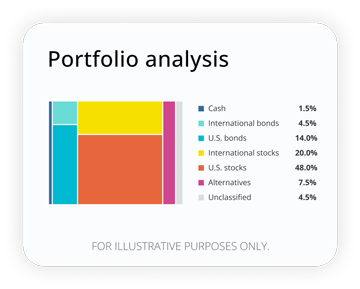
How well are your investments performing?
Analyze your portfolio in minutes and receive a target allocation for your goals.
*Third-party data is obtained from sources believed to be reliable; however, Empower cannot guarantee the accuracy, timeliness, completeness, or fitness of this data for any particular purpose. Third-party links are provided solely as a convenience and do not imply an affiliation, endorsement, responsibility, or approval by Empower of the contents on such third-party websites.
RO5279342-0325 WF5911500-0326
 Get The Currency newsletter


The Currency editors
Staff contributors
The CurrencyTM writers and editors cover the latest financial news and insights shaping how we live, work, and play. The team provides accurate, data-driven, and timely content aimed at empowering financial freedom for all.
The content contained in this blog post is intended for general informational purposes only and is not meant to constitute legal, tax, accounting or investment advice. You should consult a qualified legal or tax professional regarding your specific situation. No part of this blog, nor the links contained therein is a solicitation or offer to sell securities. Compensation for freelance contributions not to exceed $1,250. Third-party data is obtained from sources believed to be reliable; however, Empower cannot guarantee the accuracy, timeliness, completeness or fitness of this data for any particular purpose. Third-party links are provided solely as a convenience and do not imply an affiliation, endorsement or approval by Empower of the contents on such third-party websites. This article is based on current events, research, and developments at the time of publication, which may change over time.
Certain sections of this blog may contain forward-looking statements that are based on our reasonable expectations, estimates, projections and assumptions. Past performance is not a guarantee of future return, nor is it indicative of future performance. Investing involves risk. The value of your investment will fluctuate and you may lose money.
Certified Financial Planner Board of Standards Inc. (CFP Board) owns the certification marks CFP®, CERTIFIED FINANCIAL PLANNER™, CFP® (with plaque design), and CFP® (with flame design) in the U.S., which it authorizes use of by individuals who successfully complete CFP Board's initial and ongoing certification requirements.