

Not quite ready to retire early? Try “Coasting” instead
Not quite ready to retire early? Try “Coasting” instead
The Coast FIRE strategy has some who’ve reached their target retirement savings skipping the early part and sailing through a chunk of their careers
Not quite ready to retire early? Try “Coasting” instead
The Coast FIRE strategy has some who’ve reached their target retirement savings skipping the early part and sailing through a chunk of their careers

08.28.2025

Listen
·Not quite ready to retire early? Try “Coasting” instead
Key takeaways
- Coast FIRE may offer a more balanced approach with less extreme sacrifices than traditional FIRE
- Americans estimate needing $1.06M to retire
- Coasters continue to work to traditional retirement age, allowing target savings more time to continue to grow
While the FIRE strategy is aimed at intense saving to retire decades early, Coast FIRE focuses on saving and investing enough upfront to enjoy career flexibility and freedom. While money grows, Coasters continue to work to pay the bills, without touching retirement funds.
The FIRE movement (Financial Independence Retire Early) embraces an early exit from the workforce, years or even decades before the traditional retirement age (65 for men, 63 for women on average). But some proponents of the movement are adjusting the strategy, focusing more on sustainability than drastic lifestyle changes. Dubbed “Coast FIRE,” this approach to FIRE refers to those who accumulate their target savings amount — but rather than leave the workforce early, they opt to coast toward retirement by continuing to work to cover living expenses.
Coast FIRE vs. FIRE: What’s the difference?
The main difference between the traditional FIRE and Coast FIRE philosophies comes down to timing — for when to retire and tap into savings.
According to Empower Personal DashboardTM data, the typical American has $491,022 saved for retirement, and $1,148,441 on average by the time they’re in their 60s. Since early retirement is the goal with FIRE, adopters of the strategy look to accumulate more sooner by sticking to some key principles: Extreme savings of as much as 50%-75% or more of earnings, frugal living, and smart, aggressive investing. Once they reach savings targets, FIRE participants typically retire to live off their nest egg indefinitely.
But the FIRE approach isn’t ideal for everyone — it can be intense, and sticking to a crash diet in lifestyle changes can lead to fatigue.1 There’s a potential financial risk too: The earlier a person retires, the longer their money might need to last.
Coast enthusiasts take another path. Leaving 9-5 behind isn’t the priority — instead it’s all about getting savings and investments to a point that’s enough, without adding any more, to fund retirement at a traditional retirement age.
Since traditional FIRE proponents live off accumulated resources sooner than Coasters, the original strategy can require saving much more.2 For those aiming to retire in their 30s and 40s, even a few million dollars in savings could fall short if expenses rise at a faster rate than portfolio returns.3
Read more: Sparks fly: The FIRE movement trend is fueling early retirement
How does Coast FIRE work?
Coasters front-load savings by socking away and investing as much as possible during earlier career years to reach a target savings goal that’s based on desired retirement lifestyle. Once Coasters hit their goal, they can let their savings grow while they take advantage of the flexibility to “coast” through the rest of their careers. This may mean working part-time or switching to a lower paying or low-pressure job doing something they enjoy. Rather than tap into retirement savings early, Coasters rely on their continued income stream to pay the bills, without the pressure or need to keep saving aggressively for their golden years.
Advantages of Coast FIRE strategy
“The sooner the better” incentive. Coast FIRE plans are designed for saving and investing as early and as much as possible, while spending less and taking advantage of the power of compounding. Consider this hypothetical scenario:4
If an individual accumulates $1.5 million in retirement savings by age 45 and invests it all, based on a 7% annual return those funds could grow to about $4.7 million by the time the individual reaches age 62.
Flexibility. Reaching the Coast target point provides the freedom to shift careers, work less, or pursue passion projects without the pressure to save.
Security. Working in some capacity keeps access open to workplace benefits like health insurance, and even employer-sponsored retirement accounts. Even though Coasters ideally do not need to keep socking away money, staying in the workforce means they may still be able to contribute to a 401(k) or other retirement account.
Read more: Average retirement savings by age
Planning for Coast FIRE
Coast FIRE isn’t without its challenges. Empower findings show Americans rate their satisfaction with their retirement savings an average of 4.54, and the likelihood of retiring at their goal age at 4.93 out of 10. An accelerated savings timeline can further complicate things.
Putting away enough to reach a Coast target can be challenging, especially with other financial responsibilities, and market fluctuations can detour plans. Focusing intently on retirement savings may also mean having less of an emergency cushion if unexpected expenses come up.
While Americans say they need about $1.06 million to retire, that amount varies depending on individual circumstances. Before pursuing a Coast FIRE strategy, it may be a good idea to determine savings targets using a retirement calculator.
Read more: Planning ahead: Balancing saving and spending in retirement
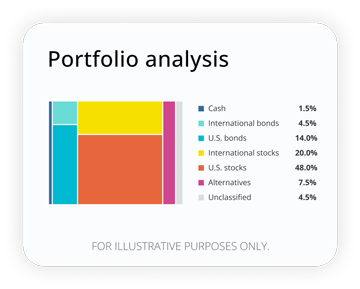
How well are your investments performing?
Analyze your portfolio in minutes and receive a target allocation for your goals.
1 Money, “Early Retirement Savers Are Burning Out. ‘Coast FIRE’ Might Be the Answer,” January 26, 2024.
2 Forbes, “How To Practice Coast FIRE, A Retire-Early Strategy,” February 23, 2024.
3 USA Today, “Why Coast FIRE may be a safer retirement strategy than early retirement,” July 17, 2025.
4 Ibid.
RO4770461-0825
 Get The Currency newsletter



The Currency editors
Staff contributors
The CurrencyTM writers and editors cover the latest financial news and insights shaping how we live, work, and play. The team provides accurate, data-driven, and timely content aimed at empowering financial freedom for all.
The content contained in this blog post is intended for general informational purposes only and is not meant to constitute legal, tax, accounting or investment advice. You should consult a qualified legal or tax professional regarding your specific situation. No part of this blog, nor the links contained therein is a solicitation or offer to sell securities. Compensation for freelance contributions not to exceed $1,250. Third-party data is obtained from sources believed to be reliable; however, Empower cannot guarantee the accuracy, timeliness, completeness or fitness of this data for any particular purpose. Third-party links are provided solely as a convenience and do not imply an affiliation, endorsement or approval by Empower of the contents on such third-party websites. This article is based on current events, research, and developments at the time of publication, which may change over time.
Certain sections of this blog may contain forward-looking statements that are based on our reasonable expectations, estimates, projections and assumptions. Past performance is not a guarantee of future return, nor is it indicative of future performance. Investing involves risk. The value of your investment will fluctuate and you may lose money.
Certified Financial Planner Board of Standards Inc. (CFP Board) owns the certification marks CFP®, CERTIFIED FINANCIAL PLANNER™, CFP® (with plaque design), and CFP® (with flame design) in the U.S., which it authorizes use of by individuals who successfully complete CFP Board's initial and ongoing certification requirements.