

The highest-paying jobs in America – and the mid-income careers building real wealth
The 10 highest-paying jobs in America – and the careers building wealth
Healthcare dominates the list of the highest-paying jobs in America, but disciplined mid-to-high-income earners can still build more than $500,000 in wealth over 20 years.
The 10 highest-paying jobs in America – and the careers building wealth
Healthcare dominates the list of the highest-paying jobs in America, but disciplined mid-to-high-income earners can still build more than $500,000 in wealth over 20 years.

10.24.2025
Key takeaways
- Medical professionals — including anesthesiologists, surgeons, OBGYNs, and psychiatrists — hold the highest paying jobs in America, bringing in $239,200 or more a year on average.
- Outside of healthcare, construction managers ($107K), web and digital designers ($98K), and accountants ($82K) are among the highest paid mid-to-high-income earners.
- Over 20 years, steady savings and the power of compounding can turn mid-to-high salaries into significant long-term wealth.
Bureau of Labor Statistics (BLS) data shows the highest-paying jobs in the U.S. — plus the mid-to-high-income careers building long-term wealth through steady pay and smart saving.
Salary is often one of the most important factors people weigh up when choosing a career path. According to Empower research, Americans think you should land your dream job at 29 and earn six figures by 35 — and more than one in five say changing career paths represents the best wealth-building move.
The Bureau of Labor Statistics’ latest data highlights the highest-paying jobs in America, the top high-income careers across industries, and the mid-to-high-income roles that can steadily build wealth over time. While medical professions remain the nation’s highest paying careers, with salaries of at least $239,200, many workers in construction, accounting, and skilled trades can still save over half a million dollars in 20 years with consistent investing.
What are the highest paying jobs in America?
The most lucrative careers in the U.S. are in healthcare, with nine of the top 10 highest paying jobs in the medical or dental fields. Airline pilots also make the list.
The BLS data below shows both median and mean annual wages.1,2 Because the agency caps median pay at $239,200 for many medical roles, mean wages provide added context, along with estimates of how steady saving and investing could build long-term wealth.
The top 10 highest paying jobs in America
(Bureau of Labor Statistics OOH and OEWS May 2024)
Occupation | Median annual wage | Mean annual wage | Estimated 20-year invested wealth* |
Airline pilots, copilots and flight engineers | $226,600 | $280,570 | $1.13 million |
Anesthesiologists | $239,200 or greater | $336,640 | $1.19 million (+) |
Cardiologists | $239,200 or greater | $432,490 | $1.19 million (+) |
Dentists (general and specialists) | $179,210 | $196,100 - $360,240 | $0.89 million |
Neurologists | $239,200 or greater | $286,310 | $1.19 million (+) |
Ophthalmologists | $239,200 | $301,500 | $1.19 million |
Physicians (all other specialties) | $236,350 - $239,200 or greater | $253,470 - $320,700 | $1.17 – $1.19 million (+) |
Psychiatrists | $239,200 or greater | $269,120 | $1.19 million (+) |
Radiologists | $239,200 or greater | $359,820 | $1.19 million (+) |
Surgeons (general and specialties) | $239,200 or greater | $365,060 - $450,810 | $1.19 million (+) |
(+) Indicates roles with capped medians where mean values provide additional context.
Read more: Healthcare is the job market's latest bright spot
Mid-to-high-income careers building real wealth
While healthcare dominates the top of the pay scale, many other careers still offer strong salaries and long-term security. Empower research shows 21% of Americans say earning a high income is one of the most important factors when it comes to wealth-building; but even more (32%) believe that discipline and consistency matter most for growth.
With median annual wages between roughly $60,000 and $120,000, this sample of commonly held mid-to-high-income roles show how steady saving and compounding can turn reliable income into long-term wealth.3
Examples of mid-to-high-income careers
(Bureau of Labor Statistics OOH May 2024)
Rank | Occupation | Median annual wage | Estimated 20-year invested wealth* |
1 | Medical and health services managers | $117,960 | $585,000 |
2 | Construction managers | $106,980 | $530,000 |
3 | Web and digital interface designers | $98,090 | $487,000 |
4 | Registered nurses | $93,600 | $464,000 |
5 | Accountants and auditors | $81,680 | $405,000 |
6 | Police and detectives | $77,270 | $383,000 |
7 | High-school teachers | $64,580 | $320,000 |
8 | Industrial machinery mechanics | $63,510 | $315,000 |
9 | Plumbers, pipefitters and steamfitters | $62,970 | $312,000 |
10 | Electricians | $62,350 | $309,000 |
Read more: How to navigate savings in the 2025 job market
What are the highest paying jobs without a degree?
Not every high-paying job requires a college degree. According to the BLS, many non-degree careers offer six-figure earning potential through certifications, apprenticeships, or specialized training.4 These roles — in aviation, energy, and law enforcement — combine strong wages with consistent demand, making them among the most lucrative skilled trades and management paths available.
The highest-paying jobs without a college degree
(Bureau of Labor Statistics OOH May 2024)
Rank | Occupation | Typical education needed | Median annual wage | Estimated 20-year invested wealth* |
1 | Commercial pilots | Postsecondary nondegree award and on-the-job training | $122,670 | $608,430 |
2 | Elevator and escalator installers and repairers | High school diploma or equivalent, and apprenticeship | $106,580 | $528,625 |
3 | First-line supervisors of police and detectives | High school diploma or equivalent, and on-the-job training | $105,980 | $525,649 |
4 | Power plant operators, distributors, and dispatchers | High school diploma or equivalent, and on-the-job training | $103,600 | $513,845 |
5 | Transportation, storage, and distribution managers | High school diploma or equivalent | $102,010 | $505,959 |
6 | Petroleum pump system operators, refinery operators, and gaugers | High school diploma or equivalent, and on-the-job training | $97,540 | $483,788 |
7 | Postmasters and mail superintendents | High school diploma or equivalent, and on-the-job training | $92,730 | $459,931 |
8 | Electrical power-line installers and repairers | High school diploma or equivalent, and on-the-job training | $92,560 | $459,088 |
9 | First-line supervisors of firefighting and prevention workers | Postsecondary nondegree award and on-the-job training | $92,430 | $458,443 |
10 | Farmers, ranchers, and other agricultural managers | High school diploma or equivalent | $87,980 | $436,000 |
Fastest growing jobs in the next decade
College students preparing to enter the workforce — and anyone tracking labor trends — are looking toward the fastest-growing jobs in the next decade. New projections from the BLS show that the fastest-growing careers will span both renewable energy and health care. Wind turbine technicians top the list for the fastest growing job in America, with jobs expected to increase nearly 50% by 2034 and a median annual wage of $62,580.5
Nurse practitioners follow closely, with roles increasing 40% during the same time period. Overall, health and social care careers more widely are forecast to grow 8.4% in the next decade; medical and health services managers, physical therapist assistants, and physician assistants all fall within the top 10 fastest growing jobs.6
Outside of energy and healthcare, technology-driven roles are also on the rise. Growing demand for artificial intelligence systems, data processing, software development, research, and related consulting services is also expected to fuel 7.5% growth in the professional, scientific, and technical services sector and 6.5% in the information sector.7
Valuing the whole compensation package
Salary is only one part of a total compensation package – one job may have the highest salary, but another may provide greater value in terms of overall benefits, such as bonuses, commission, 401(k) match, equity compensation, healthcare benefits, and paid time off (PTO). Total compensation plays a significant role in helping job seekers understand the full value of a company’s offer.
Read more: RSU vs stock options: What’s the difference?
How to calculate total compensation package
Total compensation can be calculated by adding your base salary, direct pay (bonuses, commissions), and indirect compensation (retirement plan matches, healthcare benefits, paid time off, stock options, and other perks).
For example, someone earning a $100,000 base salary with a $10,000 bonus, $5,000 in 401(k) matching, and $3,000 in health benefits earns a total compensation of $118,000.
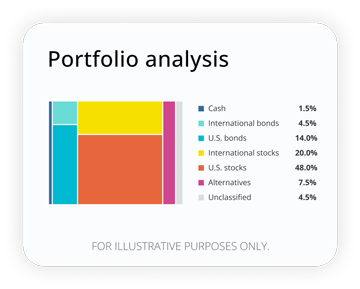
How well are your investments performing?
Analyze your portfolio in minutes and receive a target allocation for your goals.
*For illustrative purposes only. Wealth estimates assume saving 15% of annual income and earning a 5% yearly real return (after inflation) for 20 years, compounded annually.
1 Bureau of Labor Statistics, “Highest Paying Occupations,” August 2025.
2 Bureau of Labor Statistics, “Occupational Employment and Wage Statistics,” May 2024.
3 Bureau of Labor Statistics, “Occupational Outlook Handbook,” May 2024.
4 Ibid.
5 Bureau of Labor Statistics, “Employment Projections — 2024-2034,” August 2025.
6 Ibid.
7 Ibid.
RO4932072-1025
 Get The Currency newsletter



The Currency editors
Staff contributors
The CurrencyTM writers and editors cover the latest financial news and insights shaping how we live, work, and play. The team provides accurate, data-driven, and timely content aimed at empowering financial freedom for all.
The content contained in this blog post is intended for general informational purposes only and is not meant to constitute legal, tax, accounting or investment advice. You should consult a qualified legal or tax professional regarding your specific situation. No part of this blog, nor the links contained therein is a solicitation or offer to sell securities. Compensation for freelance contributions not to exceed $1,250. Third-party data is obtained from sources believed to be reliable; however, Empower cannot guarantee the accuracy, timeliness, completeness or fitness of this data for any particular purpose. Third-party links are provided solely as a convenience and do not imply an affiliation, endorsement or approval by Empower of the contents on such third-party websites. This article is based on current events, research, and developments at the time of publication, which may change over time.
Certain sections of this blog may contain forward-looking statements that are based on our reasonable expectations, estimates, projections and assumptions. Past performance is not a guarantee of future return, nor is it indicative of future performance. Investing involves risk. The value of your investment will fluctuate and you may lose money.
Certified Financial Planner Board of Standards Inc. (CFP Board) owns the certification marks CFP®, CERTIFIED FINANCIAL PLANNER™, CFP® (with plaque design), and CFP® (with flame design) in the U.S., which it authorizes use of by individuals who successfully complete CFP Board's initial and ongoing certification requirements.