

Zero-based budgeting: What it is and how it works
Zero-based budgeting: What it is and how it works
A zero-based budget assigns every dollar of income to a spending or saving category. Learn how to create a balanced budget.
Zero-based budgeting: What it is and how it works
A zero-based budget assigns every dollar of income to a spending or saving category. Learn how to create a balanced budget.

10.21.2026
Key takeaways
- Zero-based budgeting gives a purpose to every dollar of take-home income, leaving $0 unallocated.
- The budget accounts for essential expenses, debt payments, savings, and discretionary spending.
- Regular tracking and adjustments help keep a zero-based budget aligned with changing income, expenses, and financial goals.
A budget doesn't have to mean giving up the things you enjoy or changing all your spending habits. Zero-based budgeting lets you plan for everyday expenses, personal priorities, and future goals by giving every dollar of your income a purpose.
That’s the foundation of zero-based budgeting — every dollar you bring in has a job that reflects your needs and priorities.
Long-term goals are also built into this type of budget, which can be an option to try when other budgeting methods haven’t fit into your life as easily. Getting a budget in place could help you avoid money regrets down the line: More than two in five American adults (43%) wish they had learned about budgeting and expense tracking earlier in their lives, according to Empower data.
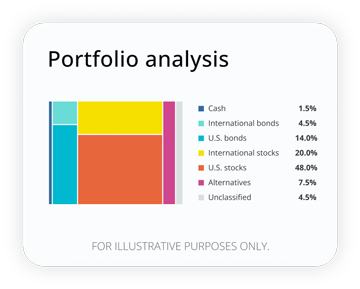
How well are your investments performing?
Analyze your portfolio in minutes and receive a target allocation for your goals.
What is zero-based budgeting?
Zero-based budgeting is way of managing your money where every dollar of take-home income is assigned to a category — such as spending, saving, investing, debt repayment, or a buffer — until nothing remains unassigned. The calculation looks like this:
Your income – planned expenses – saving – investing – debt payments = $0
This setup is also commonly referred to as a zero-sum budget, zero-balance budget, or zero-dollar budget. If you end up at zero at the end of the calculation, you’re on track.
How does zero-based budgeting work?
A zero-based budget follows the path of money and makes use of every dollar in your life. First, you need to identify how much net income you’re bringing home (after taxes and deductions), then decide on spending priorities and assign dollar amounts to each bucket. Finally, you need to track your actual spending to inform whether you need to adjust the levels in each category going forward.
For example, about four in five working-age Americans carry consumer debt, with required monthly payments making up around 10% of their monthly net pay.1 Depending on your situation, you may need more or fewer dollars allocated to debt payments.
Some money can feel less “spent” in the moment, like when a deposit hasn’t quite yet moved into a savings account. With zero-based budgeting, that money is still assigned a category, so that helps you avoid using the funds for something else. This can especially be the case for recurring transactions, such as biweekly contributions to a retirement plan.
Money that hasn’t been put towards a current bill — like savings or sinking funds — still has a job; it’s building your nest egg for later.
How to create a zero-based budget: Step by step
As you build your zero-based budget, it’s good to end at zero. Every dollar has a purpose — no double-counting — and if you increase the dollar amount of one category, you’ll need to reduce another for your plan to remain balanced.
Calculate monthly take-home income
Start first with how much money you’ll have at your disposal for a given month. This will serve as the total amount you can pull from.
Include your wages after taxes and payroll deductions have been made, along with any predictable income from side gigs or benefit payments. If your income fluctuates, use the lowest realistic dollar amount for a month, and you can adjust accordingly later in the process.
Review recent spending and upcoming expenses
Looking back at the past few months will help you gauge how much you’ve spent in different categories. If consolidating credit card statements and bank transactions feels like a hassle, consider connecting your accounts to a free tool like the Empower Personal DashboardTM to see all your spending in one place.
Also be on the look-out for recurring expenses like streaming subscriptions or quarterly tax payments. They may not always be billed regularly — appearing seasonally rather than monthly, for example.
Create budget categories
What categories belong in a zero-based budget? They should be customized for how your household lives and uses its money.
Dividing your expenses effectively means setting categories that are broad enough to reflect your habits, but not so detailed that it takes too much thought to maintain the budget.
Here are some common categories to get started with zero-based budgeting:
- Fixed essential expenses, like housing payments and insurance
- Variable essential expenses, such as groceries and transportation
- Minimum debt payments and any planned extra money to go towards paying down principal
- Emergency savings
- Contributions to retirement savings
- Sinking funds for planned-ahead costs
- Charitable giving
- Discretionary spending
- A small miscellaneous or planning buffer – it’s better to carve this out as a specific category rather than saying “whatever’s leftover will be the buffer.”
Assign every dollar by priority
At this point, you need to take your total take-home pay — and divide and conquer your zero-based budget. Start by assigning dollar amounts to known, fixed costs like a mortgage or rent payment. Keep setting other amounts and subtracting them from the monthly total.
Read more: Fixed vs. variable expenses: What’s the difference?
Adjust until the unassigned amount is zero
“Balancing your budget” in this case means you’re left with zero at the end, once you’ve assigned your money across the categories. If you’re left with extra money, divide up the remainder to categories according to your priorities. However, if you’re left with a negative number — less than zero — you’ll need to pull money out of some categories to bridge the gap and bring you back to zero overall.
Track, reallocate, and reset
With amounts in place, now you’ll need to put your zero-based budget into action. Check in with your spending throughout the month to see how you’re tracking toward the original amounts you assigned in the budget.
Don’t worry if the amounts don’t match exactly at the end of the month. Zero-based budgeting is flexible, so you can reallocate money intentionally across categories for the next time, instead of letting overspending become invisible.
Zero-based budgeting example
Here’s an example of a zero-based budget, based on monthly take home-pay of $5,000 (net pay).
Category | Allocated amount | Purpose |
Housing and utilities | $1,750 | Fixed household costs |
Groceries and household supplies | $650 | Variable essentials |
Transportation (including gas) | $550 | Car costs, including payments, fuel, transit, maintenance |
Insurance and healthcare | $400 | Monthly premiums and planned out-of-pocket costs |
Debt payments | $350 | Required payments |
Long-term savings or sinking funds | $300 | Allocation for future goals or large expenses |
Emergency savings | $300 | Future unexpected expenses |
Retirement | $300 | Saving for retirement, ideally in a tax-deferred account |
Discretionary spending | $300 | Flexible nice-to-haves |
Giving and miscellaneous buffer | $100 | Planned donations and possible cushion for other categories |
Total assigned | $5,000 | ✅ Every dollar is accounted for |
How to use zero-based budgeting with irregular income or changing expenses
For a household with variable income, it’s important not to overstate income, as any monthly shortages will eat away at previously stored cushion funds.
Use a conservative estimate, and revisit the calculations and categories after any notable changes, such as extra income from a second job, new lines of credit, or a major life event like getting married or having a baby. Those and other changes affect how well a zero-based budget matches your life.
Read more: 5 ways to manage your personal finances
Broader economic trends have also been putting pressure on budgets and should be accounted for. Over the course of 2026, the cost of health care has been a financial concern for more than half of Americans (62%).2 Also under stress is consumers’ overall purchasing power, with growing gas and energy costs contributing to an annual inflation rate of 3.7% in September.
Your personal circumstances may require you to add more categories like childcare, or increase dollar amounts in essential buckets like debt payments. Use sinking funds for predictable but nonmonthly costs such as gifts, travel, or home maintenance.
Zero-based budgeting vs. other budgeting methods
A zero-based budget can be a useful and satisfying planning tool, as you get a transparent look at where your money is going. Another popular budgeting framework, the 50-30-20 budget, follows a similar bucketing system, though it’s less specific down to the dollar.
The envelope method of budgeting has a similar intent but is traditionally used with physical cash. Divide up a set amount of dollars, and when you run out of money in a category, you’re done for the month.
From zero and beyond
Remember that a budget is a planning tool; it’s not a failure if the numbers don’t align every month. A zero-based budget is especially flexible and should be treated as a living document that can adjust as your lifestyle changes.
Your budget is just one part of a broader financial plan. Working with others in your household can help you stay accountable, stick to your budget, and see the results in your spending and savings.
1 The Century Foundation, “Half of Every Dollar: How Household Debt Eats Into Workers’ Income Gains,” September 2026.
2 KFF, “Americans’ Challenges with Health Care Costs,” September 2026.
RO6035941-1026
 Get The Currency newsletter




The Currency editors
Staff contributors
The CurrencyTM writers and editors cover the latest financial news and insights shaping how we live, work, and play. The team provides accurate, data-driven, and timely content aimed at empowering financial freedom for all.
The content contained in this blog post is intended for general informational purposes only and is not meant to constitute legal, tax, accounting or investment advice. You should consult a qualified legal or tax professional regarding your specific situation. No part of this blog, nor the links contained therein is a solicitation or offer to sell securities. Compensation for freelance contributions not to exceed $1,250. Third-party data is obtained from sources believed to be reliable; however, Empower cannot guarantee the accuracy, timeliness, completeness or fitness of this data for any particular purpose. Third-party links are provided solely as a convenience and do not imply an affiliation, endorsement or approval by Empower of the contents on such third-party websites. This article is based on current events, research, and developments at the time of publication, which may change over time.
Certain sections of this blog may contain forward-looking statements that are based on our reasonable expectations, estimates, projections and assumptions. Past performance is not a guarantee of future return, nor is it indicative of future performance. Investing involves risk. The value of your investment will fluctuate and you may lose money.
Certified Financial Planner Board of Standards Inc. (CFP Board) owns the certification marks CFP®, CERTIFIED FINANCIAL PLANNER™, CFP® (with plaque design), and CFP® (with flame design) in the U.S., which it authorizes use of by individuals who successfully complete CFP Board's initial and ongoing certification requirements.