

Best U.S. states to retire in 2026
Best U.S. states to retire in 2026
Deciding where to retire is a highly personal choice that blends lifestyle goals with financial considerations
Best U.S. states to retire in 2026
Deciding where to retire is a highly personal choice that blends lifestyle goals with financial considerations

12.16.2025
Key takeaways
Relocating in retirement may help reduce costs, especially if your current state has high taxes.
Lifestyle preferences like climate, community, and proximity to family help define the best retirement destination for you.
State cost of living includes housing, food, healthcare, and transportation — and varies widely.
Weigh both financial and lifestyle factors when narrowing down your retirement location.
Choosing where to retire isn’t just about escaping winter or finding the lowest taxes. The best retirement destinations balance affordability, taxes, and healthcare access with lifestyle preferences like weather, community, and proximity to family. States such as Florida and Wyoming offer both tax advantages and strong retirement savings trends, according to Empower data.
Congrats! Your kids are out of the house, your mortgage may be paid off, and you’re ready to retire. So now the question is: Where should you retire? There are some states that might offer a better retirement lifestyle and have certain financial benefits, but the right place will depend on what’s most important to you.
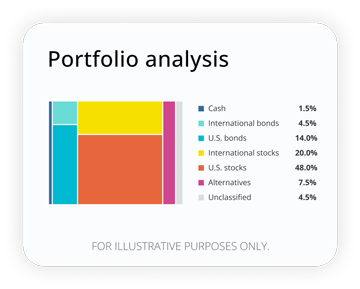
How well are your investments performing?
Analyze your portfolio in minutes and receive a target allocation for your goals.
How to choose the best state to retire in
Like any financial decision, choosing where to retire should reflect your unique situation and goals. Here are some important things to consider when it comes to finding the best places to retire — for you.
Quality of life factors in retirement
This is among the most subjective factors.
Some retirees prioritize city amenities, while others value nature or being near loved ones. Do you want warm weather or four seasons? A walkable neighborhood or rural acreage?
Do you crave the slower pace of a beach town or the hustle and bustle of a mid-to-large sized city? Are you open to exploring a new community and making new friends or would you rather forge deeper connections with people you already know or move closer to family? All of this and more will have an impact on your overall quality of life.
How housing costs impact retirement planning
Housing costs have been on the rise nearly everywhere, with the median price of existing homes in the U.S. reaching an all-time high of $435,300 in June 2025. Whether — and where — you plan to buy or rent a home in retirement is likely going to have a bigger impact on your budget than anything else.
Healthcare costs to consider in retirement
There are a lot of factors that influence a retiree’s healthcare costs, including location. Some couples may require as much as $413,000 to pay for medical costs in retirement.
Costs that vary by state include Medicare Part D premiums, Medicare Advantage plans, Medigap premiums, and out-of-pocket spending.
Which states have the lowest taxes for retirees?
This is a big consideration throughout our lives, but as incomes may decrease in retirement, it can become a huge factor. Depending on the type of retirement income, you may have to pay taxes on your distributions. Federal income tax is a given, but living in a state with a high-income tax rate could leave you with even less income to live off.
Plus, if you meet the income threshold for your filing status, you may have to pay federal income tax on your Social Security benefits. Depending on where you live, you might also have to pay state income tax in addition to federal income tax on your Social Security benefits.
States with the lowest cost of living for retirees
State cost of living is an umbrella category that includes housing, healthcare, insurance, and taxes, but also the cost of daily goods and services, like food and transportation. Some places in the U.S. are easier on your wallet than others. If you’re looking to trim costs in retirement, this may be the primary consideration. With a median retirement income of $56,680 annually for households age 65+—with some couples needing as much as $413,000 to cover medical costs in retirement—cost of living may be a primary consideration for many Americans.
Best climates for retirement in the U.S.
Are you looking for year-round sunshine? Or do you love to experience the seasons? Maybe two homes would better suit your snowbird tendencies. According to Empower research, Americans are all over the map when it comes to their ideal retirement location: 24% seek a warmer climate, 23% want to be closer to the ocean, and 20% are on a quest for a less-populated town.
How to determine the best states to retire in 2026
To find an objective answer to the question of what states are the best to retire in, we came up with a relatively simple formula: Follow the money.
Millionaires tend to be able to live in places that offer the best lifestyles. Of course, anyone can run out of money if they overspend, but the more money you have, the more options you have as to where to live.
So, to come up with the best states for retirees, let’s look at the states with the highest percentage of millionaires and compare that list with the states that have the lowest taxes, to see which states make both lists. That way, we can account for both lifestyle considerations and which states make the most sense from a financial perspective.
Read more: The cost of living in paradise
Which states have the best tax situation?
Instead of looking at tax rates, which can vary depending on your specific circumstances, the Tax Foundation’s State Tax Competitive Index accounts for many complexities: individual income taxes, sales taxes, corporate taxes, property and wealth taxes, unemployment insurance taxes, and use and excise taxes.1
Here are the top 10 states based on that ranking:
Rank | State |
1 | Wyoming |
2 | South Dakota |
3 | Alaska |
4 | Florida |
5 | Montana |
6 | New Hampshire |
7 | Texas |
8 | Tennessee |
9 | North Dakota |
10 | Indiana |
Which states have the most millionaires?
Next, to get a read on lifestyle in various states, let’s take a look at the 10 states that have the highest amount of households making $1 million or more a year in adjusted gross income, based on an analysis of 2022 data from the Internal Revenue Service.2
Rank | State | Million-dollar returns per 10,000 filers, 2022 |
1 | Connecticut | 89.51 |
2 | Massachusetts | 76.43 |
3 | New York | 71.44 |
4 | Florida | 69.78 |
5 | California | 69.72 |
6 | New Jersey | 67.67 |
7 | Wyoming | 62.69 |
8 | Washington | 57.30 |
9 | Nevada | 54.21 |
10 | Texas | 54.20 |
Read more: Average retirement savings by state
The best U.S. states for retirement
The top two states to retire in according to our formula are — drumroll please — Wyoming and Florida. Wyoming takes the top spot in having a competitive approach to state taxes. Plus, Empower Personal DashboardTM data** from October 2025 reveals that people in Wyoming have an average retirement savings of $506,372 and are in the top 15 states based on average net worth ($633,808). Florida ranks similarly, with its residents holding an average of $532,867 in retirement savings and ranking 13th for average net worth ($634,533). They’re also both lifestyle standouts: Florida is well-known for beachfront living, and if you’ve ever been to Jackson Hole, you may agree Wyoming is a lovely place.
Special mentions go to Texas, New Hampshire, and Montana, which were all in the top 20 on both the tax and millionaire lists.
For those of us who want to retire in the U.S., there are nine states that have no state income taxes: Alaska, Florida, Nevada, New Hampshire, South Dakota, Tennessee, Texas, Washington, and Wyoming. For many retirees with the means to move, it may make financial sense to relocate — especially if their home state has high taxes like California or New York.
Retirement lifestyle: Beyond finances
Money isn’t everything in retirement — there’s no point in having money if you can’t spend it on a lifestyle that makes you happy, such as being able to roam in nature or go out to nice dinners, shows, and museums. Many of us won’t have unlimited funds when we reach retirement age, so we may need to make sacrifices and relocate.
It’s impossible to say with any real conviction which states offer the best lifestyle for retirees since it’s such a subjective decision. Are you a big city person? Or do you prefer the quiet of a small town? Or maybe you’d prefer a secluded country retreat? Which states are the best states to live in is really going to depend on you.
Should you relocate for retirement? Our perspective
There’s no definitive answer to the question of which states are the best ones for retirement. Everyone’s a little biased, anyways. Personally, my home state of Hawaii would be wonderful based on lifestyle, but from an affordability standpoint, Colorado, where I’ve been for nearly two decades, has many of the same lifestyle perks (believe it or not) with lower overall costs.
So, while this list is really for fun, it also can be a good place to start if you’re thinking of relocating to a lower-tax state. To see if it would make financial sense for you to relocate, check out the Empower Retirement Planner tool, which allows you to do scenario planning to see how it impacts your chances of a successful retirement.
FAQ
What are the best states to retire in for low taxes?
States with no income tax — like Florida, Texas, and Wyoming — are often considered tax-friendly for retirees. These states typically don't tax Social Security benefits, pensions, or retirement account withdrawals, though property and sales taxes may still apply.
Which U.S. states have the lowest cost of living for retirees?
States like Mississippi, West Virginia, and Arkansas consistently rank among the lowest in cost of living, with lower housing, healthcare, and daily expenses.3 These locations may appeal to retirees looking to stretch their income.
Is it worth relocating for retirement?
It depends. Relocating can help reduce living expenses, taxes, or improve your lifestyle — but it may also increase certain costs, like travel or healthcare. Tools like Empower’s Retirement Planner can help assess the impact of a move.
What factors should I consider when choosing a retirement state?
Key factors include taxes, housing affordability, healthcare access, climate, and proximity to family or community. Balancing financial needs with lifestyle goals is essential.
How do taxes affect Social Security in retirement?
At the federal level, up to 85% of your Social Security benefits may be taxable based on your income. Additionally, some states also tax Social Security benefits, while others — like Florida and Texas — do not.
What states are considered the healthiest for retirees?
States with high healthcare rankings for seniors include Massachusetts, Minnesota, and Connecticut.4 Consider Medicare plan availability, hospital access, and long-term care services when evaluating options.
Best places to retire by state


1 Tax Foundation, “2025 State Tax Competitiveness Index,” accessed September 2025.
2 Yahoo News, “More Americans than ever are earning over $1 million a year. Here's where they're living,” August 2025.
3 U.S. News & World Report, "Best States: Affordability," Accessed December 2025.
4 America's Health Rankings, United Health Foundation, "2025 Senior Report," Accessed December 2025.
*Empower, “Financial Happiness,” November 2023.
**Note: Averages and medians are rounded to the nearest dollar. Numbers are based on aggregate and anonymous data from the Empower Personal Dashboard. Excludes test and invalid accounts. Excludes any account value greater than $100,000,000 or less than -$100,000,000. Excludes spouse accounts. Median/average 401(k) and retirement are only calculated for users who have connected 401(k)s and retirement accounts and excludes users without relevant accounts.
401(k) accounts include: 401(k), 401(k) former employer, Roth 401(k), Roth 401(k) former employer.
Retirement accounts include: 401(a), 401(a) former employer, 401(k), 401(k) former employer, 403(b), 403(b) former employer, 457, 457 former employer, IRA, Rollover IRA, non-taxable IRA, Roth IRA, traditional IRA, Roth 401(k), Roth 401(k) former employer, Roth SEP IRA, SEP IRA, SEP former employer, simple IRA, general retirement account, non-taxable, inherited Roth IRA, inherited traditional IRA, pension plan, pension plan non-taxable, rollover Roth, Roth conversion.
Net worth includes: All accounts that aren’t excluded for reasons listed above.
RO5531956-0526
 Get The Currency newsletter



Paul Deer, CFP®
Contributor
Paul Deer is the Vice President of Wealth Private Client at Empower. A CERTIFIED FINANCIAL PLANNER™ professional, he has over a decade of industry experience, and leads a team of financial advisors serving Empower clients.
The content contained in this blog post is intended for general informational purposes only and is not meant to constitute legal, tax, accounting or investment advice. You should consult a qualified legal or tax professional regarding your specific situation. No part of this blog, nor the links contained therein is a solicitation or offer to sell securities. Compensation for freelance contributions not to exceed $1,250. Third-party data is obtained from sources believed to be reliable; however, Empower cannot guarantee the accuracy, timeliness, completeness or fitness of this data for any particular purpose. Third-party links are provided solely as a convenience and do not imply an affiliation, endorsement or approval by Empower of the contents on such third-party websites. This article is based on current events, research, and developments at the time of publication, which may change over time.
Certain sections of this blog may contain forward-looking statements that are based on our reasonable expectations, estimates, projections and assumptions. Past performance is not a guarantee of future return, nor is it indicative of future performance. Investing involves risk. The value of your investment will fluctuate and you may lose money.
Certified Financial Planner Board of Standards Inc. (CFP Board) owns the certification marks CFP®, CERTIFIED FINANCIAL PLANNER™, CFP® (with plaque design), and CFP® (with flame design) in the U.S., which it authorizes use of by individuals who successfully complete CFP Board's initial and ongoing certification requirements.