

The holiday season’s over: Time to check credit card accounts for fraud
The holiday season’s over: Time to check credit card accounts for fraud
Reviewing bank and credit card statements could help limit losses
The holiday season’s over: Time to check credit card accounts for fraud
Reviewing bank and credit card statements could help limit losses

01.07.2026

Listen
·The holiday season’s over: Time to check credit card accounts for fraud
Key takeaways
- Credit card fraud related to holiday shopping often appears weeks after the season ends
- Small, delayed charges are a common early sign of stolen card data
- Reviewing statements after spending slows may help limit losses and instances of repeat fraud
Holiday shopping may lead to credit card fraud that surfaces weeks later, as stolen card data is tested with small charges and reused through online transactions. Reviewing statements once spending slows can help catch fraud before losses grow.
Holiday shopping has historically driven a sharp increase in attempted credit card fraud, with $199 million in losses reported during the 2024 season.1 Visa reports that it blocked 85% more potentially fraudulent transactions worldwide from Thanksgiving to Cyber Monday in 2025 than the same period a year ago.2 Mastercard blocked nine times as many fraud attempts between Thanksgiving and Cyber Monday in 2025 than a year prior.3
The potential for holiday-season fraud is often high.4 Almost 90% of U.S. consumers experienced or were the target of one or more forms of common holiday fraud.5 More purchases can help fraudulent transactions go undetected, as the rush to finish holiday shopping may put discretion in the back seat. Festive activities may also give consumers less time to pore over their monthly statements. In fact, nearly one-quarter of respondents to one survey reported already being victims of an online scam earlier in 2025, up from 17% the year before.6
Potential risks from holiday-related fraud don’t stop at stolen payment information or scam subscriptions: In fact, the holidays may give rise to bad actors getting enough personal information to commit identity theft.7 This could allow them to drain bank accounts, misuse credit, or even intercept tax refunds.
There are savvy steps people can take to reduce the risk of fraud once the gift-giving season comes to an end. Vigilance, strategy, and knowing when to look for suspicious spending can help flag discrepancies early.
Read more: Gen Z’s passion for plastic: Strategies for dealing with credit card debt
How common credit card scams work (and what to look for)
Credit card fraud often unfolds in stages. Many instances begin through one of several weak points:8
- Stolen card details are acquired through data breaches at retailers or payment processors9
- Skimming devices on compromised terminals or gas pumps10
- Malware embedded in point-of-sale systems11
Each of these tactics quietly capture card data during legitimate transactions.12 From there, card numbers can circulate digitally once they’re stolen. Scammers often test them with small purchases to confirm they still work, then reuse them at online merchants that do not require a physical card.13 These card-not-present transactions can appear ordinary at first glance, often posting days or weeks after the card information has been compromised.14
Fraudulent actors don’t limit their activities to online stores, either. In other cases, stolen card data can be cloned or duplicated.15 From there bad actors might add them to digital wallets to use offline.
Vigilance plays a role in keeping your credit card information safe. Physically inspecting credit card terminals for signs of tampering may help detect anomalies.16 Double-checking web addresses for any discrepancies — such as an unusual web address or warnings about unsecure connections — can act as a manual check that the site is valid. This may not stop all fraud attempts from succeeding, however. For that, it’s often a good idea to set up a routine check-up of bank and credit card statements and online accounts once festivities come to an end.
Making post-holiday checks routine
Faster scams call for steadier habits. A short, deliberate review once the season ends can limit losses, reduce follow-on risk, and keep attention focused on longer-term financial decisions. Here’s how you can approach it.
Looking for suspicious activity on statements
Post-holiday reviews can work when they focus on patterns, rather than isolated surprises.17 Small charges from unfamiliar merchants often deserve the closest attention: Fraudsters can use low-dollar purchases to confirm that stolen card details remain active before attempting larger transactions.18
Merchant names that do not align with recent shopping activity also warrant a closer look. Some fraudulent charges might appear under abbreviated or generic business names, making them easy to overlook during periods of heavy spending.19 Once activity slows, those inconsistencies can become easier to spot.
Subscription charges are common after the holidays.20 Promotions tied to gifts, limited-time offers, or free trials may convert automatically into recurring charges. Legitimate subscriptions should be recognizable and expected, but renewals that can’t be easily traced back to a recent purchase could signal the need for more scrutiny.21
Read more: Start 2026 with a financial backup plan
Spotting scams that surface later
Fake online storefronts remain one of the most common entry points for delayed credit card fraud.22 These sites often mimic well-known retailers and advertise steep discounts through social media or search ads.23 Initial charges may process correctly, creating the impression of a legitimate purchase, before additional unauthorized transactions appear weeks later.
Shipping-related scams follow a similar timeline.24 A purchase appears legitimate until delivery never occurs. By the time the issue becomes clear, card details may already have been reused elsewhere. These schemes often rely on the lag between when an order is placed and when they should be received, extending their window to commit fraudulent activity.
Using alerts and safeguards
Credit card issuers tend to offer tools designed to reduce reliance on manual reviews.25 This can take the form of transaction alerts that flag purchases as they occur, which may identify suspicious charges before they repeat or expand. Spending notifications may also help flag activity that falls outside of your typical patterns, such as purchases in unfamiliar locations or sudden changes in the amount or volume of transactions. Temporary card locks may also provide time for you to investigate questionable charges without leaving the account exposed to additional misuse.26
Checking credit to help prevent identity theft
Credit card fraud may not stop at stolen cards and fraudulent purchases. If bad actors are able to compile enough personal information about their target — think driver's license details, Social Security number, home address, or sensitive account credentials — they could go after the user’s identity next.
Federal Trade Commission (FTC) data states imposter-scam losses rose from nearly $2.7 billion in 2023 to $2.95 billion in 2024, the latest year with data on record.27,28 This is an estimated increase of about $250 million year-over-year.
When checking credit cards and bank statements for potential fraud, it may also be a good idea to check your credit history and review a credit report. Anomalies in reports from credit bureaus may help flag the early signs of identity theft, and enable you to take further steps to protect your credit.
Credit agencies may also help alert you to fraud. They often ask for additional verification before allowing new lines of credit to open, typically notifying you when there is unusual activity associated with your credit utilization (such as a loan or mortgage application).29 These actions may help slow down the approval process while providing you with an opportunity to make sure everything is above board.
Credit freezes go further by restricting access to credit reports entirely, which can prevent fraudulent accounts from being opened using stolen personal information. Lenders will often require access to credit history before approving a loan, which creates a solid barrier between your personal information and fraud in your name.30 Pulling your own credit report may also help identify any fraud associated with your name and accounts.
Make a list, check it twice
The good news is that a lull in spending following the holidays may work in your favor. Reviewing statements after the holidays, enabling transaction alerts during peak seasons, and taking a closer look at purchases that look suspicious can all help surface misuse before it escalates.31
The goal is consistency with monitoring, particularly during high-spend periods. Treating post-holiday reviews as a routine check, similar to reconciling subscriptions or scanning annual statements, may help limit losses and reduce the chance that a single compromised card may lead to broader financial disruption.
Fraud may succeed when attention is hard to provide. When spending slows and the pace of the holiday season eases, a clear look at account activity can do more than catch problems early — it can also restore control over what spending goes where, and uncover if any transactions should end up on the naughty list.
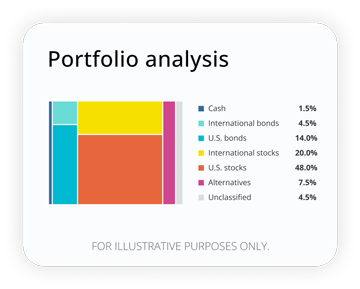
How well are your investments performing?
Analyze your portfolio in minutes and receive a target allocation for your goals.
1 FBI, “Internet Crime Report 2024,” Accessed December 2025
2 Visa, "Visa Helps Holiday Shoppers Stay Secure, Blocking Nearly 85% More Suspected Fraud Globally This Cyber Monday Compared to Last Year," December 2025
3 Wall Street Journal, "How Scammers Are Using AI This Holiday Season to Steal Your Money," December 2025
4 Federal Bureau of Investigation, "Holiday Scams," Accessed December 2025
5 AARP, “How Much Do You Know About Holiday-Related Scams in 2025?” November 2025
6 Trend Micro, "New Trend Micro Survey Shows Economic Strain and Overconfidence put Holiday Shoppers at Greater Risk of Online Scams," November 2025
7 Federal Trade Commission, “Planning for 2026? Add Identity Theft Awareness Week to your calendar,” January 2026
8 Federal Trade Commission, "When Information Is Lost or Exposed," Accessed December 2025
9 Ibid.
10 FBI, “Skimming,” Accessed December 2025
11 Federal Trade Commission, "When Information Is Lost or Exposed," Accessed December 2025
12 New Jersey Cybersecurity & Communications Integration Cell, "Point-of-Sale (POS) Malware," Accessed December 2025
13 Federal Trade Commission, "When Information Is Lost or Exposed," Accessed December 2025
14 Office of the Comptroller of the Currency, "Credit Card and Debit Card Fraud," Accessed December 2025
15 Click On Detroit, "Credit card ‘ghost tapping’: New way thieves are trying to steal your data," November 2025
16 University of Louisville, “Protect Your Credit Card Terminals and Devices From Illegal Tampering,” Accessed January 2026
17 Fox Business, "Rising holiday scams are costing consumers. Here's how to protect your wallet," December 2025
18 Kansas City Fed, "Card-Not-Present Fraud Rates in the United States After the Migration to Chip Cards," May 2025
19 U.S. Chamber of Commerce, "Credit Card Processing Scams and Fraud Small Businesses Should Be Aware Of," Accessed December 2025
20 California Department of Justice, "'Free' Trial Offers," Accessed December 2025
21 WCNC, "BBB warns of fake subscription renewal emails," March 2025
22 WRBC, "Scammers use fake websites and social media ads to target online shoppers, BBB warns," August 2025
23 Ibid.
24 Federal Trade Commission, "Scams in online sales: when orders don’t arrive," March 2023
25 CNBC, "Why credit card fraud alerts are rising, and how worried you should be about them," September 2024
26 Experian, "What Happens When You Lock Your Credit Card?" June 2024
27 Federal Trade Commission, “As Nationwide Fraud Losses Top $10 Billion in 2023, FTC Steps Up Efforts to Protect the Public,” February 2024
28 Federal Trade Commission, “New FTC Data Show a Big Jump in Reported Losses to Fraud to $12.5 Billion in 2024,” March 2025
29 Federal Trade Commission, "Credit Freezes and Fraud Alerts," Accessed December 2025
30 FDIC, "Credit Reports," Accessed December 2025
31 Office of the Comptroller of the Currency, "Credit Card and Debit Card Fraud," Accessed December 2025
RO 5093980-0126
 Be current.
Get insights and intel on your money.
*If you’re already registered with Empower, please use the same email address as your existing account.
Recent Articles
Saving vs. investing: Key differences
Money
Theme Slug
category--money
Pathauto Slug
money
Saving vs. investing depends on your goals and timeline. Saving can help with near-term needs, while investing may support longer-term financial goals.
Turn open enrollment into a savings check-up
Work
Theme Slug
category--work
Pathauto Slug
work
Reframing this annual benefits selection window can offer a chance to maximize savings and strengthen financial well-being.
20 sinking fund categories to better control your money
Life
Theme Slug
category--life
Pathauto Slug
life
Planning ahead for irregular expenses can help take the surprises out of your budget.

The Currency editors
Staff contributors
The CurrencyTM writers and editors cover the latest financial news and insights shaping how we live, work, and play. The team provides accurate, data-driven, and timely content aimed at empowering financial freedom for all.
The content contained in this blog post is intended for general informational purposes only and is not meant to constitute legal, tax, accounting or investment advice. You should consult a qualified legal or tax professional regarding your specific situation. No part of this blog, nor the links contained therein is a solicitation or offer to sell securities. Compensation for freelance contributions not to exceed $1,250. Third-party data is obtained from sources believed to be reliable; however, Empower cannot guarantee the accuracy, timeliness, completeness or fitness of this data for any particular purpose. Third-party links are provided solely as a convenience and do not imply an affiliation, endorsement or approval by Empower of the contents on such third-party websites. This article is based on current events, research, and developments at the time of publication, which may change over time.
Certain sections of this blog may contain forward-looking statements that are based on our reasonable expectations, estimates, projections and assumptions. Past performance is not a guarantee of future return, nor is it indicative of future performance. Investing involves risk. The value of your investment will fluctuate and you may lose money.
Certified Financial Planner Board of Standards Inc. (CFP Board) owns the certification marks CFP®, CERTIFIED FINANCIAL PLANNER™, CFP® (with plaque design), and CFP® (with flame design) in the U.S., which it authorizes use of by individuals who successfully complete CFP Board's initial and ongoing certification requirements.