

Digital estate planning: Preserve wealth and security by thinking ahead
Digital estate planning: Preserve wealth and security by thinking ahead
With people increasingly online and connected, it’s important to have valuable information ready to be passed down.
Digital estate planning: Preserve wealth and security by thinking ahead
With people increasingly online and connected, it’s important to have valuable information ready to be passed down.

09.17.2025

Listen
·Digital estate planning: Preserve wealth and security by thinking ahead
Key takeaways
The average person manages 168 passwords
Americans lost $12.5 billion to fraud in 2024
Taking inventory of online information now can aid in a wider estate plan
From bank logins to crypto private keys, keeping track of digital details can help people leave a rich digital legacy.
In today’s connected age, people are spending many of their waking hours — 10 hours a day — online.1 While technology has enabled people to spread their reach and increase their spending power, there can be hurdles along the way. Americans reported losing over $12.5 billion to fraudulent activity in 2024, a 25% jump over 2023’s losses, according to the Federal Trade Commission.2
Living life online also plays a role in thinking about the future. From tracking financial details to treasured personal photos and videos, setting up a digital inheritance before death can give loved ones the ability to access passwords and online accounts.
This setup should include representatives that would need access to a digital estate — executor, trustee, and financial agent — and these roles can be held by the same person or spread across a trusted group. These people would take the reins and responsibility for a variety of money matters after someone dies, including the need to pay off and settle debts.
Safeguard online accounts
Empower findings show that around a quarter of people (24%) check their bank account daily. Keeping track of complex passwords and login information can prove essential for everyday monitoring and for any future handoff to loved ones.
Opting-in online to manage financial transactions, social interactions, and routine tasks can also come with a larger mental load to juggle. As of 2024, the average American managed 168 passwords, a 70% increase from just three years prior.3
Due diligence also applies to what each online account includes. In 2023, the Pew Research Center reported that more than half (56%) of people frequently clicked “agree” on online privacy policies right away, without reading the details.4 These agreements can include terms around how companies can share personal data and how often they can communicate with consumers. Understanding how these interactions can mesh with daily life can prevent accidental disclosure of confidential data that a family member may need to handle in the future.
An Empower study found that almost three in four Americans (72%) rely or expect to rely on Social Security payouts for retirement income. With the program playing such a pivotal role in retirement, setting up a Social Security account online follows earnings history and estimates of future payments, and any discrepancies seen in the information can be handled promptly.
Keep an inventory of digital assets
Each year, Americans face tax season, which can serve as an opportunity to sift through financial documents and track down accounts people may have forgotten about. It can also be a prime time to create a financial inventory — even a basic list can be helpful for a friend or family member to reference when someone passes away and needs to follow up with issuing banks. An “at a glance” checklist can include information for each account, such as:
Account type (mortgage, credit card, checking, savings, 529, FSA, etc.)
Name of the financial institution
Account number
A general sense of account balance at that point in time
Since this would include sensitive personal information, again security is paramount: Keeping the inventory in a safe place is just as important as providing the details.
Read more: Protect your wealth with this 5-step checklist
More than a fifth of Americans (21%) now hold investments in cryptocurrencies, with Millennials most likely to hold crypto than other generations (29%), according to Empower research. Investors with cryptocurrencies as part of their asset allocation can understand the need for additional safeguards beyond a list to protect their wealth.
The largest cryptocurrency by market capitalization, Bitcoin, has seen a meteoric rise: Bitcoin traded at over $123,000 earlier this year – an eye-popping jump since it traded for $1,000 in 2013.
Essential to Bitcoin and other crypto holdings are private keys, which are secret strings of characters that prove ownership of the decentralized currencies. It could be life-changing if private keys are lost or misplaced: One investor offered to buy a landfill after a hard drive containing private keys was mistakenly thrown out, saying he lost $800 million in Bitcoin.5
Decide on and assign a successor
Similar to how retirement plans like 401(k) accounts and IRAs include the ability to set a beneficiary to take ownership of retirement savings, a digital estate plan should appoint a person or group to inherit the access to financial accounts. This enables an organized approach to end-of-life responsibilities like filing paperwork and paying off debts.
Read more: What is a beneficiary?
Americans have a complex relationship with debt, as seen through multiple Empower studies:
For Americans with a credit card who do not pay their bills in full, a quarter of people owe $10,000 or more.
The average monthly student loan payment is $284, with more than a third of people (34%) paying $200 or more.
Sparked by people spending around four hours a day thinking about money, 20% have already paid off meaningful debt.
Being prepared for the future with an effective digital estate can also aid in paying it forward — in the form of inheritances to loved ones or organizations that are near and dear.
More than a quarter of Americans (26%) consider their financial legacy to be passing down and protecting assets for the people they choose, according to Empower findings.
Through charitable giving, people can pass along stocks, real estate, bonds, and crypto, for example, after their death by naming specific beneficiaries and allocations beforehand.
Philanthropic money decisions will have new considerations starting in 2026, as changes arrive for charitable tax deductions. Since an income tax return still needs to be filed for a deceased person, donations to organizations could be a tax-efficient move when the time comes.6
Above all, secure the details
Like other essential estate planning documents, personal information surrounding a digital estate should be kept in a trusted place — like online cloud storage, safe deposit box, password manager, or physical safe, and people involved in fulfilling future wishes should understand how to gain access.
As important decisions evolve throughout a lifetime, a person’s digital legacy can be just as meaningful — and worthwhile to protect — as physical possessions.
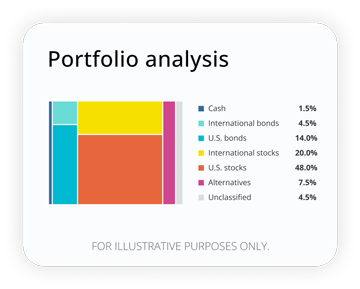
How well are your investments performing?
Analyze your portfolio in minutes and receive a target allocation for your goals.
1 Fox News, “Americans now spend 10 hours online every day,” July 2025.
2 Federal Trade Commission, “New FTC Data Show a Big Jump in Reported Losses to Fraud to $12.5 Billion in 2024,” March 2025.
3 Reader’s Digest, “Here’s Why You Should Delete Your Old Online Accounts—Stat,” September 2024.
4 Pew Research Center, “How Americans protect their online data,” October 2023.
5 The New York Times, “In Yearslong Search for Lost Bitcoin, a Final Proposal: Let Me Buy the Landfill,” February 2025.
6 Internal Revenue Service, “File the final income tax returns of a deceased person,” accessed September 2025.
RO4821396-0925
 Get The Currency newsletter



The Currency editors
Staff contributors
The CurrencyTM writers and editors cover the latest financial news and insights shaping how we live, work, and play. The team provides accurate, data-driven, and timely content aimed at empowering financial freedom for all.
The content contained in this blog post is intended for general informational purposes only and is not meant to constitute legal, tax, accounting or investment advice. You should consult a qualified legal or tax professional regarding your specific situation. No part of this blog, nor the links contained therein is a solicitation or offer to sell securities. Compensation for freelance contributions not to exceed $1,250. Third-party data is obtained from sources believed to be reliable; however, Empower cannot guarantee the accuracy, timeliness, completeness or fitness of this data for any particular purpose. Third-party links are provided solely as a convenience and do not imply an affiliation, endorsement or approval by Empower of the contents on such third-party websites. This article is based on current events, research, and developments at the time of publication, which may change over time.
Certain sections of this blog may contain forward-looking statements that are based on our reasonable expectations, estimates, projections and assumptions. Past performance is not a guarantee of future return, nor is it indicative of future performance. Investing involves risk. The value of your investment will fluctuate and you may lose money.
Certified Financial Planner Board of Standards Inc. (CFP Board) owns the certification marks CFP®, CERTIFIED FINANCIAL PLANNER™, CFP® (with plaque design), and CFP® (with flame design) in the U.S., which it authorizes use of by individuals who successfully complete CFP Board's initial and ongoing certification requirements.