

Bonds are back in the spotlight for investors
Bonds are back in the spotlight for investor
After years of low returns, bonds are experiencing a renewed appeal in a high-interest, moderate-inflation environment
Bonds are back in the spotlight for investor
After years of low returns, bonds are experiencing a renewed appeal in a high-interest, moderate-inflation environment

08.18.2025

Listen
·Bonds are back in the spotlight for investors
Key takeaways:
- Treasury yields near 5% offer income opportunities not seen since pre-2008 markets.
- Foreign investors bought $146.3 billion in treasuries in May, helping stabilize bond prices.
- I Bonds recently offered as high as 3.11% returns with inflation protection and the highest fixed rate in 16 years.
Treasury bonds are generating real income once again, and some investors may want to take a second look.
Bond investments are offering sustained, higher yields again after years of low interest rates. Thirty-year Treasuries are near 4.9%, and 10-year notes are above 4.3%.1,2
These higher yields have been around for much of 2025 so far, giving bonds a stronger role in shaping portfolios.3 Prices are also rising more slowly, which can give bonds a stronger role in shaping portfolios. Overseas interest in Treasury bonds adds another element to the market, potentially making bonds more attractive right now due to foreign investments.4
This environment has bonds back in focus for investors, and could reestablish their role as potentially attractive investments for income, planning, and risk management.
What’s behind the bond market rally
The bond market now has options for real income after years of yields that barely beat inflation.5 Economic conditions and timing are two major factors behind the about-face. Inflation has cooled, but hasn’t stopped. The Fed has paused rate hikes, but there has not been a strong economic case for lowering them. This in-between zone has helped yields to remain elevated, and investors do not seem to expect market-shaking interest rate decisions.6 This is a unique scenario in which fixed income offers returns in a period of relative calm in the markets.
There may also be some fatigue with market volatility.7 After a few up-and-down years with the stock market, bonds could potentially provide some stability that stocks have not.8 This can be particularly welcome for investors with specific goals, such as retirees, people planning for college expenses, or those who want to time bond maturities with life milestones. Treasury bonds are designed for stable payments, predictable timelines, and less day-to-day trading drama.9 These factors may be behind the growing interest in what bonds can do in portfolios in addition to being a hedge against volatility.
Read more: Understanding rate of return
Why bonds are back in style
Bond yields are higher than they have been in several years, due in large part to central banks raising interest rates in an attempt to curb inflation. Raising rates makes borrowing more expensive, which tends to cool down spending and business investments while also easing price pressure across the economy.
New bonds are issued with interest rates that match the current market. Since these bonds are issued at the highest interest rate in recent memory, they are generally more attractive than older bonds with lower interest. These bonds could generate larger returns than those from past years, and they may also be bought and sold at a premium if interest rates decline.
Breaking down bond investments
There are several approaches to investing in bonds, each with its own benefits and limitations:
- Individual bonds: Individual bonds pay interest on a set schedule and return the principal (the total value of the bond) once they mature.11 These bonds could be beneficial for predictable income, especially for investors who may be interested in creating capital alongside certain goals or dates. It may take more time to build a robust portfolio of bonds that expire at different times, however, and reinvesting funds from one bond the next (or as another investment type) may have to be done manually.
- Bond funds and exchange-traded funds (ETFs): Bond funds and ETFs can provide exposure to the bond market without having to pick and choose between bonds and maturity dates. These investment types of pool thousands of bonds together, which can boost bond diversification without investors having to pick-and-choose options manually. Bond ETFs are funds that hold a basket of bonds and trade like stocks throughout the day. These ETFs can offer exposure to fixed income without buying bonds themselves. Plus, they can suit short-, medium-, or long-term goals depending on the bonds they hold.
- Target maturity bond ETFs: These combine elements of both bond funds as well as bond ETFs. Funds hold bonds with the same maturity date and dissolve at the end of the term. This option is designed to offer built-in diversification.12
- Treasury inflation-protected securities (TIPS): TIPS are issued by the Treasury, with a principal value that adjusts depending on changes in the Consumer Price Index, which measures inflation. When inflation is on the rise, the principal behind TIPS bonds increases. When it falls, the principal may decrease, but only to a certain amount as determined by the terms of the bond.
Read more: Understanding compound interest and its power
Risks and tax advantages of bonds
Although bonds may potentially offer income and stability, they are not without risk. They are subject to three types of risk that are particularly relevant to investors. The first is interest rate risk, which indicates the possibility that a bond’s price will fall if new bonds are issued with higher interest rates.13 The second, inflation risk, details the potential for a bond’s fixed interest payments to lose purchasing power if inflation increases between the bond’s issuance and its maturity.14
Word is bond
Bonds may not get attention most of the time, given they’re designed to be a hedge against market challenges. Investors looking to lock in higher interest rates could potentially benefit from giving bonds a closer look.
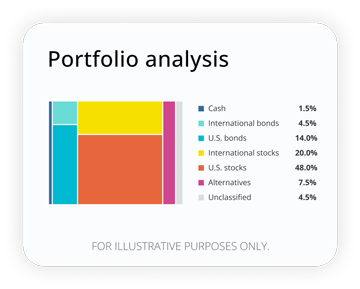
How well are your investments performing?
Analyze your portfolio in minutes and receive a target allocation for your goals.
1 U.S. Department of the Treasury, “Daily Treasury Par Yield Curve Rates,” Accessed August 2025
2 CME Group, “10-Year Treasury Note yield opens lower, closes above 4.3%.,” August 2025
3 Pew Research Center, “What to know about the bond market,” August 2025
4 Reuters, “Foreign demand for US Treasuries holds off bond vigilantes,” July 2025
5 CNBC, “10-year Treasury yield is little changed after tame inflation report,” November 2024
6 MarketWatch, “Here’s what investors will look for in Fed messaging on interest-rate policy,” July 2025
7 Fortune, “For exhausted stock market pros, the choice is buy or stay home,” May 2025
8 NPR, “Sell USA? Why Trump's tariffs may be sparking a historic storm on Wall Street,” April 2025
9 BBC, “Why everyone is suddenly so interested in US bond markets,” April 2025
10 Brookings, “The rise in long-term US Treasury yields,” May 2025
11 TreasuryDirect, “Understanding pricing and interest rates,” Accessed August 2025
12 Morningstar, “Jumping On High Yields, Investors Head for Target Maturity Bond Funds,” June 2024
13 Corporate Finance Institute, “Interest Rate Risk,” Accessed August 2025
14 FINRA, “Brush Up on Bonds: Interest Rate Changes and Duration,” September 2024
RO 4746276-0825
 Get The Currency newsletter



The Currency editors
Staff contributors
The CurrencyTM writers and editors cover the latest financial news and insights shaping how we live, work, and play. The team provides accurate, data-driven, and timely content aimed at empowering financial freedom for all.
The content contained in this blog post is intended for general informational purposes only and is not meant to constitute legal, tax, accounting or investment advice. You should consult a qualified legal or tax professional regarding your specific situation. No part of this blog, nor the links contained therein is a solicitation or offer to sell securities. Compensation for freelance contributions not to exceed $1,250. Third-party data is obtained from sources believed to be reliable; however, Empower cannot guarantee the accuracy, timeliness, completeness or fitness of this data for any particular purpose. Third-party links are provided solely as a convenience and do not imply an affiliation, endorsement or approval by Empower of the contents on such third-party websites. This article is based on current events, research, and developments at the time of publication, which may change over time.
Certain sections of this blog may contain forward-looking statements that are based on our reasonable expectations, estimates, projections and assumptions. Past performance is not a guarantee of future return, nor is it indicative of future performance. Investing involves risk. The value of your investment will fluctuate and you may lose money.
Certified Financial Planner Board of Standards Inc. (CFP Board) owns the certification marks CFP®, CERTIFIED FINANCIAL PLANNER™, CFP® (with plaque design), and CFP® (with flame design) in the U.S., which it authorizes use of by individuals who successfully complete CFP Board's initial and ongoing certification requirements.