

Consumer confidence cools, while Wall Street holds steady in September
Consumer confidence cools, while Wall Street holds steady in September
Americans send mixed signals about jobs, spending, and income expectations
Consumer confidence cools, while Wall Street holds steady in September
Americans send mixed signals about jobs, spending, and income expectations

10.06.2025

Listen
·Consumer confidence cools, while Wall Street holds steady in September
Key takeaways:
- The Consumer Confidence Index fell to 94.2 in September, its lowest since April
- Despite consumer unease, stock markets continue to edge higher, reflecting cautious optimism
- Confidence is up among people under age 35 and households earning $35k–$200k, but down in other groups
- Plans to buy cars and take vacations dropped, while home purchase intentions hit a four-month high
- Even with short-term jitters, 58% of Americans still believe they’ll achieve financial success in their lifetime
Consumer confidence cooled in September, with Americans citing concerns about prices and the job market. Sentiment varied across demographics, with younger adults and middle-income households feeling more secure than others. While intentions to spend on cars and travel fell, homebuying interest rose, and many Americans continue to budget carefully, indulge in small luxuries, and maintain long-term optimism about their financial future.
Americans’ confidence in the economy dipped last month, with The Conference Board’s Consumer Confidence Index falling from 97.8 in August to 94.2 in September.1 The decline marks the weakest showing since April when a sweeping tariff policy was announced, and is the largest drop in a year — signaling uneasiness about prices and a cooling job market.2
Despite consumer perceptions, stocks continued to edge up in recent weeks, indicating Wall Street may remain optimistic that the U.S. economy will avoid a recession.3
While both the Present Situation and Expectations indices also fell to 125.4 and 73.4, respectively, overall consumer optimism about future income increased, with confidence rising for those under age 35, and slipping among the 35 and over cohort.4 The picture was mixed based on income, with people earning between $35,000-$200,000 continuing to be more confident than they were in April, and those outside those income levels feeling less so.
Read more: Job market cools after modest August gains
Data snapshot
Consumer plans to purchase cars and take vacations both declined in September from August, while intention to buy big-ticket items was largely unchanged. At the same time, home purchase plans ticked up, reaching a four-month high.
Other month-over-month sentiments include:5
- 19.5% say business conditions are “good,” down from 21.8%
- 26.9% think jobs are “plentiful,” compared with 30.2%
- 22.3% expect business conditions to worsen, relatively flat from 23.5%
- 25.6% anticipate fewer jobs, down slightly from 25.9%
- 17.6% expect incomes to increase, compared with 18.8%
Shifting behaviors
As economists and market watchers debate what’s to come, Empower findings reveal some clues showing up in behaviors from gift-giving to tipping habits. Some Americans are taking a thoughtful approach to budgeting, with more than half saying they set aside a dedicated budget for gift-giving (58%) or buy gifts ahead of time to spread out costs (56%).
Emotions can play a major role in everyday spending, and the “lipstick effect” — the idea that consumers turn to small luxuries in hard times — could be at play, with spending on small luxuries like coffee holding steady, and beauty products and gym memberships on the rise.
Read more: Going rate
Money mindset
Though views on Family’s Current and Future Financial Situation weakened in September, many Americans may still take a long-term view: More than half (58%) saying they believe they’ll achieve financial success in their lifetime despite hurdles, according to Empower research.
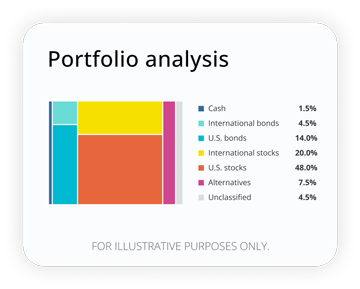
How well are your investments performing?
Analyze your portfolio in minutes and receive a target allocation for your goals.
1 The Conference Board, “US Consumer Confidence Declines Again in September,” September 30, 2025.
2 Ibid.
3 Fortune, “Yet another recession indicator is flashing as consumer confidence declines sharply in September,” October 1, 2025.
4 The Conference Board, “US Consumer Confidence Declines Again in September,” September 30, 2025.
5 Ibid.
RO4875377 -1025
 Get The Currency newsletter



The Currency editors
Staff contributors
The CurrencyTM writers and editors cover the latest financial news and insights shaping how we live, work, and play. The team provides accurate, data-driven, and timely content aimed at empowering financial freedom for all.
The content contained in this blog post is intended for general informational purposes only and is not meant to constitute legal, tax, accounting or investment advice. You should consult a qualified legal or tax professional regarding your specific situation. No part of this blog, nor the links contained therein is a solicitation or offer to sell securities. Compensation for freelance contributions not to exceed $1,250. Third-party data is obtained from sources believed to be reliable; however, Empower cannot guarantee the accuracy, timeliness, completeness or fitness of this data for any particular purpose. Third-party links are provided solely as a convenience and do not imply an affiliation, endorsement or approval by Empower of the contents on such third-party websites. This article is based on current events, research, and developments at the time of publication, which may change over time.
Certain sections of this blog may contain forward-looking statements that are based on our reasonable expectations, estimates, projections and assumptions. Past performance is not a guarantee of future return, nor is it indicative of future performance. Investing involves risk. The value of your investment will fluctuate and you may lose money.
Certified Financial Planner Board of Standards Inc. (CFP Board) owns the certification marks CFP®, CERTIFIED FINANCIAL PLANNER™, CFP® (with plaque design), and CFP® (with flame design) in the U.S., which it authorizes use of by individuals who successfully complete CFP Board's initial and ongoing certification requirements.