

5 building blocks of financial literacy
5 building blocks of financial literacy
A guide to core financial skills that can help build stability, confidence, and long-term financial success
5 building blocks of financial literacy
A guide to core financial skills that can help build stability, confidence, and long-term financial success

04.16.2026
Key takeaways
- Americans say they lost an estimated $246 billion in 2025 due to gaps in financial literacy.
- Tracking income and spending through ongoing budgeting can be a helpful tool for staying on track.
- Saving and investing early can create potential for compounding to build toward long-term security.
- Establishing and maintaining good credit and focusing on reducing “bad” debt potentially can help improve borrowing power and free up cash for possible future savings.
- Open conversations, education, and guidance from professionals can help inform decisions about money.
Achieving financial freedom begins with knowledge and know-how — and when it comes to financial literacy, what you don’t know can come at a cost: U.S. adults say they lost an estimated $948 in 2025 — totaling more than $246 billion overall — due to gaps in personal finance knowledge.1
Everyone has their own unique vision for what success looks like. And understanding options and learning to apply some key financial skills — from sticking to a budget and implementing a saving plan to gaining control of credit and debt — can be pivotal steps in learning to effectively manage money, stay on course, and navigate challenges along the way.
Although it can feel difficult to know where to begin, focusing on key personal finance principles can help support financial security and progress toward long-term goals.
Read more: Time for a check-up: 7 questions to test your financial health
Learn to budget
Creating and sticking to a realistic budget is a fundamental, straightforward step to successful money management. U.S. workers are seeing relatively flat wage growth month over month, and shrinking balances could potentially lead to a tendency toward outspending earnings.2 There’s more to budgeting than just tracking spending though. Getting a handle on precisely how much money is coming in and where it’s going is an important step in learning to direct spending.
Budgeting isn’t a one and done exercise. As circumstances change, it’s important to make adjustments as necessary to help keep to a plan. The 50-30-20 budget rule, which splits household income into needs, wants, and savings categories, can provide a holistic view of finances and be a useful tool for balancing income and expenses while working toward short- and long-term financial goals.
Read more: How to create a budget: A step-by-step guide
Kickstart saving
The earlier saving begins, the more time there is to maximize the power of compound interest or compound earnings. With compounding, not only do investments have the potential to grow, any earnings may also produce earnings. There are many types of investments to consider, including but not limited to mutual funds, stocks, bonds, high-yield savings accounts, and exchange-traded funds. It’s important to compare options before getting started.
Read more: Saving vs. investing: Key differences
Along with setting aside money for big purchases, it can be beneficial to earmark savings for specific purposes:
Retirement. Planning for retirement is essential to preparing for the future and building long-term financial security. It’s never too early to establish retirement goals and start saving for them. This might include opening a traditional or Roth IRA, or other type of account, and if available, contributing regularly to a workplace savings account. Contribution limits vary by account type, so it’s important to keep abreast of any changes.
Emergency fund. Life is full of unexpected events, and a dedicated emergency savings provides a cushion against circumstances like job loss, illness, or a big home or car repair, reducing or eliminating the need to dip into other savings or accumulate debt. Empower findings reveal that about 1 in 3 (32%) Americans have no emergency savings set aside for unexpected financial events, and nearly as many (29%) couldn’t afford an emergency expense over $400. While there’s no ideal number for emergency savings, saving enough cash to cover three to six months of expenses based on average monthly spending habits is a reasonable goal according to conventional wisdom.
Read more: How to build an emergency fund
Build credit
Credit scores are not a direct measure of overall financial health, but they do provide a snapshot of how well someone does with borrowing and paying back money. Common models like FICO and VantageScore assign credit scores from 300 to 850, with the average FICO score at 715 in late 2025. The earlier the better when it comes to establishing and improving credit: Some industry specialists suggest starting as early as age 16 or 17.3
Maintaining a good credit score can have far-reaching implications — from maximizing borrowing power and landing favorable interest rates to determining insurance eligibility. Credit health can fluctuate over time, depending on age and financial history, so it’s important to monitor changes. Simple steps like paying bills in a timely manner, limiting revolving credit, and avoiding late charges can help keep scores up.
Read more: Who needs perfect? For credit scores, it pays to be in the ballpark
Manage debt
While avoiding debt is ideal, many people find themselves with some amount of debt at some point in time. But all debt is not created equal: It’s important to differentiate between good debt, like a home mortgage or student loan that can lead to higher earnings and net worth, versus bad debt, such as high-interest credit card balances. Typically, these are considered liabilities that represent depreciating assets.
Making a dent in debt will free up additional funds that can go toward saving for the future. There are different approaches for paying down debt, from the snowball method of paying off smallest to largest balances, regardless of interest rate, to the avalanche method, which prioritizes paying down debts with the highest interest rates.
Read more: How do I pay off credit card debt? Get a Sense Check
Talk and keep learning
According to a recent survey, most Gen Alpha kids have more access to money and how it’s spent than their parents did at their age.4 In fact, 4 in 5 Gen Alphas earn money for doing household chores and 50% have made money selling things they no longer use.5
This may underscore the need for open conversations about basic financial literacy — yet broaching money talks can be daunting for some families. A financial professional can be a valuable ally to help jump start these conversations, gain greater financial literacy, and guide financial decisions. Asking some key questions can help with the process of identifying a good fit.
Read more: Teaching kids about money: What today's parents are doing differently
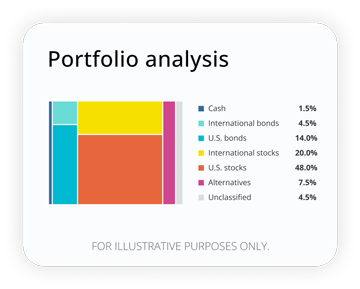
How well are your investments performing?
Analyze your portfolio in minutes and receive a target allocation for your goals.
1 National Financial Educators Council, “Annual Survey Underscores the Persistent Cost of Financial Illiteracy in the U.S.,” accessed April 2026.
2 U.S. Bureau of Labor Statistics, “Economic News Release,” March 11, 2026.
3 ABC News 7, “How improving your financial literacy can help build your credit score,” February 28, 2025.
4 Bloomberg, “How to Teach Gen Alpha Kids About Money in a Digital World,” February 20, 2026.
5 Ibid.
RO5399461-0426
 Get The Currency newsletter



The Currency editors
Staff contributors
The CurrencyTM writers and editors cover the latest financial news and insights shaping how we live, work, and play. The team provides accurate, data-driven, and timely content aimed at empowering financial freedom for all.
The content contained in this blog post is intended for general informational purposes only and is not meant to constitute legal, tax, accounting or investment advice. You should consult a qualified legal or tax professional regarding your specific situation. No part of this blog, nor the links contained therein is a solicitation or offer to sell securities. Compensation for freelance contributions not to exceed $1,250. Third-party data is obtained from sources believed to be reliable; however, Empower cannot guarantee the accuracy, timeliness, completeness or fitness of this data for any particular purpose. Third-party links are provided solely as a convenience and do not imply an affiliation, endorsement or approval by Empower of the contents on such third-party websites. This article is based on current events, research, and developments at the time of publication, which may change over time.
Certain sections of this blog may contain forward-looking statements that are based on our reasonable expectations, estimates, projections and assumptions. Past performance is not a guarantee of future return, nor is it indicative of future performance. Investing involves risk. The value of your investment will fluctuate and you may lose money.
Certified Financial Planner Board of Standards Inc. (CFP Board) owns the certification marks CFP®, CERTIFIED FINANCIAL PLANNER™, CFP® (with plaque design), and CFP® (with flame design) in the U.S., which it authorizes use of by individuals who successfully complete CFP Board's initial and ongoing certification requirements.