

401(k) RMD rules to know before you withdraw
401(k) RMD rules to know before you withdraw
Learn how and when to take 401(k) RMDs, including age rules, deadlines, taxes, and penalties
401(k) RMD rules to know before you withdraw
Learn how and when to take 401(k) RMDs, including age rules, deadlines, taxes, and penalties

08.12.2025

Listen
·401(k) RMD rules to know before you withdraw
Key takeaways
- A Required Minimum Distribution (RMD) is the minimum amount you must withdraw annually from a 401(k) or other qualified retirement plan starting at a certain age
- Missing an RMD deadline can lead to costly penalties, but understanding the rules, such as when to start, how much to withdraw, and how to calculate it can help retirees stay compliant and avoid unnecessary tax burdens.
- Some workers may qualify for delays or be able to manage timing with planning tools
- Online calculators and planning tools can help estimate, schedule, and optimize RMD strategies
RMDs are mandatory 401(k) withdrawals generally start at age 73 — and smart planning can help people avoid penalties and tax surprises.
Required minimum distributions (RMDs) mark the point at which tax-deferred savings must turn into taxable income for retirees. RMDs are mandatory withdrawals from certain types of retirement accounts, including 401(k)s, that begin at 73 for most people. RMDs ensure savers begin to draw down their accounts and pay income taxes on the funds they withdraw. Understanding how and when 401(k) RMDs kick in can help people avoid steep penalties while helping to keep tax planning on track.
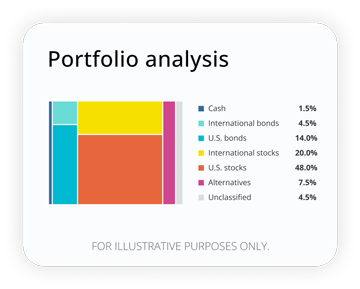
How well are your investments performing?
Analyze your portfolio in minutes and receive a target allocation for your goals.
What is a Required Minimum Distribution (RMD)?
An RMD is the minimum amount a person must withdraw every year from their tax-deferred retirement accounts once they reach a certain age. The IRS requires these withdrawals to ensure that individuals eventually pay taxes on retirements that are tax deferred before retirement.
A required minimum distribution applies to traditional 401(k)s and traditional IRAs, although the rules for each can vary slightly. Understanding how one’s 401(k) fits into these rules is key to avoiding unnecessary tax burdens.
Read More: What is a Roth IRA? Benefits & eligibility
When do you have to start taking 401(k) RMDs?
Many retirees ask, “when do you have to take RMDs?” After all, it’s a core timing question for retirement account withdrawals. The age at which people need to take RMDs depends on their birth year, due to changes from the SECURE Act and its successor, the SECURE Act 2.0. According to these acts, those who were born between 1951 and 1959 need to take RMDs at 73 years of age. People born in 1960 or later do not have to take RMDs until they’re 75.
Although the first RMD applies to the year in which a person reaches the required age, retirees have until April 1 of the following year to take that initial withdrawal. After that, all RMDs must be taken by December 31 each year. Delaying the first withdrawal into the second year may result in two RMDs being taxed during the same year.
How do you calculate an RMD?
Learning how to calculate the RMD for a 401(k) comes down to dividing the account balance by the IRS life expectancy factor by age.1 The IRS calculates RMDs based on life expectancy tables, assigning a distribution period by age. To find one’s RMD, divide the account balance as of December 31 of the previous year by the distribution period listed by age.
For example, someone who is 75 years old with a 401(k) balance of $200,000 would divide that balance by 24.6 (the IRS factor for age 75). This would result in an RMD of roughly $8,130. People with multiple 401(k) accounts have to calculate each of them separately. People can split their distributions up into smaller sums throughout the year, or all at once, so long as they meet the minimum amount required. RMD calculators can help take the guesswork out of determining the RMD amount required.
Penalties for missing or miscalculating RMDs
Learning what happens if you miss an RMD is something all retirees should know. If a person misses their RMD, they may face a steep penalty — one of the most costly mistakes in retirement planning. Missing an RMD can lead to a penalty of 25% of the amount not withdrawn.2 The penalty may be reduced to 10% if the account owner corrects the error promptly. They must request relief via IRS Form 5329 and provide a written explanation as to why they didn’t take it.
Other common mistakes include overlooking the distribution deadline, using the wrong life expectancy factor, or misapplying calculations across several accounts. It’s important to stay on schedule and comb through the IRS tables thoroughly. Qualified financial professionals may also help avoid these errors.
Can you delay or avoid 401(k) RMDs?
Some account holders can delay taking RMDs if they are working beyond age 73, and do not own more than 5% of the company they work for.3 The still-working exception only applies to the account sponsored by a person’s current employer; it does not affect RMDs from prior employers.
There are planning tools that could help manage or postpone RMDs. For example, converting part of a 401(k) to a Roth IRA removes some assets from future RMD obligations.4 Roth IRAs are funded with post-tax dollars, which means they are no longer part of the RMD calculus. This strategy may trigger a tax bill at the time the funds are converted, but may create more flexibility later.
Qualified Longevity Annuity Contracts (QLACs) may also help defer some contributions until as late as 85.5 Placing funds in a deferred income annuity that pays out later in life can help exclude funds from RMDs, which may help manage taxes while preserving savings. The money used to purchase a QLAC is not taxed when the contract is created, but is taxed once the annuity begins making payments. These are taxed as ordinary income.
How do RMDs affect taxes?
Withdrawals taken as RMD's count as ordinary taxable income. This means the amount is added to your gross income for the year and taxed at your marginal rate. Taking a large RMD could push people into a higher tax bracket, especially if combined with Social Security or other income.
Importantly, withdrawing more than the RMD does not reduce future obligations. Strategic withdrawals paired with tactics like Qualified Charitable Distributions (QCDs) may help manage tax impacts and could keep total income below key thresholds.6
Planning ahead: How Empower can help with your RMD strategy
Early planning is one of the most effective ways to stay ahead of required minimum distributions, and Empower offers tools that help circulate and schedule future withdrawals to help avoid surprises and stay compliant with RMD rules. You can estimate your required minimum distribution with our RMD calculator today.
Frequently asked questions about 401(k) RMDs
What is the RMD age for my 401(k)s?
The RMD age depends on one’s birth year. People born between 1951 and 1959 will have to take RMDs at 73 years old. Those born in 1960 or later must take RMDs at 75. Anyone who turned 72 before 2023 follows the old rule and should already be taking RMD.
How do I calculate my 401(k) RMD?
Divide the account balance as of December 31st of the year prior by the life expectancy factor from the IRS's Uniform Lifetime Table.
Can I reinvest my RMD?
No, once withdrawn, RMD's cannot be rolled back into a tax-advantaged retirement account. However, they can be placed in a taxable brokerage account or used for qualified charitable distributions (QCDs) if eligible.
What happens if I forget to take my RMD?
Missing an RMD can result in a 25% penalty on the amount not taken, though this may be reduced to 10% if corrected promptly. File IRS Form 5329 and include an explanation to request a waiver.
1 Internal Revenue Service, “Publication 590-B (2024), Distributions from Individual Retirement Arrangements (IRAs),” Accessed August 2025
2 Internal Revenue Service, “Retirement plan and IRA required minimum distributions FAQs,” Accessed August 2025
3 Internal Revenue Service, “Retirement topics - Required minimum distributions (RMDs),” Accessed August 2025
4 AARP, “How to Convert a Traditional 401(k) Into a Roth IRA,” Accessed August 2025
5 Investor.gov, “Qualified Longevity Annuity Contract (QLAC),” Accessed August 2025
6 Internal Revenue Service, “Qualified charitable distributions allow eligible IRA owners up to $100,000 in tax-free gifts to charity,” Accessed August 2025
RO 4731445-0825
 Get The Currency newsletter
News and know-how for whatever money decision comes next.
*If you’re already registered with Empower, please use the same email address as your existing account.
Recent Articles
💨 Drift happens
Money
Theme Slug
category--money
Pathauto Slug
money
More than 1 in 3 Americans say they may have lost track of funds from a former employer, according to Empower research. Here's this month's money news.
Zero-based budgeting: What it is and how it works
Money
Theme Slug
category--money
Pathauto Slug
money
Learn how zero-based budgeting works, how to give every dollar a job, and how to build a monthly plan with categories, steps, and a practical example.
Inherited a retirement account? Understanding your options
Money
Theme Slug
category--money
Pathauto Slug
money
Learn what to do after inheriting a retirement account, including how to contact the administrator, gather documents, and navigate tax and withdrawal rules.

The Currency editors
Staff contributors
The CurrencyTM writers and editors cover the latest financial news and insights shaping how we live, work, and play. The team provides accurate, data-driven, and timely content aimed at empowering financial freedom for all.
The content contained in this blog post is intended for general informational purposes only and is not meant to constitute legal, tax, accounting or investment advice. You should consult a qualified legal or tax professional regarding your specific situation. No part of this blog, nor the links contained therein is a solicitation or offer to sell securities. Compensation for freelance contributions not to exceed $1,250. Third-party data is obtained from sources believed to be reliable; however, Empower cannot guarantee the accuracy, timeliness, completeness or fitness of this data for any particular purpose. Third-party links are provided solely as a convenience and do not imply an affiliation, endorsement or approval by Empower of the contents on such third-party websites. This article is based on current events, research, and developments at the time of publication, which may change over time.
Certain sections of this blog may contain forward-looking statements that are based on our reasonable expectations, estimates, projections and assumptions. Past performance is not a guarantee of future return, nor is it indicative of future performance. Investing involves risk. The value of your investment will fluctuate and you may lose money.
Certified Financial Planner Board of Standards Inc. (CFP Board) owns the certification marks CFP®, CERTIFIED FINANCIAL PLANNER™, CFP® (with plaque design), and CFP® (with flame design) in the U.S., which it authorizes use of by individuals who successfully complete CFP Board's initial and ongoing certification requirements.