

Family business succession: What to know as Gen Z steps in
Family business succession: What to know as Gen Z steps in
Gen Z is joining family-run firms as owners face retirement, but succession planning can be more challenging without formal plans.
Family business succession: What to know as Gen Z steps in
Gen Z is joining family-run firms as owners face retirement, but succession planning can be more challenging without formal plans.

09.19.2025

Listen
·Family business succession: What to know as Gen Z steps in
Key takeaways
- Family businesses contribute $7.7 trillion to private-sector GDP
- Gen Z participation in family small businesses rose 13% year over year in early 2025
- Just 34% of business owners report having a formal succession plan
Family businesses employ nearly 60% of private-sector workers. Succession remains a complex process with just 30% of businesses passing to the next generation. Rising Gen Z involvement and recent tax changes might give owners more clarity on planning.
From neighborhood shops to global corporations, family-run operations make up much of the U.S. economy, generating an estimated $7.7 trillion of U.S. gross domestic product and employing nearly 60% of private-sector workers.1
Young adults have also been taking a greater interest in joining the family business, driven partly by a tighter labor market and other economic realities. They’re being welcomed by Baby Boomers and Gen X owners who are eager to shore up transitions before they enter retirement.2
About half of small businesses have owners over age 50. But wealth and leadership transfers can be tricky for those looking to build legacies: About 30% of family enterprises transition to the next generation and only 12% make it to a third generation.3
The Murdoch family recently made headlines with a $3.3 billion trust restructuring that cemented Lachlan Murdoch’s control of Fox Corp. and News Corp. and compensated three of Rupert Murdoch’s other children after a prolonged succession battle that played out in the courts.4
Smaller and less complex businesses aren’t immune to such dynamics. Whether it’s a media empire or a family-run diner, disputes over inheritance and leadership can emerge for myriad personal and business reasons.5
While nothing is guaranteed, formal and properly communicated succession plans can help reduce friction during transitions.6 Recent tax law changes also might provide greater clarity for small business operations as owners make succession plans.
Read more: Small businesses: Putting themselves on the map
Why succession can stumble
Gen Z and other young adults are seeing family businesses as a way to build wealth and continue a family legacy. The share of young adult children under age 30 who work for their family’s business increased 13% in January 2025 compared to the prior year, according to a study of 400,000 payrolls by HR technology platform Gusto.7
The timing is optimal for parents and other relative owners contemplating next moves. Nearly three quarters (72%) of respondents to a recent PwC survey said they want to ensure that the business stays in the family, but only 34% said they had a formal plan in place.8
One reason family businesses might delay the creation of a formal plan is because they fear it will raise tensions between various family members.9 Business strategy and vision, digital transformation and other technological changes, and perceptions about customer reactions are just a few of the issues that can arise during leadership shifts.10
While the PwC survey found that 64% of family members regularly communicate about the business, only 49% said there is family alignment on company direction.11
Tension or mistrust between generations can be a recurring theme in family business succession. Founders may hesitate to relinquish control, while next-generation leaders might feel disempowered or excluded from decision-making.12
Gen Z has big plans for financial success and is the most optimistic (71%) of all generations in reaching goals, according to Empower research. But gaps in training and experience are also real, and family dynamics can create blind spots for succession.
Some observers recommend that heirs co-design the transition, giving both generations greater clarity and confidence. Equally important is formalizing a written plan with clearly designated roles and timelines, along with contingencies to ensure the business can endure unexpected events.13
Can tax clarity spur succession planning?
Many small businesses might have delayed succession decisions while waiting for clarity on tax policy.14 But recent changes enacted in July under the One Big Beautiful Bill Act (OBBBA) could propel planning.
The new law permanently raised the federal estate, gift, and generation-skipping transfer (GST) tax exemption to $15 million per individual ($30 million for married couples). The current $14 million exemption for 2025 was due to drop to about $7 million next year without the change.15
The new law also extends the 20% qualified business income deduction (QBI). The QBI was created in 2017 to make sure pass-through entities like sole proprietorships, partnerships, and S corporations — which comprise the majority of small businesses — weren’t at a competitive disadvantage to corporations, which had their tax rate lowered from 34% to 21%.16
That QBI extension doesn’t have an expiration under the new law, allowing business owners to design trusts, buy-sell agreements, and other succession vehicles with greater clarity than before.17
There are a host of other tax changes in the law that can help make business transfers or sales more affordable, including provisions on the sale of qualified small business stock, and bonus depreciation and expensing for property and equipment purchases.18
Read more: What the big, beautiful bill could mean for wallets nationwide
The path ahead on succession
Passing a business to the next generation is complex, spanning finance, law, taxes, operations, strategy — and family dynamics. The Small Business Administration advises owners to assemble a team of advisers that might include an attorney, wealth planner, business valuation professional, and an accountant or tax specialist.19
On the family side, succession often falters when conversations are delayed. Generational differences, inexperienced heirs, and reluctance from founders to step aside can all add risk. A well-documented formal plan with clear roles, timelines, and contingencies can help move transitions forward.
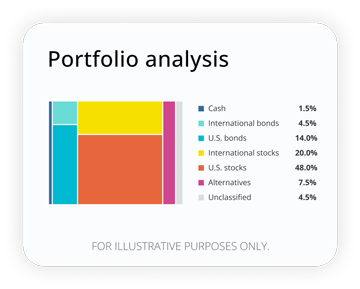
How well are your investments performing?
Analyze your portfolio in minutes and receive a target allocation for your goals.
1 Conway Center of Family Business, “Family Business Facts,” accessed September 2025.
2 The Wall Street Journal, “A Young Generation Goes to Work for Mom and Dad Inc.,” April 2025.
3 Conway Center of Family Business, “Family Business Facts,” accessed September 2025.
4 The New York Times “Inside the Deal Ending the Murdoch Succession Fight,” September 2025.
5 Harvard Business Review, “Plan a Smooth Succession for Your Family Business,” September 2022.
6 PwC, “PwC’s 2023 US Family Business Survey,” May 2023.
7 The Wall Street Journal, “A Young Generation Goes to Work for Mom and Dad Inc.,” April 2025.
8 PwC, “PwC’s 2023 US Family Business Survey,” May 2023.
9 World Economic Forum, “3 ways to improve family business succession and benefit the wider economy,” December 2023
10 Deloitte, “2024 Family Enterprise Survey,” accessed September 2025.
11 PwC, “PwC’s 2023 US Family Business Survey,” May 2023.
12 Harvard Business Review, “Plan a Smooth Succession for Your Family Business,” September 2022.
13 Harvard Business Review, “Plan a Smooth Succession for Your Family Business,” September 2022.
14 NJBIZ, “Experts share tips to grow – and possibly sell – family businesses,” July 2025.
15 The Wall Street Journal, “Trump Bill Would Raise Estate Tax Exemption to $15 Million and Make It Permanent,” June 2024.
16 U.S. Chamber of Commerce, “Tax Bill Delivers Permanent Relief for Small Businesses,” July 2025.
17 BizBuySell, “Effective Exit Strategies for Family Businesses,” accessed September 2025.
18 U.S. Chamber of Commerce, “Tax Bill Delivers Permanent Relief for Small Businesses,” July 2025.
19 Small Business Administration, “Close or sell your business,” accessed September 2025.
RO4832284-0925
 Get The Currency newsletter



The Currency editors
Staff contributors
The CurrencyTM writers and editors cover the latest financial news and insights shaping how we live, work, and play. The team provides accurate, data-driven, and timely content aimed at empowering financial freedom for all.
The content contained in this blog post is intended for general informational purposes only and is not meant to constitute legal, tax, accounting or investment advice. You should consult a qualified legal or tax professional regarding your specific situation. No part of this blog, nor the links contained therein is a solicitation or offer to sell securities. Compensation for freelance contributions not to exceed $1,250. Third-party data is obtained from sources believed to be reliable; however, Empower cannot guarantee the accuracy, timeliness, completeness or fitness of this data for any particular purpose. Third-party links are provided solely as a convenience and do not imply an affiliation, endorsement or approval by Empower of the contents on such third-party websites. This article is based on current events, research, and developments at the time of publication, which may change over time.
Certain sections of this blog may contain forward-looking statements that are based on our reasonable expectations, estimates, projections and assumptions. Past performance is not a guarantee of future return, nor is it indicative of future performance. Investing involves risk. The value of your investment will fluctuate and you may lose money.
Certified Financial Planner Board of Standards Inc. (CFP Board) owns the certification marks CFP®, CERTIFIED FINANCIAL PLANNER™, CFP® (with plaque design), and CFP® (with flame design) in the U.S., which it authorizes use of by individuals who successfully complete CFP Board's initial and ongoing certification requirements.