

529 contribution limits: How much can you put in?
529 contribution limits: How much can you put in?
There are no federal limits on annual 529 contributions. But federal gift tax rules and state-specific account limits and tax benefits can shape savings.
529 contribution limits: How much can you put in?
There are no federal limits on annual 529 contributions. But federal gift tax rules and state-specific account limits and tax benefits can shape savings.

07.02.2026
Key takeaways
- There are no federal limits on annual 529 contributions, but amounts above $19,000 in 2026 ($38,000 for married couples) generally require gift tax reporting.
- Large lump-sum contributions to 529s are possible through the five-year “superfunding” election and reporting.
- State-sponsored 529 plans set their own lifetime account maximums for 529s. Many states also allow their own tax incentives for 529 contributions.
A 529 account can offer a flexible, tax-advantaged way to save for education. But if you're wondering about annual contribution limits, the answer goes beyond a single dollar amount.
The IRS does not set an annual contribution limit for 529 plans, but the amount you put in can be shaped by federal gift tax rules, state-specific account limits, and the amount reasonably needed to cover a beneficiary's qualified education expenses.1
Here's a breakdown of the key rules governing 529 contributions and some common questions explained.
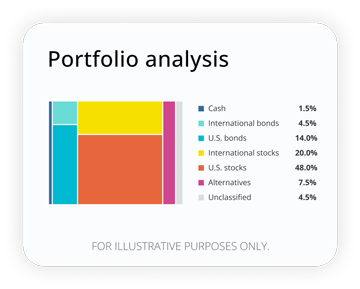
How well are your investments performing?
Analyze your portfolio in minutes and receive a target allocation for your goals.
529 contribution limits: The quick answer
- There are no federal annual 529 contribution limits. However, the IRS generally treats 529 contributions as gifts. If you contribute more than the 2026 annual gift tax exclusion—$19,000 per donor or generally $38,000 for a married couple — you'll typically need to file a federal gift tax return (IRS Form 709).2
- States set aggregate account limits for 529 plans. Each state sponsors its own 529 plan and has its own rules, including aggregate or lifetime limits on contributions per beneficiary. Those limits range from about $235,000 to more than $621,000 per beneficiary. Contributions above those caps usually aren't accepted, although there is still the potential for investment growth.3
- State tax benefits. While 529 contributions aren't federally deductible, many states also offer income tax deductions or credits that may be subject to annual contribution caps, residency requirements, or other eligibility rules.4
- Accelerated 529 funding. 529 plans have a unique feature for “superfunding,” which allows you to contribute up to five years' worth of the federal annual gift tax exclusion ($19,000) into a 529 plan in a single year. An individual can contribute up to $95,000 in 2026 — or $190,000 for a married couple electing to split gifts — by using a special five-year gift tax election and filing out IRS Form 709.5
Annual 529 gift tax rules
It can be easy to mistake the federal gift tax annual exclusion for an annual limit on 529 contributions. The exclusion is not a cap — rather it determines when a federal gift tax return may be required.
For 2026, the annual gift tax exclusion is $19,000 per recipient, per donor. That means an individual can generally contribute up to $19,000 to a beneficiary's 529 plan without triggering gift tax reporting. A married couple can generally contribute $38,000 to the same beneficiary if they make separate gifts or elect gift-splitting.6
Contributing more than those amounts doesn't necessarily mean you'll owe gift tax. The excess generally must be reported on IRS Form 709 and can count against the donor's lifetime estate and gift tax exemption.
How 529 superfunding works
A 529 plan offers a tax-planning strategy known as superfunding, which allows up to five years' worth of annual gift tax exclusions at once. Based on the 2026 annual exclusion of $19,000, one person can contribute up to $95,000 to a beneficiary's 529 plan in a single year, or $190,000 for a married couple that qualifies for gift-splitting.7
Superfunding can accelerate college savings by giving investments more time for potential growth while also helping donors move assets out of their taxable estate. Donors must make the five-year election on IRS Form 709, which treats the contribution as if it were made evenly over five years for gift tax purposes.8
Superfunding comes with several important and complex tax rules. For example, if the donor dies during the 5-year period, a prorated amount may be included in the donor's estate.9
Because superfunding has both gift and estate tax implications, you should consult with a tax professional before making a large lump-sum contribution.
Who can contribute to a 529 plan?
Any U.S. citizen can contribute to a 529 plan, including parents, grandparents, other relatives, friends, and non-family members. There are no income limits for contributors or beneficiaries under IRS guidance.
It’s important to know the difference between the account owner and a contributor. The account owner controls the investments and withdrawals, while a contributor is someone who adds money to the account.
Multiple people can contribute to the same 529 plan, and a beneficiary can have multiple 529 accounts owned by different family members. For example, parents may own one account while grandparents maintain another for the same child.
Families should coordinate contributions to avoid unnecessary gift tax reporting or oversaving. This can be especially important if grandparents are both contributing to a parent's 529 plan and funding a separate account of their own.
Read more: What is the 529 grandparent “loophole”?
State tax benefits and deductions for 529 contributions
529 contributions aren't deductible on your federal income tax return. However, the money in the account can be tax-deferred, and withdrawals used for qualified education expenses are generally federally tax-free.*
About 30 states offer their own tax incentives for contributing to a 529 plan, such as an income tax deduction or credit. The amount you can claim varies by state and is often subject to an annual cap. Some states allow taxpayers to carry forward unused deduction amounts to future tax years.10
Your eligibility for a deduction or credit may depend on where you live and whether you contribute to your state's 529 plan or an out-of-state plan.11
Read more: Is a 529 plan worth it? Pros, cons, and when it makes sense
What happens if you contribute too much to a 529?
If you contribute more than the annual gift tax exclusion, you may need to file IRS Form 709 to report the gift. This can be a reporting requirement rather than an immediate tax bill, since the excess generally counts against the donor's lifetime estate and gift tax exemption.
If a 529 account reaches the state's aggregate account limit, the plan will generally stop accepting new contributions. However, the account balance still has the potential to grow through potential investment earnings, even if it exceeds the state's limit.12
It's possible to save more than the beneficiary ultimately needs for qualified education expenses. An overfunded 529 plan may require additional planning but there are several options to use the money without triggering tax penalties on withdrawals for non-qualified expenses.
Read more: What to do if you have an overfunded 529 plan
How much should you contribute to a 529?
There isn't an ideal one-size-fits-all contribution amount for a 529 plan. However, setting a clear goal can help you estimate how much you might need based on factors such as the beneficiary's age, the type of school they may attend, and projected tuition and other qualified education expenses.
Another potential factor is whether you want your 529 savings to cover the full cost of education or only one portion — leaving room for scholarships, financial aid, or other savings.
Some 529 savers choose to automate recurring contributions, but the right amount depends on your goals and financial situation. Tools such as the Empower free college savings calculator can help visualize the long-term impact of various contribution amounts and time frames.**
Your 529 contribution strategy should also fit with your overall financial plan. Potential 529 contributions should be considered in the context of other financial goals, such as building an emergency fund, contributing to retirement, paying down high-interest debt, and maintaining positive cash flow.
Read more: 6 ways to balance your saving, debt payoff, and investing goals
Frequently Asked Questions: 529 contribution limits
Are 529 contributions pretax?
No. Contributions to a 529 plan are made with after-tax dollars and are not deductible on your federal income tax return. However, some states offer a state income tax deduction or credit for eligible contributions.
Do I need to report 529 contributions on taxes?
If your contributions exceed the annual federal gift tax exclusion, you may need to file IRS Form 709. For 2026, contributions above $19,000 per person ($38,000 for married couples who elect gift splitting) require filing a gift tax return.
Can grandparents deduct 529 contributions?
Grandparents cannot deduct 529 contributions on their federal tax return. Depending on the state, grandparent and other donors may qualify for a state tax deduction or credit if they meet the state's eligibility requirements.
Can you withdraw 529 contributions without penalty?
You can withdraw your original contributions at any time. Any Earnings are tax-free if used for qualified education expenses, but the earnings portion of a non-qualified withdrawal may be subject to income tax and a 10% federal tax penalty.
* Any earnings on non-qualified withdrawals may be subject to federal, state and local income tax; a 10% federal tax penalty; and recapture of state tax deductions. Tax and other benefits are contingent on meeting certain requirements.
** This calculator is for information purposes only and is not intended to provide investment, legal, tax or accounting advice, nor is it intended to indicate the performance, availability or applicability of any product or service.
1 IRS, “529 Plans: Questions and answers,” accessed June 2026.
2 IRS “Instructions for Form 709, accessed June 2026.
3 Saving for College, “529 Contribution Limits: Maximums by State, Gift Tax Exclusion, and More,” January 2026.
4 Ibid.
5 IRS “Instructions for Form 709, accessed June 2026.
6 IRS, “Frequently asked questions on gift taxes,” December 2025.
7 IRS, “Instructions for Form 709, accessed June 2026.
8 Ibid.
9 26 USC 529: Qualified State tuition programs, accessed June 2026.
10 Saving for College, “Are 529 Contributions Tax Deductible? State-by-State Guide and What It’s Worth,” November 2025.
11 Ibid.
12 Ibid.
RO5704457-0726
 Get The Currency newsletter



The Currency editors
Staff contributors
The CurrencyTM writers and editors cover the latest financial news and insights shaping how we live, work, and play. The team provides accurate, data-driven, and timely content aimed at empowering financial freedom for all.
The content contained in this blog post is intended for general informational purposes only and is not meant to constitute legal, tax, accounting or investment advice. You should consult a qualified legal or tax professional regarding your specific situation. No part of this blog, nor the links contained therein is a solicitation or offer to sell securities. Compensation for freelance contributions not to exceed $1,250. Third-party data is obtained from sources believed to be reliable; however, Empower cannot guarantee the accuracy, timeliness, completeness or fitness of this data for any particular purpose. Third-party links are provided solely as a convenience and do not imply an affiliation, endorsement or approval by Empower of the contents on such third-party websites. This article is based on current events, research, and developments at the time of publication, which may change over time.
Certain sections of this blog may contain forward-looking statements that are based on our reasonable expectations, estimates, projections and assumptions. Past performance is not a guarantee of future return, nor is it indicative of future performance. Investing involves risk. The value of your investment will fluctuate and you may lose money.
Certified Financial Planner Board of Standards Inc. (CFP Board) owns the certification marks CFP®, CERTIFIED FINANCIAL PLANNER™, CFP® (with plaque design), and CFP® (with flame design) in the U.S., which it authorizes use of by individuals who successfully complete CFP Board's initial and ongoing certification requirements.