

Roth IRA investments: A tool to help grow retirement wealth
Roth IRA investments: A tool to help grow retirement wealth
A Roth IRA offers tax-free growth potential, flexible investment choices, and long-term planning benefits. Understanding the rules can help support retirement goals
Roth IRA investments: A tool to help grow retirement wealth
A Roth IRA offers tax-free growth potential, flexible investment choices, and long-term planning benefits. Understanding the rules can help support retirement goals

01.13.2025
Key takeaways
- Roth IRAs allow post-tax contributions with tax-free qualified withdrawals.
- Eligibility and contribution limits vary based on annual IRS income thresholds.
- Long-term outcomes depend on asset allocation, diversification, and consistency.
- Provider fees, tools, and investment options can influence overall account experience.
Roth IRAs use post-tax contributions and offer tax-free qualified withdrawals with broad investment flexibility. Annual IRS rules determine eligibility and contribution limits, while factors like fees, allocation choices, and steady contributions help shape long-term retirement planning.
For most people, saving for retirement is often a top priority in financial planning. And while many people save through a workplace retirement plan, it’s not your only option. You can also use a Roth IRA, either in addition to an employer-sponsored plan or, in some cases, instead of one.
A Roth IRA offers tax-advantaged potential growth and qualified tax-free withdrawals under certain conditions. However, it’s important to understand how these accounts work, what outcomes may occur, and how to make the most of your account.
What is the average Roth IRA investment return?
Unlike traditional bank savings accounts, Roth IRAs don’t earn interest on the account alone. Rather, you choose which investments to hold within the Roth IRA and it may earn a return over time.
Understanding Roth IRAs
A Roth IRA — short for individual retirement account — is a tax-advantaged individual retirement plan. Unlike workplace retirement plans like 401(k)s, a Roth IRA is one that’s typically self-managed. In other words, you open the account yourself directly with a provider, you set up your own contributions, and you choose all your own investments or investment managers.
Unlike many popular retirement plans, Roth IRA contributions are made with after-tax income. You can’t claim a tax deduction for your contributions, meaning there’s no upfront tax benefit. However, Roth IRAs can offer potential tax-free investment growth and tax-free withdrawals.1
Each year, the IRS reassesses the Roth IRA contribution limit and may adjust it based on inflation. In 2026, you can contribute $7,500 to a Roth IRA, up from $7,000 in 2025. Additionally, if you’re 50 or older, you can make a $1,100 catch-up contribution.2
There’s one catch, though: Not everyone can contribute to a Roth IRA. Each year, the IRS sets income thresholds for Roth IRA eligibility. As long as your income remains below the lower income threshold, you can contribute the full $7,500 to your Roth IRA. However, once your income hits the lower income threshold, your allowed contribution will be reduced. And once your income hits the higher income threshold, you can’t contribute at all.
The table below shows the updated income limits for 2026:3
Modified AGI | Allowed contribution | |
Married filing jointly, qualifying widower | Less than $242,000 | Full contribution |
Married filing jointly, qualifying widower | $242,000 to $252,000 | Partial contribution |
Married filing jointly, qualifying widower | $252,000 or more | No contribution |
Married filing separately | Less than $10,000 | Partial contribution |
Married filing separately | $10,000 or more | No contribution |
Single or head of household | Less than $153,000 | Full contribution |
Single or head of household | $153,000 to $168,000 | Partial contribution |
Single or head of household | $168,000 or more | No contribution |
Roth IRA vs. savings account
You may be wondering why you need a special account to save for retirement. Can’t you just use your savings account? There are many important differences between savings accounts and investment accounts.
When you put money in a savings account, you may earn a modest amount of interest. The bank pays you that interest in exchange for them being able to use your money while it’s in the bank.
A Roth IRA, on the other hand, can be invested in securities, such as stocks, bonds, mutual funds, and exchange-traded funds (ETFs). You can earn dividends, interest, and capital gains.
Your money is also generally safer in a savings account as there is government insurance in place to protect accounts up to certain amounts. There’s no government insurance against stock market declines. Government insurance only protects you up to certain amounts in your account in case your brokerage firm goes bankrupt or out of business.
That being said, even with the risk of the stock market, as long as you build a well-diversified portfolio, a Roth IRA may be a useful tool to save for retirement.
The role of interest rates in Roth IRAs
The impact current interest rates have on your Roth IRA depends largely on how your Roth IRA is invested. If you have your Roth IRA assets invested in CDs, money market accounts, and other savings type investments, then changing interest rates can directly impact your returns. The return on these types of investments will fluctuate with changing interest rates. When rates are low, as they were in 2020 and 2021, then the return will also be similarly low. And when rates increase, as they have in 2022 and 2023, then returns on these investments will generally also increase.4
Even if you invest your Roth IRA in securities, interest rates still have an impact. Many people invest at least a portion of their investment account into bonds. Bonds, similar to bank deposit accounts, pay interest. As interest rates increase, new bonds are issued at higher rates.
Interest rates can even impact your stock returns. Historically, there’s somewhat of an inverse relationship between interest rates and stock prices. In other words, when interest rates rise, stock prices may fall, and vice versa. Of course, this isn’t a hard and fast rule. However, knowing what’s going on with interest rates can provide some context as to what is happening with your investments. 5
Factors influencing investments
We’ve talked about the impact that interest rates can have on your Roth IRA returns, but it’s far from the only relevant factor.
First, your investment returns are impacted by what’s going on in the economy. In addition to interest rates, this includes inflation, which can have either a positive or negative impact on the market, depending on its level. Similarly, the employment rate can impact stock prices.
Investment returns are also impacted by what’s going on in the world. Current geopolitical events can have a notable impact on stock prices. Stock prices may fluctuate when new policy initiatives are announced when new leaders are elected, when new budgets are passed, and more. Other world events, such as conflict or natural disasters, can also impact the market.
Of course, these are generally short-term factors. They might impact what your investment returns do over the course of days or weeks (or even months). But assuming you’re investing in a Roth IRA for many years, long-term factors may matter more.
One of the most important long-term factors that impacts your Roth IRA returns is your asset allocation. Too aggressive of an asset allocation can result in major losses that are hard to bounce back from over a short period. On the other hand, a portfolio that isn’t aggressive enough can result in not enough growth to support your retirement goals.
What to know about Roth IRA investment returns
When you’re investing for retirement, it’s not the day-to-day — or even the year-to-year — gains and losses that matter. Instead, it’s the return spread out over many years.
According to the Securities and Exchange Commission, the average U.S. stock market annual return historically is around 10%, with the average real return is closer to 6% or 7% when you account for inflation.7
To give you an idea of what that 10% can look like, suppose you invested $500 per month starting at age 30 and ending at age 65 when you retire. Assuming the 10% average annual return, you would retire with more than $1.6 million in your Roth IRA.
However, the average stock market return doesn’t necessarily translate to the average Roth IRA return.
First, most people don’t invest their retirement savings 100% in stocks. Instead, they have a diversified portfolio that includes both stocks and bonds, along with other possible investments. Additionally, each person’s stock allocation may look a bit different. Unless you have an investment portfolio that perfectly resembles the stock market, your average returns won’t be identical to the average stock market return.
Of course, your Roth IRA earnings are more complex than just changing stock prices. Yes, you make money on capital gains when the investments you own increase in value and you sell them. However, you also make money in other ways, including dividends and interest. Those types of earnings aren’t necessarily reflected in the average stock market growth.
The best way to feel confident that your Roth IRA will come as close as possible to the average market returns is to build a well-diversified portfolio with opportunities for both growth and risk mitigation. You can learn more about that in later sections.
Opening a Roth IRA
If you’re considering opening a Roth IRA, the good news and bad news is there are many investment firms to choose from. This is good news because it means you have plenty of options. But it may also come as bad news because it means you have some research to do before making a selection.
When comparing Roth IRA providers, you can narrow down your search using a few specific factors:
- Account fees
- Investment options
- Investment fees
- Customer reviews
- Digital tools
There’s not one right investment firm for everyone. Instead, consider what’s most important to you. Some firms may have more hands-on customer service, while others offer superior digital tools.
Once you’ve chosen a Roth IRA provider, you can go ahead and open your account. You can usually open a Roth IRA online, and it typically only takes a few minutes. You’ll have to verify your identity, and once that’s done, you can connect your Roth IRA to a bank account and set up your first contribution.
Important: Don’t contribute to your Roth IRA and then just let the funds sit. You must also choose and purchase investments. Far too often, people forget to select investments for the money they contribute to their Roth IRAs.
Watch out for fees
When you’re choosing and investing in a Roth IRA, it’s important to keep fees top of mind. There are several types of fees that can cut into your earnings:
- Account fee: Some companies may charge a fee to administer your Roth IRA at their financial institution.
- Transaction fees: A transaction fee is one you pay when you buy or sell securities. Many firms no longer charge transaction fees on certain securities, but some still do.
- Expense ratios: You’ll pay an annual fee known as an expense ratio on the mutual funds and ETFs in your portfolio.
- Advisor fee: If a financial advisor is managing your account, you may pay an annual fee, often as a percentage of assets under management.
- Robo-advisory fees: If you use a robo-advisor, you’ll pay an annual fee as a percentage of your assets under management.
Fees may not sound like a big deal, but they can cost you a lot over the course of your career and seriously limit the funds available to you during retirement. For example, suppose you pay a total of 1% in fees between your expense ratios and any other fees you pay.
Remember our example earlier of investing $500 per month for 35 years and retiring with more than $1.6 million? If you lose 1% of your account each year to fees, your account balance at retirement is suddenly reduced by more than $300,000. And for most people, that’s several years of income.
Strategies for maximizing Roth IRA contributions
When you’re opening your Roth IRA and building your portfolio, there are a few things you can do to help maximize your investments.
Regular contributions and dollar-cost averaging
The first thing you can do to help maximize your Roth IRA growth is to set up regular contributions. In 2026, you can contribute $7,500 to your Roth IRA. In addition to lump sums, you can set up automatic contributions weekly or monthly to max out your contributions by the end of the year.
Even if you aren’t able to max out your Roth IRA contributions, setting up regular automatic contributions ensures that you’re consistent.
These regular contributions follow a strategy that’s known as dollar-cost averaging. It means contributing and investing the same dollar amount at set intervals, regardless of the current share price. It’s a way of managing your price risk while maintaining consistency in your investing.
Asset allocation and diversification
In addition to contributing to your Roth IRA, the other key component is choosing the right investments. The way you build your portfolio is your asset allocation.
One key to investment selection is diversification, which happens in two distinct ways:
- Across investments: You want to include multiple types of securities in your portfolio — primarily stocks and bonds.
- Within investments: Rather than investing in just one company’s stock or buying one type of bond, you want to include a variety in your portfolio.
Building a diversified portfolio is a delicate balance. First, you want to spread your investments out across many different companies in the stock market. You may also want to invest in a variety of types of stocks, such as growth and value stocks, dividend vs. non-dividend stocks, stocks across a variety of sectors, and more.
One of the simplest ways to build a diversified portfolio is by investing in mutual funds or ETFs. You can build a portfolio that largely resembles the U.S. stock market, but without having to invest in many individual securities.
Monitoring and adjusting your Roth IRA
It may be advisable to take a buy-and-hold strategy in your Roth IRA. In other words, don’t buy and sell investments often to seek a higher return. Choose investments that are suitable for your goals and hold onto them for many years.
However, you will have to adjust your investments at some point. First, you’ll want to review your portfolio to ensure it isn’t underperforming the market. If it is, it may be time to adjust your holdings.
Next, you may want to rebalance your portfolio based on how much certain securities are growing. For example, suppose you decide on an 80%/20% split between stocks and bonds. Stocks often grow more quickly, meaning after a while, your stock holdings might actually represent 90% of your portfolio. In that case, you would rebalance to get closer to your original 80%/20% split.
Finally, you’ll want to reevaluate and adjust your holdings as you get closer to retirement. Generally speaking, you can afford to take a more aggressive approach to investing when you’re many years from retirement. But the closer to retirement you get, the less risk you want in your portfolio. For that reason, you may want to adjust your asset allocation as you age.
The good news is that for hands-off investors, there are investments that can do all of these things for you. A target-date fund, also known as a lifecycle fund, builds a portfolio based on your estimated retirement year. As you age, the fund automatically adjusts your holdings to rebalance as needed and reduce your portfolio risk the closer you get to retirement.
The bottom line
A Roth IRA can be a powerful retirement savings tool for individuals.
If you’re using a Roth IRA to save for retirement, it’s important to choose an investment firm and build an asset allocation that suits your financial situation, risk tolerance, and retirement goals. You can do this alone or with the help of a financial professional.
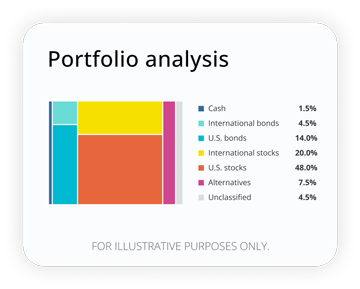
How well are your investments performing?
Analyze your portfolio in minutes and receive a target allocation for your goals.
1 IRS. “Roth IRAs.” August 2025.
2 IRS, “401(k) limit increases to $24,500 for 2026, IRA limit increases to $7,500,” November 2025
3 IRS, “2026 Amounts Relating to Retirement Plans and IRAs, as Adjusted for Changes in Cost-of-Living,” November 2025.
4 Federal Reserve Bank of St. Louis. “Federal Funds Effective Rate.” December 2025.
5 Federal Reserve Bank of St. Louis, “Graph: S&P 500 and Fed Funds Rate,” December 2025
6 Securities and Exchange Commission, “Saving and Investing,” accessed December 2025.
RO5074890-1225
Past performance does not indicate future returns.
Asset allocation, diversification, or rebalancing does not ensure a profit or protect against loss.
 Get The Currency newsletter



The Currency editors
Staff contributors
The CurrencyTM writers and editors cover the latest financial news and insights shaping how we live, work, and play. The team provides accurate, data-driven, and timely content aimed at empowering financial freedom for all.
The content contained in this blog post is intended for general informational purposes only and is not meant to constitute legal, tax, accounting or investment advice. You should consult a qualified legal or tax professional regarding your specific situation. No part of this blog, nor the links contained therein is a solicitation or offer to sell securities. Compensation for freelance contributions not to exceed $1,250. Third-party data is obtained from sources believed to be reliable; however, Empower cannot guarantee the accuracy, timeliness, completeness or fitness of this data for any particular purpose. Third-party links are provided solely as a convenience and do not imply an affiliation, endorsement or approval by Empower of the contents on such third-party websites. This article is based on current events, research, and developments at the time of publication, which may change over time.
Certain sections of this blog may contain forward-looking statements that are based on our reasonable expectations, estimates, projections and assumptions. Past performance is not a guarantee of future return, nor is it indicative of future performance. Investing involves risk. The value of your investment will fluctuate and you may lose money.
Certified Financial Planner Board of Standards Inc. (CFP Board) owns the certification marks CFP®, CERTIFIED FINANCIAL PLANNER™, CFP® (with plaque design), and CFP® (with flame design) in the U.S., which it authorizes use of by individuals who successfully complete CFP Board's initial and ongoing certification requirements.