

How to save on back-to-school shopping in 2026
How to save on back-to-school shopping in 2026
Families expect to spend hundreds on back-to-school expenses as inflation adds complexity
How to save on back-to-school shopping in 2026
Families expect to spend hundreds on back-to-school expenses as inflation adds complexity

08.18.2026
Key takeaways
- Back-to-school spending is expected to top $100 billion for the first time
- Families can manage costs by setting a budget, reusing supplies, and sticking to school lists
- Educational discounts, refurbished tech, and secondhand items may help slash prices
School bells are ringing soon, and American consumers are poised to spend $103.5 billion on back-to-school shopping this year, topping $100 billion for the first time.1
Families on average expect to spend $863.86 in 2026 for elementary through high school students, while those with college students are on track to average $1,437.79. Electronics purchases top the to-do list, and almost half of back-to-school shoppers (47%) are mindful of upfront costs, opting to buy only the essentials to start the year and then add on as needed.2
Going back to school doesn’t have to mean a different approach to managing your money. Let’s look at ways to shop strategically and still cover all the bases.
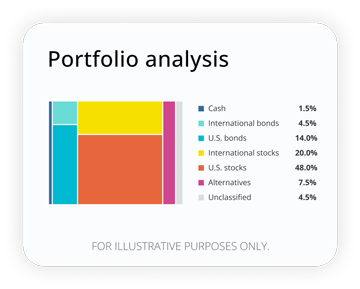
How well are your investments performing?
Analyze your portfolio in minutes and receive a target allocation for your goals.
Make a back-to-school plan
It helps to set a game plan for back-to-school expenses, just as you would set guardrails for holiday shopping or vacation planning.
Stick to the supply list
Depending on your schools or individual teachers, your family may have already received a suggested supply or packing list for the return to the classroom. Carry a copy of the list during your shopping trips, and try not to let your students stray too far.
Make sure to check if your school has made changes to the dress code before clothes shopping. Inflation has hit kids’ apparel — with girls’ clothing up 5.3% and boys’ clothing up 3.3% since last year — so it’s wise to buy clothes that they’ll be able to wear on a regular basis.
Figure out how much you have to spend
Before shopping, take an inventory of last year’s supplies and see if anything’s in good enough condition to last another year. Make rough cost estimates of what’s needed, and keep that figure in mind at the store checkout.
If you want some wiggle room for non-essentials or nice-to-haves, set a dollar amount before you start shopping for the extras. You can make shopping more fun for everyone by allowing some flexibility for items like clothes a child wants rather than specific pieces.
Organize gift cards or other payments
Americans have around $23 billion in unredeemed gift cards, which could go toward back-to-school expenses and eligible clothing stores or big retailers.3 Using gift cards sooner rather than later lessens the chance of you might eventually forget about them.
Check the specifics on any gift cards because stores or issuers could allow them to expire or have their value lowered with inactivity fees. Some states allow people to exchange gift cards up to certain amounts for cash, so it’s worth understanding what applies to your area.4
For people that use credit cards with rewards programs, redeeming points or miles for gift cards can lower your out-of-pocket school-supply costs at checkout, while cash-back rewards can offset past shopping already charged to your card.
Read more: 10 ways you may be leaving money on the table
Bigger-ticket items like a new phone or tablet can be a sizeable chunk of your back-to-school spend, with the rising costs of computers (+3.9% since last year) and related software (+21.2% YOY). However, technology can also serve as an investment that lasts longer than one school year.
Asking family or friends to contribute toward a big purchase could transform a tech necessity into a meaningful birthday or holiday gift. Empower research reveals that nearly four in five Americans (79%) think cash and gift cards are more acceptable presents than in the past.
Savers with a 529 plan can get reimbursed for qualified educational expenses — such as tuition, books, and computers — though you have to be diligent and keep receipts. Be sure to make any withdrawals from the 529 account in the same calendar year that the qualified expenses are paid. Otherwise, some of the withdrawal could be considered taxable, potentially resulting in income tax and a 10% additional tax on the earnings portion.
Shop smart for back to school
With a general budget and payment plan in place, filling the shopping cart can be another learning opportunity.
Try to find a lower price
Price matching: Some retailers will match a competitor’s qualifying price if they both sell the same item. Shoppers looking for a new laptop among multiple retailers could compare the policies of HP, Dell, and Best Buy, which all have explicit price match programs.5,6,7 Other stores may offer price adjustments, with potential refunds on cost differences if an item’s price drops during a specific period after you buy it.
Educational discounts: Check individual store policies for specific markdowns offered to teachers, educators, and students. College students especially may find value in furniture discounts like Ikea’s, which apply to both full and part-time students.8 Families expect to buy an average of $194 of college dorm or apartment furnishings this year.9
Buying refurbished: Electronics are expected to be the top back-to-school spending category for elementary through college students this year.10 If a student needs a laptop or tablet, manufacturer-refurbished devices can provide substantial savings. Check the warranty and the school’s technical requirements first.
Think outside of big-box stores
Big retailers are spending around $20 billion over the next 10 years to revamp stores to entice shoppers.11 Expanded grocery aisles and beauty sections can be a financial distraction for back-to-school buyers focused on the essentials.
Specialized retailers like office supply or educational learning stores still stock necessary school materials — without the potential temptation of walking by non-essentials like treats and home goods.
Tap your network
Back-to-school needs don’t end after the first week of classes. More than half of U.S. kids age 6-17 play organized sports, with families spending around $40 billion a year on the activities. Those needing extra gear have seen price swings, with sports equipment costs up 2.9% compared to last year.
Read more: Game on: The $40 billion play in youth sports
Setting up a swap system among other parents at your school or checking local “buy nothing” groups could be smart ways to save on short-term needs like sports equipment, uniforms, and seasonal needs like Halloween costumes or holiday attire.
Secondhand shopping has become more typical in household spending — and you can even skip the store. Building community connections with families with older kids can start a virtuous cycle of hand-me-downs; one family doesn’t need to buy things brand new, and others can clean out clutter and outgrown items.
Pay attention to unit prices
Another option to buy school supplies in bulk and share the costs with other families or school roommates. This strategy can work for supplies that get used quickly, like pencils, facial tissues, and disinfecting wipes.
This “divide and conquer” mentality can help lower the individual cost of each item, known as the unit price. However, buying large quantities may not work for solo shoppers. Though you may think you’re “getting a deal” because the unit price is lower, you may not have enough storage space, or simply the need, for 20 packages of cleaning wipes before they expire.
Back to basics
You’ll know your family’s needs and habits best for back-to-school shopping. Start with what your family actually needs, reuse what you can, and look for ways to stretch your budget on the rest. Maybe you have active student-athletes who go through a lot of apparel and gear, but can stretch an existing laptop for another year of learning. Every family’s situation is unique.
Needs may change throughout the school year, so leave room to replenish or upgrade as needed. Back-to-school shopping may be an ongoing assignment, but a little planning can help keep costs check throughout the school year.
1 National Retail Federation, “Majority of Back-to-School Shoppers Get a Head Start on the Season,” July 2026.
2 National Retail Federation, “Majority of Back-to-School Shoppers Get a Head Start on the Season,” July 2026.
3 NBC 7 San Diego, “Still holding onto a gift card? There's now a national day for that,” January 2026.
4 National Conference of State Legislatures, “Gift Cards and Gift Certificates Statutes and Legislation,” May 2026.
5 HP, “HP Price Match and Price Protection Policies,” accessed August 2026.
6 Dell, “Competitor Price Match,” accessed August 2026.
7 Best Buy, “Price Match Guarantee,” accessed August 2026.
8 IKEA, “Verified students get 15% off,” accessed August 2026.
9 National Retail Federation, “Majority of Back-to-School Shoppers Get a Head Start on the Season,” July 2026.
10 National Retail Federation, “Majority of Back-to-School Shoppers Get a Head Start on the Season,” July 2026.
11 The New York Times, “Retailers Are Making Expensive Bets That Shoppers Still Want to Go to Stores,” May 2026.
RO5843947-0826
 Get The Currency newsletter



The Currency editors
Staff contributors
The CurrencyTM writers and editors cover the latest financial news and insights shaping how we live, work, and play. The team provides accurate, data-driven, and timely content aimed at empowering financial freedom for all.
The content contained in this blog post is intended for general informational purposes only and is not meant to constitute legal, tax, accounting or investment advice. You should consult a qualified legal or tax professional regarding your specific situation. No part of this blog, nor the links contained therein is a solicitation or offer to sell securities. Compensation for freelance contributions not to exceed $1,250. Third-party data is obtained from sources believed to be reliable; however, Empower cannot guarantee the accuracy, timeliness, completeness or fitness of this data for any particular purpose. Third-party links are provided solely as a convenience and do not imply an affiliation, endorsement or approval by Empower of the contents on such third-party websites. This article is based on current events, research, and developments at the time of publication, which may change over time.
Certain sections of this blog may contain forward-looking statements that are based on our reasonable expectations, estimates, projections and assumptions. Past performance is not a guarantee of future return, nor is it indicative of future performance. Investing involves risk. The value of your investment will fluctuate and you may lose money.
Certified Financial Planner Board of Standards Inc. (CFP Board) owns the certification marks CFP®, CERTIFIED FINANCIAL PLANNER™, CFP® (with plaque design), and CFP® (with flame design) in the U.S., which it authorizes use of by individuals who successfully complete CFP Board's initial and ongoing certification requirements.