

What is a sinking fund? How to budget without touching emergency funds
What is a sinking fund? How to budget without touching emergency funds
This saving strategy can help you prepare for irregular expenses, avoid debt, and keep your safety net intact
What is a sinking fund? How to budget without touching emergency funds
This saving strategy can help you prepare for irregular expenses, avoid debt, and keep your safety net intact
04.23.2026
Key takeaways
- A sinking fund enables you to plan ahead for predictable expenses with small, regular savings.
- Sinking funds are for known expenses like vacations and car maintenance, and should be separate from emergency savings for unexpected costs.
- Identifying upcoming expenses, setting targets, and automating savings can help keep your plan on track.
- Automate contributions — even modest savings, done regularly, can build enough to cover larger expenses when they arise.
- Having money set aside in advance may help avoid last-minute borrowing or dipping into long-term savings.
From holiday gifts and family vacations to insurance premiums and home maintenance, many expenses that may feel like financial curveballs are actually predictable. Still, without appropriate planning for these bills, their variable nature sometimes can lead to financial setbacks. That’s where a sinking fund can make a meaningful difference.
Sinking funds can be a practical way to stay ahead of costs that you know are coming, even if they’re irregular. And with Americans holding a record $1.28 trillion in credit card balances, the saving strategy can potentially help provide a defense against debt — as well as possibly help reduce stress and keep budgets and financial plans on track.
The difference between a sinking fund and an emergency fund
Some people may believe a sinking fund and an emergency fund are interchangeable, but the two serve different, distinct purposes: One is for known and the other is for unknown expenses.
What is a sinking fund?
A sinking fund is dedicated to expenses that typically aren’t part of your regular monthly budget, but you’re expecting at some point. Some common examples include:
- Insurance, tax, and other annual/quarterly bills
- Vacations and events
- Home upkeep
- Routine car maintenance
- Pet care/veterinary bills
- Gifts and holidays
- Back-to-school shopping
A good sinking fund strategy comes down to basic, but thoughtful, budgeting: Set aside small amounts of money over time and earmark these dollars for specific non-monthly known expenses. Rather than being caught off guard and having to scramble to cover an irregular bill or other expense, the funds are already on hand to cover it. This kind of planning can help reduce reliance on credit cards or last-minute budget adjustments.
What is an emergency fund?
Emergency funds, on the other hand, are meant to be a safety net for true financial surprises, such as job loss, medical issues, or urgent repairs that you can’t predict. While there’s no one-size-fits-all amount for an emergency fund, a general rule of thumb is to save enough cash to cover three to six months of expenses based on your average monthly spending.
Separating the two types of funds can be crucial to help avoid dipping into emergency dollars for predictable costs and ensure you have a financial parachute when you truly need it.
Read more: How much should you have in an emergency fund?
How to create a sinking fund
You can get started by taking a few simple steps.
1. Identify savings goals
Look back at the prior year and ahead over the next 12 months to identify the expenses that might be predictable but also infrequent and not part of your monthly budget. Consider items that recur annually, as well as one-off purchases such as new furniture or upcoming events like a wedding or baby shower.
Read more: 20 sinking fund categories to better control your money
2. Set a target amount and timeline
Crunch the numbers to ballpark how much you’ll need for each expense and when it might arise. Using financial calculators can be helpful with this step.
Divide each expense total by the number of weeks or months you have before you expect the bill to arrive to estimate how much you’ll need to set aside on a regular basis. For example, if you expect to spend $1,200 on holiday and other gifts over the next year, setting aside $100 a month can build a cushion.
3. Decide where you want to put your sinking funds
There are a variety of options from high-yield cash accounts and money market funds to certificates of deposit. Whatever vehicle you choose, it’s important that the money is liquid so you can access it when you need it.
You also may want to use separate accounts for each savings goal. If you have a sizable list of categories, consider prioritizing the expenses that are closest or feel the most manageable to you. The purpose is to simplify rather than overwhelm, so having too many separate accounts can backfire. Aim for balance — the key is landing on an approach that works best for you so you can stay organized and consistent.
Read more: What are liquid assets?
4. Automate your savings
Setting up automatic transfers can be a good way to ensure you’re consistently making steady progress toward different goals. Even small amounts can add up over time through the potential power of compounding. And once you’ve hit a goal, it can also make sense to shift how much you save where.
You may have conflicting financial priorities that make it challenging to keep your sinking fund saving on track. Things like annual bonuses, tax refunds, or other windfalls potentially can provide opportunities to catch up. And if you oversave for a particular expense, consider carrying over the surplus to next year for the same expenditure, or moving the extra dollars to a different expense where you may have a shortfall this year.
Small shifts can have a big impact
Sinking funds won’t eliminate every financial challenge, but they can help reduce stress and increase control. By planning for expenses before they arrive, you may be able to avoid last-minute tradeoffs like withdrawing from an emergency fund or retirement account or taking on unnecessary debt. Over time, this approach can make budgets feel less reactive and more intentional.
Read more: 5 ways to manage your personal finances
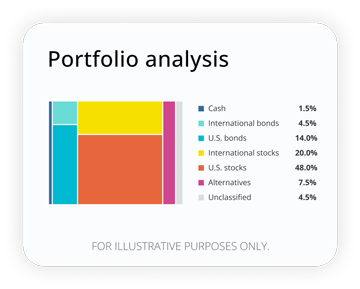
How well are your investments performing?
Analyze your portfolio in minutes and receive a target allocation for your goals.
RO5421738-0426
 Get The Currency newsletter



The Currency editors
Staff contributors
The CurrencyTM writers and editors cover the latest financial news and insights shaping how we live, work, and play. The team provides accurate, data-driven, and timely content aimed at empowering financial freedom for all.
The content contained in this blog post is intended for general informational purposes only and is not meant to constitute legal, tax, accounting or investment advice. You should consult a qualified legal or tax professional regarding your specific situation. No part of this blog, nor the links contained therein is a solicitation or offer to sell securities. Compensation for freelance contributions not to exceed $1,250. Third-party data is obtained from sources believed to be reliable; however, Empower cannot guarantee the accuracy, timeliness, completeness or fitness of this data for any particular purpose. Third-party links are provided solely as a convenience and do not imply an affiliation, endorsement or approval by Empower of the contents on such third-party websites. This article is based on current events, research, and developments at the time of publication, which may change over time.
Certain sections of this blog may contain forward-looking statements that are based on our reasonable expectations, estimates, projections and assumptions. Past performance is not a guarantee of future return, nor is it indicative of future performance. Investing involves risk. The value of your investment will fluctuate and you may lose money.
Certified Financial Planner Board of Standards Inc. (CFP Board) owns the certification marks CFP®, CERTIFIED FINANCIAL PLANNER™, CFP® (with plaque design), and CFP® (with flame design) in the U.S., which it authorizes use of by individuals who successfully complete CFP Board's initial and ongoing certification requirements.