

How much to save for college: A realistic guide for parents
How much to save for college: A realistic guide for parents
As college costs climb, how much you need to save depends on your goals, timeline, and overall college savings strategy
How much to save for college: A realistic guide for parents
As college costs climb, how much you need to save depends on your goals, timeline, and overall college savings strategy

04.08.2026
Key takeaways
College costs are significant and rising, and the average cost of college can exceed six figures for a four-year degree.
There’s no one-size-fits-all answer to how much to save for college — your plan should reflect your financial situation, priorities, and your child’s potential path.
Rather than fund 100%, many families aim to cover a portion of college savings costs, with the rest coming from aid, income, or loans.
As college costs continue their steady climb, the pressure to save can feel intense, and many parents may be grappling with a deceptively simple question: How much should I save for my kid’s college education? But the answer isn’t a single savings target or magic number. Instead, it’s a strategy — one shaped by your financial situation, the type of school your child might attend, and the reality that college pricing, financial aid, and life circumstances can all shift over time.
Understanding the cost of college
Getting a sense of what college might cost is a natural first step to figuring out how much to save for college — and sticker prices can feel daunting. Today, annual tuition, fees, and room and board can average anywhere from $30,780 for state schools to upwards of $95,000 for private universities — and run as much as $98,301 to attend a top 10 U.S. college.1 Over four years, that can easily total well into six figures.
Tuition at public and private colleges has increased at an average annual rate of 3.88% since 2010 and is projected to rise 3.25% for the 2026-2027 academic year.2 While future costs are hard to predict — especially if your child’s enrollment is still years away — understanding today’s prices can help you plan a more effective savings strategy.
Read more: The price of college admissions
How much should I save for college? Why there’s no one-size-fits-all answer
There isn’t necessarily a one-size-fits-all “right” amount to save for college, so it’s important to have a plan that works for your circumstances and is flexible. In 2025, nearly two in three (62%) families said they had a plan to pay for their child’s college education prior to enrollment.3 But there are many variables that can influence how much to save for college, including:
Your income potential
The number of children you have
Overall financial obligations
Whether your child attends a public or private school
Tuition range
Financial aid eligibility
Because of these factors, your college savings goal may change over time — which is why flexibility matters.
Setting a realistic goal for college savings
It can be helpful to decide up front just how much of your child’s education you want to cover and what’s realistic for you — whether it’s a specific dollar amount or a percentage.
The ability to fully fund a college bill may be out of reach for some, so it can make sense to target a more balanced benchmark. One approach is the one-third rule: Save enough to cover one-third of expected costs, with the expectation that the remainder will come from a mix of other sources — financial aid and loans combined with existing income and student contributions.4
According to the latest data from the National Center for Education Statistics, approximately 85.5% of first-time, full-time college students received some form of financial assistance, which could encompass institutional aid, federal loans, and federal, state, and local grants or scholarships.5
The one-third approach is designed to enable you to work toward competing financial priorities so that saving aggressively for college doesn’t come at the expense of also setting aside money for retirement, an emergency fund, or other money goals. Tools like a college savings calculator can help you estimate future costs and set monthly savings targets based on timeline and expected returns.
Read more: How to apply for a student loan
Starting early matters
Time is one of the most powerful tools for college savings. Starting early allows families to potentially benefit from any compound growth to earn returns not just on contributions, but also on prior gains as well.
For example, a family that begins saving when a child is born may be able to contribute smaller amounts monthly and still build a meaningful fund by the time they go to college. On the other hand, waiting until a child is in high school to start a college fund likely will require significantly larger contributions to reach the same goal.
Even modest, consistent savings can make a difference over time. The key may be less about hitting a perfect number and more about building momentum early.
Read more: Understanding compound interest and its power
The role of 529 plans in saving for college
For some families, a 529 or other college savings plan can be a cornerstone of a college savings strategy. The average 529 balance is $30,295, and about one in three (32%) households use some type of college savings plan to help fund a child’s secondary education.6
529 plans can be an attractive option as they offer tax advantages. Any investment growth is tax-deferred, and withdrawals are generally federal income tax-free when used for qualified education expenses (state tax treatment may vary). They may also offer flexibility, depending on the plan and applicable rules.
Funds can typically be used for more than just college tuition, including:
Room and board
Books and supplies
Computers
Internet access
K–12 tuition
Some student loans.
Recent rule changes have also expanded options, including limited rollovers into retirement accounts if conditions are met. And if you overfund a 529 plan, untapped savings can be used elsewhere: Up to $35,000 can be rolled into a Roth IRA for the beneficiary (subject to IRS rules and limitations).
Read more: 529 plan myths: 6 facts that could change how you save
Final thoughts
Ultimately, figuring out how much to save for college is less about hitting a perfect number and more about making consistent, informed progress. Whether you’re able to cover a portion of costs or a larger share, having a plan in place can provide flexibility and reduce future financial strain. By starting early, taking advantage of tax-advantaged tools like 529 plans, and balancing college savings with other priorities, families can approach this major expense with greater confidence — and less uncertainty about what lies ahead.
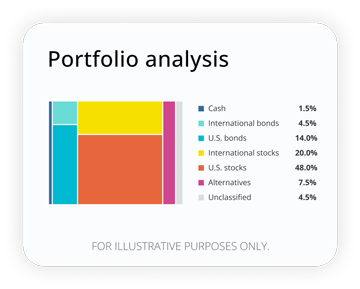
How well are your investments performing?
Analyze your portfolio in minutes and receive a target allocation for your goals.
1 CNBC, “How much it costs to attend the top 10 colleges in the U.S.—No. 1 has a sticker price over $90,000 a year,” September 25, 2025.
2 Education Data Initiative, “College Tuition Inflation Rate,” November 26, 2025.
3 Best Colleges, “529 College Savings Plan Statistics,” November 5, 2025.
4 Saving for College, “How Much You Need to Save for College,” June 12, 2025.
5 National Center for Education Statistics, “Integrated Postsecondary Education Data System,” accessed April 2026.
6 Best Colleges, “529 College Savings Plan Statistics,” November 5, 2025.
RO5371152-0326
 Get The Currency newsletter



The Currency editors
Staff contributors
The CurrencyTM writers and editors cover the latest financial news and insights shaping how we live, work, and play. The team provides accurate, data-driven, and timely content aimed at empowering financial freedom for all.
The content contained in this blog post is intended for general informational purposes only and is not meant to constitute legal, tax, accounting or investment advice. You should consult a qualified legal or tax professional regarding your specific situation. No part of this blog, nor the links contained therein is a solicitation or offer to sell securities. Compensation for freelance contributions not to exceed $1,250. Third-party data is obtained from sources believed to be reliable; however, Empower cannot guarantee the accuracy, timeliness, completeness or fitness of this data for any particular purpose. Third-party links are provided solely as a convenience and do not imply an affiliation, endorsement or approval by Empower of the contents on such third-party websites. This article is based on current events, research, and developments at the time of publication, which may change over time.
Certain sections of this blog may contain forward-looking statements that are based on our reasonable expectations, estimates, projections and assumptions. Past performance is not a guarantee of future return, nor is it indicative of future performance. Investing involves risk. The value of your investment will fluctuate and you may lose money.
Certified Financial Planner Board of Standards Inc. (CFP Board) owns the certification marks CFP®, CERTIFIED FINANCIAL PLANNER™, CFP® (with plaque design), and CFP® (with flame design) in the U.S., which it authorizes use of by individuals who successfully complete CFP Board's initial and ongoing certification requirements.