

529 to Roth IRA rollover: A new way to save for retirement
529 to Roth IRA rollover: A new way to save for retirement
How the new 529 to Roth rollover rule can turn unused education savings into long-term retirement wealth
529 to Roth IRA rollover: A new way to save for retirement
How the new 529 to Roth rollover rule can turn unused education savings into long-term retirement wealth

12.31.2025
Thanks to SECURE Act 2.0, $35,000 of unused 529 funds can now move into a Roth IRA tax-free if strict rules and limits are met.
Key takeaways
- The SECURE Act 2.0 allows unused 529 funds to roll into a Roth IRA tax- and penalty-free.
- Eligibility rules are strict, including a 15-year account age, 5-year wait, and earned income.
- Rollovers are capped at $35,000 per beneficiary and count toward annual Roth IRA limits.
What happens when a 529 plan has money left over after education costs are covered? Until recently, families faced limited and often costly options for unused funds. Now, under the SECURE Act 2.0, eligible 529 savings can be rolled into a Roth IRA for the same beneficiary, tax- and penalty-free, turning excess education funds into a powerful retirement boost. This guide breaks down how the 529 to Roth rollover works, who qualifies, the benefits and limits to know, and how to get started.
Understanding the new 529 to Roth IRA rollover rules
A new provision in SECURE Act 2.0 now allows up to $35,000 to be rolled over tax- and penalty-free from a 529 plan into a Roth IRA owned by the 529 beneficiary, provided certain conditions are met.1 Before initiating a 529 to Roth rollover, it’s important to understand the key eligibility requirements and limitations:
- Account age: The 529 account must have been open for 15 years.
- Same beneficiary: The Roth IRA must be owned by the same beneficiary as the 529 account.
- Holding period: Contributions and earnings to be rolled over must have been in the 529 account for at least five years.
- Direct transfer: The rollover must be completed as a direct, trustee-to-trustee transfer, meaning the funds are paid directly from the 529 plan provider to the Roth IRA custodian.
- Earned income requirement: The beneficiary must have earned income equivalent to the rolled over amount in the year of the rollover.
- Annual contribution limit: The rollover amount, combined with any other IRA contributions for the year, can’t exceed the beneficiary’s annual Roth IRA contribution limit. For the 2026 tax year, the annual Roth IRA contribution limit is $7,500 for individuals under age 50 and $8,600 for those age 50 or older (including the catch-up amount).
- Lifetime limit: The aggregate amounts transferred from 529 accounts to all Roth IRAs must not exceed $35,000 per beneficiary.
Read more: What can 529 funds be used for?
Benefits of a 529 to Roth IRA Rollover
The new 529 to Roth IRA rollover offers several compelling benefits, especially for families worried about overfunding education savings or limiting future flexibility.
Tax-free and penalty-free conversion
For families who over-saved or who have children that didn’t go to college, the 529 to Roth IRA rollover offers a tax-advantaged way to repurpose unused education funds. If those funds were withdrawn from a 529 plan for non-qualified expenses, the earnings portion would generally be subject to federal income tax at ordinary rates and may also incur a 10% federal penalty.
The rollover option avoids both federal income taxes and the 10% penalty on 529 earnings by allowing up to $35,000 to be transferred into a Roth IRA, where the funds can potentially grow tax-free. Because rollovers count toward the annual Roth IRA contribution limit, the full amount must typically be completed over multiple years. Under the current contribution limit (which can change over time), it would take around five years of rollovers to hit that maximum for someone under age 50.
Boosting retirement savings
Rolling over 529 leftover funds into a Roth IRA can provide a meaningful head start on retirement savings for the beneficiary. Because Roth IRA contributions are made with after-tax dollars, both contributions and earnings potentially grow tax-free. Contributions can be withdrawn at any time, and earnings may be withdrawn tax-free and penalty-free once the account has been open for five years and the account holder reaches age 59½. Unlike many other retirement accounts, Roth IRAs are not subject to required minimum distributions (RMDs).
Over time, the $35,000 lifetime rollover limit can make a significant impact on retirement savings. For example:
Beneficiary’s age at initial rollover | 25 |
Beneficiary's retirement age | 67 |
Beneficiary's total rolled Roth assets | $35,000 |
Hypothetical annual rate of return | 7% |
Beneficiary’s assets at retirement | $600,049 |
This hypothetical example illustrates the potential value of yearly transfers to a Roth IRA for 5 years starting at age 25 and assumes an average annual return of 7%. Actual results will vary based on market performance and individual circumstances.
Income maximums do not apply
Regular Roth IRA contributions are subject to modified adjusted gross income (MAGI) limits. However, based on current interpretations of SECURE Act 2.0, those income limits do not appear to apply to 529-to-Roth IRA rollovers. While the beneficiary must have earned income at least equal to the rollover amount in the year of the transfer, there is no maximum income limit that restricts eligibility for a 529 to Roth IRA rollover.
Read more: How to invest in a 529 plan during uncertain times
How to initiate a 529 to Roth rollover
- Confirm eligibility and beneficiary opens a Roth IRA: Before initiating a rollover, confirm all the eligibility requirements have been met:
- The 529 account must have been open for 15 years
- The Roth IRA must be owned by the same beneficiary as the 529 account
- Contributions and earnings to be rolled over must have been in the 529 account for at least five years
- The beneficiary must have earned income equivalent to the rolled over amount in the year of the rollover
You can initiate the rollover to an existing Roth IRA, provided the beneficiary hasn’t already met the contribution limit for the tax year. If the beneficiary doesn’t have a Roth IRA already, they’ll need to open and set up an account.
- Contact the 529 plan provider: Contact the 529 plan provider via customer service or by visiting their website and request a direct trustee-to-trustee transfer of funds to the Roth IRA in the beneficiary’s name. It’s crucial that funds are paid directly from the 529 provider to the Roth IRA custodian – funds paid directly to the beneficiary will be considered taxable.
- Complete and send the form: Send the completed form with the Roth IRA custodian's info to your 529 plan provider.
- Keep tax forms for reporting: Qualified rollovers are generally not taxable events and do not need to be reported as taxable income on the beneficiary’s tax return. However, the beneficiary should receive Form 1099-Q from the 529 plan provider and Form 5498 from the Roth IRA provider documenting the rollover. These forms should be retained with the beneficiary’s tax records.
Read more: The big changes to 529s in the 2025 spending bill
FAQ for 529 to Roth rollovers
What is the lifetime limit for 529 to Roth IRA rollovers?
The lifetime limit for rolling over assets from a 529 plan to a Roth IRA is $35,000. The lifetime limit applies per beneficiary, not to the 529 account itself.
Do 529 to Roth IRA rollovers count toward the annual contribution limit?
The rollover amount counts toward the annual Roth IRA contribution limit ($7,500 in 2026, or $8,500 if age 50+). If you’ve already made regular Roth IRA contributions for the year, you cannot exceed this limit with a 529 rollover.
Can I split leftover 529 funds among multiple beneficiaries for Roth IRA rollovers?
You can change the beneficiary on a 529 plan and use the same account to fund Roth IRA rollovers for more than one person. Each beneficiary has their own $35,000 lifetime rollover limit, though changing the beneficiary will likely restart the 15-year clock on the account — the IRS has yet to provide final guidance on this issue. The only requirements are that the account has been open at least 15 years, the funds being rolled over have been in the account at least five years, and each rollover stays within the beneficiary’s annual Roth IRA contribution limit and earned-income requirement. This allows leftover funds to be used to support multiple beneficiaries’ Roth IRAs over time.
Can a Coverdell be rolled into a Roth IRA?
Coverdell education savings account cannot be rolled into a Roth IRA under the SECURE Act 2.0. However, Coverdell assets could first be rolled into a 529 plan and subsequently rolled into a Roth IRA if the rule requiring assets to be held in the 529 plan for five years prior to the rollover has been met, and the account has been open for at least 15 years.
How should a 529 to Roth IRA rollover be reported for tax purposes?
The beneficiary receives the tax forms for a 529 to Roth IRA rollover. The 529 plan issues Form 1099-Q to the beneficiary, and the Roth IRA provider reports the contribution on Form 5498. As long as the rollover meets IRS rules, it isn’t taxable and generally doesn’t need to be reported on the beneficiary’s tax return.
What are the state-level tax implications of a 529 to Roth IRA rollover?
State-level tax implications depend on where the 529 plan is based and where the account owner lives. Some states may treat the rollover as a non-qualified distribution, which could trigger state income taxes and the recapture of any state tax deductions or credits previously claimed on 529 contributions. Other states do not impose additional taxes or penalties. It’s important to check with the 529 plan provider or a tax professional before initiating a rollover.
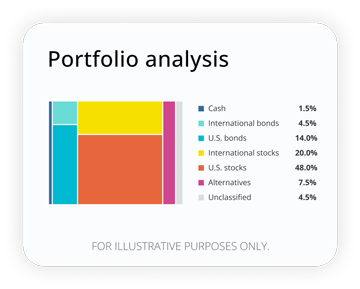
How well are your investments performing?
Analyze your portfolio in minutes and receive a target allocation for your goals.
1 IRS, “Topic no. 313, Qualified tuition programs (QTPs),” December 2025.
RO5083016-1225
 Get The Currency newsletter



The Currency editors
Staff contributors
The CurrencyTM writers and editors cover the latest financial news and insights shaping how we live, work, and play. The team provides accurate, data-driven, and timely content aimed at empowering financial freedom for all.
The content contained in this blog post is intended for general informational purposes only and is not meant to constitute legal, tax, accounting or investment advice. You should consult a qualified legal or tax professional regarding your specific situation. No part of this blog, nor the links contained therein is a solicitation or offer to sell securities. Compensation for freelance contributions not to exceed $1,250. Third-party data is obtained from sources believed to be reliable; however, Empower cannot guarantee the accuracy, timeliness, completeness or fitness of this data for any particular purpose. Third-party links are provided solely as a convenience and do not imply an affiliation, endorsement or approval by Empower of the contents on such third-party websites. This article is based on current events, research, and developments at the time of publication, which may change over time.
Certain sections of this blog may contain forward-looking statements that are based on our reasonable expectations, estimates, projections and assumptions. Past performance is not a guarantee of future return, nor is it indicative of future performance. Investing involves risk. The value of your investment will fluctuate and you may lose money.
Certified Financial Planner Board of Standards Inc. (CFP Board) owns the certification marks CFP®, CERTIFIED FINANCIAL PLANNER™, CFP® (with plaque design), and CFP® (with flame design) in the U.S., which it authorizes use of by individuals who successfully complete CFP Board's initial and ongoing certification requirements.