

What should I do with an inheritance? Get a Sense Check
What should I do with an inheritance? Get a Sense Check
Deciding what to do with an inheritance can be stressful. In this edition of Sense Check, Empower's Laurel Dein shares what to consider before making any money moves, and ways to use your inheritance wisely
What should I do with an inheritance? Get a Sense Check
Deciding what to do with an inheritance can be stressful. In this edition of Sense Check, Empower's Laurel Dein shares what to consider before making any money moves, and ways to use your inheritance wisely

11.14.2025
Key takeaways
- Take a breath before making any financial decisions. Processing the emotions that could come with an inheritance helps you make thoughtful, lasting choices.
- Understand exactly what you’ve inherited — cash, investments, real estate, or retirement accounts — because each comes with unique rules and tax considerations.
- Consider folding your inheritance into your broader financial plan, balancing debt repayment, savings, and long-term investing goals.
Whether you receive an inheritance in cash, in the form of retirement accounts, or real estate, taking a moment to pause and understand any tax implications and distribution rules can help you manage the windfall effectively.
Inheriting money or assets can bring a mix of gratitude, grief, and uncertainty. Deciding what to do with an inheritance can feel overwhelming — especially when emotions run high and financial decisions feel urgent. Taking time to pause and gather information can help ensure that you manage what you’ve received wisely.
An inheritance is often the result of someone else’s thoughtful planning. The best way to honor that is to do the same with what you have received.
First steps to managing an inheritance
Knowing what to do with an inheritance can be especially difficult during a period of grief. So, it’s okay, and actually smart, to do nothing at first. You want to make sure you’re acting from a clear place, not an emotional one.
A financial professional can help you understand the full scope of what you’ve received and coordinate with estate planning and tax professionals to make sure everything is handled properly. Before that first meeting, gather all the relevant documents — the will, trust, death certificate, and any correspondence from the executor or trustee. These documents will help you create an inventory of what you’re inheriting. That could include account statements, property deeds, and valuations. You should know exactly what’s there before you start moving money around or making commitments.
Regardless of the dollar figure, the approach should be the same. Whether it’s $10,000 or $100,000, you still want to make good, thoughtful choices about your inheritance.
What to do with a cash inheritance
What to do with a cash inheritance depends on your unique financial picture. It’s best to take a balanced approach – look at debt, age, goals, and risk tolerance before making any decisions. Integrate an inheritance into your financial plan rather than treating it as something separate.
This windfall may be an opportunity to build an emergency fund, fund education for children or grandchildren, or catch up on retirement savings. It’s also okay to enjoy some of it — taking a trip or buying something meaningful can also be part of how you honor the person who left it to you.
Ways to use your cash inheritance
- Build or top up an emergency fund to create financial stability
- Pay off high-interest or credit card debt
- Invest in line with long-term goals such as retirement or education
- Maximize tax-advantaged accounts like IRAs, 401(k)s, or HSAs
- Add to a taxable brokerage account (mutual funds, index funds, ETFs)
- Use part of your inheritance for a home down payment or to pay down a mortgage
- Save for education through a 529 plan
- Consider charitable giving or building a legacy plan
- Set aside a portion for enjoyment — travel, experiences, or meaningful purchases
Read more: How to manage a windfall
What to do with an inherited IRA, 401(k), or other retirement account
Inherited retirement accounts are particularly complex. There are a lot of moving parts, and people don’t always realize how different the rules are depending on what kind of account you’re dealing with. You need to understand what you’ve received — is it a traditional IRA, a Roth, or a 401(k)? Each comes with its own timeline and tax treatment.
Distribution rules
In the past, you could stretch withdrawals from an inherited retirement account over your own life expectancy. Now, with the passing of the Secure 2.0 Act in 2019, only a spouse can do that. For most other beneficiaries — whether it’s an IRA or a 401(k) — you may have to take required minimum distributions (RMDs) and the entire balance must be distributed within ten years of the original owner’s death if you inherited in 2020 or later. If you miss that deadline, the penalties can be significant.1
Tax impact
Withdrawals from inherited retirement accounts are taxed as ordinary income, which makes them different from assets such as real estate or stock, where you get a step-up in basis.2,3 Consider your tax bracket when taking distributions. Once you take money out, there’s no undoing it — and taking too much in one year can push you into a higher tax bracket.
For younger beneficiaries especially, it can make sense to spread withdrawals over several years. Doing so can help manage your tax rate and give the money a chance to keep growing.
Planning and coordination
Managing an inherited retirement account is one of those areas where coordination with trusted financial and tax professionals could matter. If you’ve inherited stock or mutual funds, you may want to review the assets and assess how they’re going to fit in with your current portfolio. Plus, the timing of withdrawals can affect everything from your marginal tax rate to student-aid eligibility for your kids.
This is also a good time to check your own paperwork. Review the beneficiary designations on your accounts so they align with your current wishes. People sometimes forget to update their own beneficiary designations after inheriting — and that can undo a lot of good planning.
Read more: Inherited IRA beneficiary options & withdrawal rules
What to do with inherited real estate
With inherited real estate, you need to analyze whether you should be holding, selling, or renting — and whether that makes sense with your broader financial picture. You receive a stepped-up cost basis at death that can dramatically reduce capital-gains taxes. Where you live can impact that, so it’s important to be aware and educated — even just where you live can positively or negatively affect your plan. For a family home or sentimental property, be thoughtful. It’s okay to take time — selling too quickly could create regret or tax consequences.
Understand the tax implications when you receive an inheritance
Many people don’t realize that, at the federal level, an inheritance itself isn’t usually taxable. Any estate taxes are typically paid before the inheritance is distributed, and the IRS allows up to $13.99 million per person to be passed on tax-free. That means you’re not paying income tax on what you receive — it’s what you do with those assets later that matters.
You may owe taxes later if you sell inherited assets, earn income from them, or withdraw money from a tax-deferred account. Inherited real estate and investments typically benefit from a stepped-up cost basis, reducing capital gains if you sell soon after inheriting.
Where you live can also make a difference. State inheritance tax laws vary widely. Some states, like Oregon or Massachusetts, have their own estate or inheritance taxes with lower limits. So, it’s important to understand both federal and state rules before you act.
What your inheritance could mean for your taxes
Type of asset | How it's taxed | Key things to know |
Cash | Not taxable as income | You won't owe taxes on receiving cash, but any interest earned later is taxable. |
Investments (stocks, mutual funds, ETFs, brokerage accounts) | Capital gains tax if sold later for more than inherited value | You receive a stepped-up cost basis: The value resets to the date of death, so selling right away may result in little or no taxable gain. |
Real estate or tangible assets (homes, land, collectibles) | Capital gains tax if sold for more than inherited value | Also benefit from a stepped-up basis. If you rent the property, rental income is taxable, but expenses and depreciation may offset it. |
Traditional IRAs, 401(k)s, and other tax-deferred retirement accounts | Taxed as ordinary income when withdrawn | Non-spouse beneficiaries must typically withdraw the full balance within 10 years; withdrawals count toward your income and can affect your tax bracket. |
Roth IRAs | Generally tax-free if the account was open at least five years | You must still take required distributions, but qualified withdrawals are tax-free. |
Trust distributions or inherited income-producing assets | Taxed as ordinary income | Annual distributions may raise your taxable income or move you into a higher bracket. |
Read more: How to avoid capital gains tax
Tax implications for inheritance can be complex and depend on the kind of assets you’ve received and where you live. Be thoughtful — talk with your advisor, your tax planner, and your estate attorney about tax planning for inheritance so you understand the rules and can plan effectively.
Once you understand how your inheritance is taxed, the next step is deciding how to protect it. Whether that means updating your will, naming beneficiaries, or creating a trust, taking time to plan ensures what you’ve received — and what you’ll could pass on one day — is structured wisely and in line with your goals.
Read more: Taxes on inheritance & how to avoid them
Common pitfalls when receiving an inheritance
Here are some of the most common pitfalls I see people make when receiving an inheritance — and the ones to avoid:
- Acting too quickly: People can make huge purchases, quit their jobs, or give away money without realizing the long-term impact.
- Overlooking taxes: People can inadvertently trigger large tax bills by selling appreciated assets without understanding the implications.
- Forgetting to retitle or update accounts: People don’t retitle assets correctly or update their beneficiary designations, so something that could have been avoided probate ends up in court.
- Neglecting your own estate plan: You should also revisit your own estate plan when you receive an inheritance — this changes your financial picture, and you want to make sure what you’ve inherited goes where you intend.
- Sharing too much information: Be mindful about who you share details with. An inheritance can sometimes change dynamics within families or friendships, so keeping the specifics private can help maintain harmony.
FAQs
What states have an estate tax?
Connecticut, the District of Columbia, Hawaii, Illinois, Maine, Maryland, Massachusetts, Minnesota, New York, Oregon, Rhode Island, Vermont, and Washington all still have a state-level estate tax, with an exemption as low as $1 million dollars per person. Several others, including Maryland, New Jersey and Pennsylvania, impose an inheritance tax instead.6
How are inherited retirement accounts taxed?
Inherited retirement accounts are taxed as ordinary income. That means you’ll pay taxes when you take withdrawals, not when you receive the account. It’s important to plan distributions carefully — taking too much at once can push you into a higher tax bracket.
What are the tax rules for selling inherited property?
If you sell inherited property, capital gains are based on the value at the date of death — that’s called a stepped-up cost basis. Selling soon after inheriting often means little or no tax but waiting longer could create taxable gains as the property appreciates.
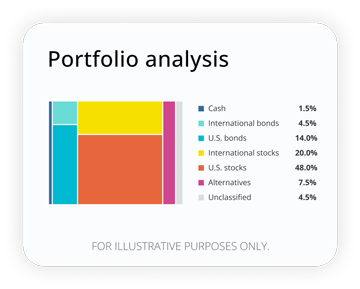
How well are your investments performing?
Analyze your portfolio in minutes and receive a target allocation for your goals.
1 IRS, “Required minimum distributions for IRA beneficiaries,” August 2025.
2 IRS, “Retirement topics – Beneficiary,” August 2025.
3 IRS, “Publication 551 (12/2024), Basis of Assets,” March 2025.
4 Ibid.
5 IRS, “Estate tax,” October 2025.
6 Tax Foundation, “Estate and Inheritance Taxes by State, 2025,” October 2025.
RO4978028-1125
 Get The Currency newsletter



Laurel Dein
Contributor
Laurel Dein, J.D., is a Senior Estate Planning Strategist at Empower. She analyzes current estate plans, wills, and trusts in order to help clients identify inefficiencies and opportunities.
The content contained in this blog post is intended for general informational purposes only and is not meant to constitute legal, tax, accounting or investment advice. You should consult a qualified legal or tax professional regarding your specific situation. No part of this blog, nor the links contained therein is a solicitation or offer to sell securities. Compensation for freelance contributions not to exceed $1,250. Third-party data is obtained from sources believed to be reliable; however, Empower cannot guarantee the accuracy, timeliness, completeness or fitness of this data for any particular purpose. Third-party links are provided solely as a convenience and do not imply an affiliation, endorsement or approval by Empower of the contents on such third-party websites. This article is based on current events, research, and developments at the time of publication, which may change over time.
Certain sections of this blog may contain forward-looking statements that are based on our reasonable expectations, estimates, projections and assumptions. Past performance is not a guarantee of future return, nor is it indicative of future performance. Investing involves risk. The value of your investment will fluctuate and you may lose money.
Certified Financial Planner Board of Standards Inc. (CFP Board) owns the certification marks CFP®, CERTIFIED FINANCIAL PLANNER™, CFP® (with plaque design), and CFP® (with flame design) in the U.S., which it authorizes use of by individuals who successfully complete CFP Board's initial and ongoing certification requirements.