

Zero-fee index funds are changing the math on retirement costs
Zero-fee index funds are changing the math on retirement costs
A new crop of zero-management-fee index options is pushing costs lower across workplace plans. What “zero” really covers — and how a few basis points (one-hundredth of a percent each) can add up over decades.
Zero-fee index funds are changing the math on retirement costs
A new crop of zero-management-fee index options is pushing costs lower across workplace plans. What “zero” really covers — and how a few basis points (one-hundredth of a percent each) can add up over decades.

10.09.2025

Listen
·Zero-fee index funds are changing the math on retirement costs
Key takeaways
- Fund fees keep falling. On an asset-weighted basis, average expenses are a fraction of early-2000s levels, driven by flows to low-cost funds.
- “Zero-fee” ≠ zero cost. It typically means the management (advisory) fee is waived; plan administration, recordkeeping, and custody can still apply.
- How providers get near zero: scale pricing, securities lending income, and institutional vehicles (e.g., CITs) that are cheaper to operate than retail mutual funds.
- Most savings come from getting very low, not necessarily all the way to zero; trimming the last few basis points still helps.
Fund expenses keep falling, and some workplace index vehicles now waive the management fee altogether. The goal isn’t “free” — it’s lower all-in costs and tight tracking so compounding can do more over time.
Industrywide investment fees have declined for two decades as assets have migrated to low-cost index options.1 That shift, alongside record Exchange-Traded Fund adoption, keeps competitive pressure on fees. Lower ongoing costs leave more of each year’s return invested, which can add up over a long horizon with compounding potential.
Read more: How do I invest in mutual funds? Get a Sense Check
What “zero” usually covers
“Zero-fee” in this context typically means the fund or account waives its management fee.2 That headline number does not automatically include other plan-level costs like recordkeeping or custody — common in workplace plans.3 Boards also evaluate differential advisory fee waivers to avoid cross-subsidization across share classes.4
Read more: Can I contribute to a 401(k) & an IRA?
How providers get near zero
Several offsetting mechanisms make waived-fee index exposure feasible:
- Scale pricing. Very large asset bases can support institutional pricing, compressing per-dollar costs.5
- Securities lending. Index portfolios may lend securities against collateral and earn income that offsets expenses; disclosures and policies govern risk/revenue sharing. Recent SEC Rule 10c-1a also increases transparency around securities lending.6
- Vehicle design. Separate accounts and collective investment trusts (CITs) often deliver broad-market exposure with lower operational overhead than retail mutual funds, making ultra-low or waived management fees more practical for retirement platforms.
Read more: Understanding compound interest and its power
Why pennies matter: the compounding math
Here’s an example of how compounding works.7 Assume a 6% gross annual return for 30 years.
Start with a $100,000 lump sum:
- 0.40% fee → $512,764
- 0.05% fee → $566,277
- 0.00% fee → $574,349
Cutting from 0.40% to 0.05% leaves about $53,513 more after 30 years; 0.05% to 0.00% adds roughly $8,072.
- $6,000 added annually (no initial balance)
- 0.40% fee → $442,247
- 0.05% fee → $470,195
- 0.00% fee → $474,349
Moving from 0.40% to 0.05% adds about $27,948; trimming the last five basis points to zero adds another $4,154.
The takeaway: most of the benefit comes from getting costs very low, even if not literally zero. Investing involves risk; returns are not guaranteed.
What to evaluate
When comparing options, the headline fee is only a starting point. Other factors can matter, too:
- Tracking difference. How closely the vehicle has matched its index after all costs and activities (including lending)
- Trading frictions. Cash drag, turnover, and rebalancing practices that can widen or narrow the gap to the index
- Lending policies. Collateral standards, revenue-sharing splits, and how lending activity is overseen
- Plan-level fees. Recordkeeping and administrative charges that affect the true all-in cost inside a workplace plan
What it all means
Getting expenses very low is what moves the needle, even if the stated management fee isn’t literally zero. The next phase of cost competition is about net investor outcomes: tight index tracking, transparent lending and waiver practices, and lower all-in costs at the plan level — so compounding can do more over time.8
It is important to note, however, there is no guarantee that a fund with a lower cost will outperform a fund with a higher expense. This is also true with respect to a passively managed index fund versus an actively managed fund. Investors should evaluate all attributes of a fund when choosing a fund before investing.
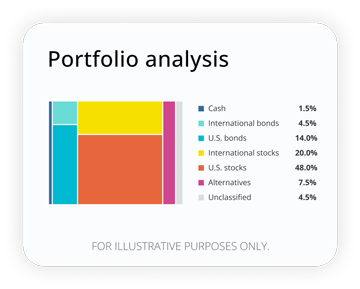
How well are your investments performing?
Analyze your portfolio in minutes and receive a target allocation for your goals.
1 Morningstar, “2024 Annual US Fund Fee Study,” Accessed Sept. 20, 2025.
2 Ibid
3 SEC, “Mutual Fund Fees and Expenses,” Accessed Sept. 20, 2025.
4 SEC, “Differential Advisory Fee Waivers,” Feb. 2, 2023.
5 Office of the Comptroller of the Currency, “Collective Investment Funds,” May 2014.
6 FINRA, “Implementing the SEC’s Securities Lending Reporting Requirements,” Jan. 24, 2025.
7 Investor.gov, “Compound Interest Calculator,” Accessed Sept. 20, 2025.
8 Morningstar, “2024 Annual US Fund Fee Study,” Accessed Sept. 20, 2025.
RO4853677-0925
 Get The Currency newsletter



The Currency editors
Staff contributors
The CurrencyTM writers and editors cover the latest financial news and insights shaping how we live, work, and play. The team provides accurate, data-driven, and timely content aimed at empowering financial freedom for all.
The content contained in this blog post is intended for general informational purposes only and is not meant to constitute legal, tax, accounting or investment advice. You should consult a qualified legal or tax professional regarding your specific situation. No part of this blog, nor the links contained therein is a solicitation or offer to sell securities. Compensation for freelance contributions not to exceed $1,250. Third-party data is obtained from sources believed to be reliable; however, Empower cannot guarantee the accuracy, timeliness, completeness or fitness of this data for any particular purpose. Third-party links are provided solely as a convenience and do not imply an affiliation, endorsement or approval by Empower of the contents on such third-party websites. This article is based on current events, research, and developments at the time of publication, which may change over time.
Certain sections of this blog may contain forward-looking statements that are based on our reasonable expectations, estimates, projections and assumptions. Past performance is not a guarantee of future return, nor is it indicative of future performance. Investing involves risk. The value of your investment will fluctuate and you may lose money.
Certified Financial Planner Board of Standards Inc. (CFP Board) owns the certification marks CFP®, CERTIFIED FINANCIAL PLANNER™, CFP® (with plaque design), and CFP® (with flame design) in the U.S., which it authorizes use of by individuals who successfully complete CFP Board's initial and ongoing certification requirements.